Tag Archives: politics

A Working Class Party without Working Class Voters

Over recent decades, the Democratic and Republican parties have traded core constituencies. Working class voters, once securely in the Democratic fold, have gravitated to the Republican Party, while highly educated professionals, once reliably Republican, have shifted to the Democratic Party.

Yet the policies pursued by Republican office-holders clearly serve business elites rather than working people. This would seem to offer the Democratic Party an opportunity to regain working class support by championing pro-worker policies.

These might, for instance, include a higher minimum wage, the appointment of pro-union members of the National Labor Relations Board, and a ban on no-compete clauses in labor contracts. Or increased access to affordable health care and a reduction in the prices of widely used drugs. Expanded child tax credits and support for pre-K education would also benefit workers.

A pro-worker strategy would commit major resources to rebuilding infrastructure while investing in green energy and key high tech industries, such as semi-conductors, thus creating blue collar, predominately male jobs in Red states. The Democrats could support higher taxes on the wealthy and corporations while beefing up IRS enforcement against tax dodges and cracking down on offshore tax havens. Consumers would benefit from tougher enforcement of anti-trust and consumer protection laws. Taken together, these policies would offer a stark contrast with the anti-worker, pro-billionaire policies pursued during the first Trump Administration.

But here is the rub. Democrats have pursued all of these policies over the past four years, yet the Democratic share of the working class vote fell in 2024, just as it had in 2020 and 2016, while white working class identification with the Republican Party has been growing for decades. Most alarmingly, Democrats lost ground this time around among black and brown working class voters while remaining deeply unpopular among white workers.

This reality places Bernie Sander’s claim that the Democrats abandoned the working class in ironic perspective. The reality is that Joe Biden was far more pro-worker than either Barack Obama or Bill Clinton. Yet none of it swayed working class voters.

The problem was in part a failure of communication. While Biden touted his pro-worker policies at every opportunity, Democrats failed to embed specific policies or outcomes in a broader narrative about the rise of inequality, the hollowing out of American manufacturing, and the financialization of the economy. When 70% of Americans feel the country is headed in the wrong direction, it behooves those in power to offer a diagnosis of what is wrong, who is to blame, and how to fix matters. The Democrats have touted fixes without laying the groundwork by explaining how things got so bad.

To do so would have required a critique of the neoliberal order that Democrats, as much as Republicans, helped to build. Without such a narrative, Democrats were unable to explain the downward mobility experienced by many workers. Nor could they pin responsibility. Instead, they offered technocratic policy prescriptions without context.

Biden and mainstream Democrats embraced some of the policies offered by Bernie Sanders without the underlying anti-corporate rationale that Sanders has so insistently articulated. The reasons are obvious. While Democrats seek to win back working class voters, they also depend heavily upon corporate support. Indeed, many Democratic-leaning urban professionals are employed within those corporate sectors most supportive of the Democratic Party. Overly blunt efforts to rally working class support would threaten to erode the loyalty of the party’s professional and corporate constituencies.

In the absence of a clear Democratic message, Trump offered working class voters a coherent – if badly flawed – narrative attributing their problems to immigrants, foreign imports, globalists, bureaucrats, and a cultural elite. In doing so, he not only gave working class voters targets to blame for their economic grievances, he also exploited social and cultural divides over race, gender, and identity.

The Democratic Party has taken Trump’s bait by embracing a set of cultural and social litmus tests that drive away many working class voters. It is not just that the Democratic brand is now associated with a set of values and beliefs contrary to the sentiments of tradition-minded rural and working class people, but it is also that rural whites – especially males – feel targeted as scapegoats for social ills – such as racial or gender inequality – that they neither created nor have the power to eradicate. Instead, many rural whites feel unfairly shamed and looked down upon while their own struggles with opioid addition or the depopulation of rural communities are ignored by urban politicians.

Pro-worker policies are necessary but not sufficient for winning back working class voters. Democrats need to embed such policies in a clear, compelling narrative that helps workers make sense of the forces buffeting their lives. Democrats should also return to the notion of a big-tent party, one that tolerates ideological diversity while taking seriously the material and cultural needs of the rural working class.

Democrats should also frankly acknowledge that policies aimed at pleasing core urban professional supporters often have pernicious impacts on working class people. Broad-based student debt relief helps college-educated voters but does nothing for those who have never stepped foot on a college campus. When residents of well-off urban neighborhoods successful oppose the construction of high-density housing, this worsens the housing crisis and push up home prices. Low-wage immigrant labor keeps prices low on services used by upper-middle class consumers but poses competition for unskilled native born workers. The reality is that the professed commitments to social justice among what author Musa Al-Gharbi calls “symbolic capitalists” are often belied by the latter’s pursuit of narrow material gains.

The process of rebuilding a working class-based Democratic Party will be long and difficult. In many Red states, Democrats have been virtually vanquished. The chaos of the next four years and the damage that the Trump Administration’s proposed policies will do to rural and working class people will provide an opening, but Democrats must rethink their own messaging and strategy in order to take advantage of the opportunities that will arise. This will require a more coherent narrative about the gross inequalities that afflict the American economy, greater openness to cultural and ideological diversity within the party, and frank acknowledgement of conflicting class interests between the current Democratic base and the working class support that the party needs to attract in order to win.

Leave a comment

Filed under Uncategorized

Is the GOP Now Pro-Worker? Not Really

Led by billionaire Donald Trump and former venture capitalist J.D. Vance, the Republican Party now proclaims itself the party of working-class people. Vance, referring to himself as a “working-class boy,” hit this theme hard in his speech at the Republican Convention. Vance lauded Trump as “a leader who’s not in the pocket of big business, but answers to the working man, union and non-union alike. A leader who won’t sell out to multinational corporations.” He went on to lament lost jobs, stagnant wages, and closed factories, which he attributed to free trade, corporate outsourcing, and illegal immigration.

The convention featured an address by Teamster President Sean O’Brien, once an unthinkable choice for Republicans. Following the convention, Republican Senator Josh Hawley published a piece in Compact magazine titled “The Promise of Pro-Labor Conservatism.”

How seriously should we take this turnabout from a party once looked upon as home to the country-club set? In short, the answer is not much. This is evident by looking at Trump’s record during his stint as president as well as his promises for a second term.

Referring to his cabinet, Trump declared in 2016: “I want people who have made a fortune.” He delivered, as one lineup of cabinet officials had a net worth of $3.2 billion. Trump’s affinity for the rich was also evident from his 2017 tax cuts, which will save the top 1% of earners an average of more than $60,000 in 2025, compared with average savings of only $500 for the bottom 60% of earners. Trump has suggested that he would double down on this generosity toward the rich by cutting the corporate tax rate from 21% to 15% in a second term.

On the other hand, Trump’s National Labor Relations Board made rulings that made it harder for unions to organize and curtailed union bargaining rights. In 2017, Trump also tried, but failed, to repeal the Affordable Care Act, which provides health benefits to 40 million Americans.

A Trump-appointed judge recently blocked a Biden Administration rule that would have outlawed non-compete clauses in employment contracts. Meanwhile, Trump-appointed justices on the Supreme Court have weakened the power of Federal agencies to enforce workplace health and safety regulations.

Looking forward, Project 2025, a blueprint for Trump’s next term compiled by the Heritage Foundation and other groups closely associated with Trump, proposes to revoke civil service protections from vast swathes of the Federal workforce, allowing workers to be fired at will and replaced by political loyalists. This greatly expands upon a similar executive order issued near the end of Trump’s first term but reversed by Joe Biden.

Trump has promised a 10% across-the-board tariff increase on imported goods and a 60% increase on Chinese goods.  Since importers would simply pass on the increased costs to consumers, economists estimate that increased tariffs would cost Americans $1700 per year, on average.

Donald Trump’s marquee issue has been immigration, which Trump has proposed to curtail. Trump claims that immigrants – especially illegal immigrants – steal jobs from American workers and lower wages for unskilled work. J. Daniel Kim of the University of Pennsylvania’s Wharton School has summarized the results of his recent co-authored study: “What we find … is that immigrants act more as job creators than they act as job takers in the United States.” Immigrants are more entrepreneurial than native-born Americans. Less-skilled immigrants often take jobs that few native-born Americans want. Amidst a period of high levels of both legal and illegal immigration, the unemployment rate has hit record lows and wages have grown faster than prices, with the biggest gains at the bottom of the pay scale. By expanding the workforce, immigration stimulates economic growth, increasing the pie for everyone.

Trump plans to deport 10 million undocumented residents in a second term, 79% of whom have been in the United States for at least 12 years (and 44% for more than 20 years). Aside from the unthinkable human toll from mass deportation, the economic effects would be disastrous. The construction industry would lose 1.5 million workers, the hospitality industry 1.1 million workers, and the agricultural sector 283,000 workers. Overall, Trump’s plan would eliminate 4.5% of the U.S. workforce, which could produce a 9% drop in national income while also costing one million jobs among native born Americans.

Mass deportation would force up prices on many goods. Trump’s immigration policies combined with tax cuts for the wealthy and higher tariffs would create tremendous inflationary pressures.

None of this benefits American workers. Whatever Trump and Vance’s new Republican Party may be, it is not pro-labor.

Leave a comment

Filed under Uncategorized

Mike Johnson’s Historic Choice

Republican House Speaker Mike Johnson faces a critical decision that could align his legacy with that of Senator Henry Cabot Lodge, who, in 1920, spearheaded the Senate Republicans’ rejection of the Treaty of Versailles, thus declining United States membership in the new League of Nations.

This was a stunning defeat for President Woodrow Wilson, who had championed the League as an alternative to the imperialism and power politics he considered responsible for World War I. The League sought to ensure peace by committing members to come to the defense of any other members who faced aggression. The prospect of a collective response would give pause to any aggressor otherwise tempted to attack a weaker neighbor.

But without the leadership of the United States, already the greatest power of the era, the League’s collective security mechanism lost all credibility. When Japan invaded China in 1931, the League sent a fact-finding team, but otherwise failed to act. Following Italy’s invasion of Ethiopia in 1935, the League imposed some ineffective sanctions, but was otherwise helpless to reverse Italy’s aggression. The League likewise stood by while Nazi Germany took the Sudetenland in 1938.

Through all these events, as the world stumbled toward a second world war within a generation, the United States sought safety in isolation. A meek giant, lulled into complacency by its geographic remoteness, the United States sat on the sidelines as aggressors threatened the peace in both Europe and Asia. Massive rallies organized under the slogan “America First,” sought to avoid the kinds of sacrifices that had been made along the trench lines in Europe a generation earlier.

Alas, peace and security could not be bought so cheaply. American security was bound up with the security of others. The American economy could not thrive if hostile rivals used violence to gain exclusive control over vast concentrations of industrial power and raw materials. Our democracy would be imperiled in a world dominated by autocracies. The isolationist illusion was finally punctured by the Japanese attack on Pearl Harbor.

Following World War II, a new generation of leaders accepted the responsibilities of global leadership and built a set of American-centered alliances to keep the peace in Europe and East Asia. These alliances have secured the basis for spheres of remarkable peace, prosperity, and democracy in both regions, even in the face of great power threats both past and present.

The continued stability and peace in Europe and Asia depend upon the strength and credibility of the American commitments to the security of our partners. And this is where Mike Johnson faces a choice potentially as momentous as that of Senator Henry Cabot Lodge. Johnson holds the fate of Ukraine in his hands, and so too the standing of America’s international leadership.

Although Ukraine is not a treaty ally, the United States, both individually and through NATO, has made public commitments to assist Ukraine in defending itself from Russian aggression. The very fact that the current arms aid package for Ukraine has been held up in Congress for months has already harmed the credibility of America’s word.

Should the standoff result in a failure to resume arms shipments – especially if followed by major Russian battlefield advances – America’s friends and rivals alike will be forced to reconsider their strategic position in a world of renewed American isolationism. Already, Donald Trump’s reckless threats to pull out of NATO have damaged the alliance regardless of whether he wins the presidency or carries through on the threat. Our allies now understand that America’s commitment to their security is in question. And so do our rivals.

Speaker Johnson should calm such fears by bringing an aid package for Ukraine to a vote in the House, where it would likely pass. If he fails to do so, then this moment may well be remembered as a turning point akin to the failure of the League of Nations vote in the Senate, and the first step into a new era of isolationism and insecurity.

Leave a comment

Filed under Uncategorized

Understanding Chinese President Xi Jinping’s Anti-Corruption Campaign

Chinese President Xi Jinping has made fighting official corruption a cornerstone of his reign.

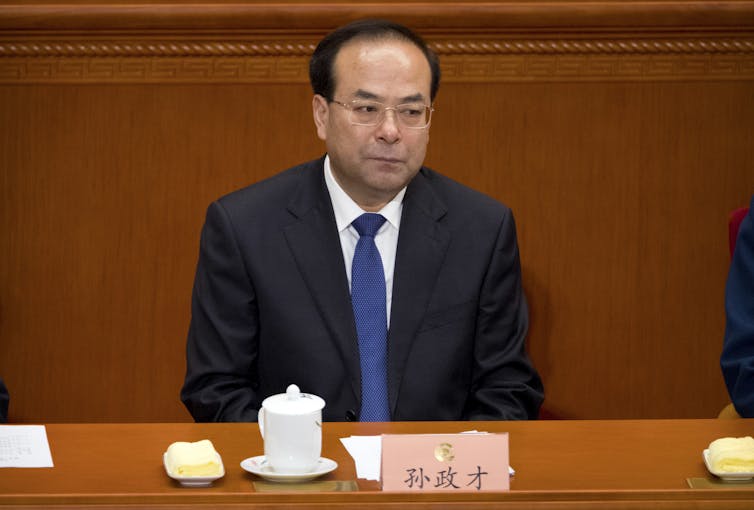
Judging by the numbers alone, the campaign has achieved impressive results. Astonishingly, the Chinese Communist Party (CCP) has disciplined well over one million officials since Xi took power in 2012. The anti-corruption campaign has snared hundreds of high-level leaders – including, most recently, former Chongqing Communist Party General Secretary and Politburo member Sun Zhengcai.

Xi’s fight against corruption has made him enormously popular among the Chinese people. As a political scientist and close observer of Chinese politics, however, I would argue that Xi’s enthusiasm to root out corrupt officials isn’t based on his own rectitude. Indeed, Xi’s family has inexplicably managed to accumulate over $1 billion in wealth, according to reports by Bloomberg. Rather, it rests on Xi’s determination to strengthen his personal power and that of the party he leads.

We should pay attention. If Xi succeeds in centralizing his control over the world’s most populous country, the United States will be presented with an increasingly confident and formidable competitor.

Sun Zhengcai was one of the more prominent targets of Xi Jinping’s crackdown on corruption. AP Photo/Mark Schiefelbein

Managing corruption

Corruption is built into the structure of China’s governing institutions.Xi’s campaign is more about managing the scope and consequences of corrupt practices than rooting them out altogether.

As China scholar Minxin Pei has documented, corruption in China typically takes the form of organized schemes involving groups of bureaucrats and private business people to plunder state resources.

Corruption fuels job promotions, the awarding of government contracts and the transfer of public assets into private hands at fire sale prices. Corruption in China is rooted in the blurred lines that come with a system combining weak rule of law, considerable autonomy on the part of local officials and an economic model featuring opaque relations between private enterprise and a large state-owned sector.

Xi has approached the problem of corruption much like his predecessors, though with unusual vigor, scale and persistence. Periodically, the CCP leadership has undertaken highly visible campaigns against corruption. During these campaigns, teams of officers from the CCP’s Discipline Inspection Commission sweep the offices of municipal or provincial governments and party units. These efforts have succeeded in preventing corruption from overwhelming the political system and undermining the economy. But the misuse and plunder of state resources nevertheless remains pervasive.

If Xi were serious about rooting out corruption more thoroughly, deep institutional reforms would be required. In countries where corruption has been successfully addressed, these have included strengthened rule of law, greater judicial independence, democratic accountability, institutional transparency and greater space for media and civil society watchdogs.

In China, scholar Pei emphasizes the need for clearer property rights that prevent officials from exploiting public assets for private gain. Such measures would both limit the opportunities for graft and more easily expose that which does take place.

Yet Xi has shown little interest in these kinds of reforms, which would threaten the leading role of the Communist Party. Indeed, his attacks on rights lawyersindependent media and non-governmental organizations– precisely the groups that in other societies hold public officials to account – have pushed in the opposite directions.

Too many pigs at the trough

So if Xi has ruled out the most effective anti-corruption tools, why is he going after corrupt officials at all?

In The Dictator’s Handbook, political scientists Bueno de Mesquita and Alastair Smith theorize that authoritarian leaders cannot rule without the support of other powerful players, such as military generals, business leaders and key intellectuals. Their demands must be met. Such leaders survive, therefore, by channeling rewards to those supporters most essential to the leader’s maintenance of power. Over time, however, the number of individuals attached to the ruling coalition tends to grow, as does the price that each member demands for support. We might call this the “too many pigs at the trough” problem.

This may be sustainable if the economy is rapidly growing, but becomes more problematic once growth slows, as indeed it has in China in recent years. Because the monetary gains extracted by corrupt officials serve as dead weight from an economic perspective, corruption itself can become a source of worsening economic performance. The costs of paying off a bloated coalition of greedy supporters are considerable: a reduced take for the dictator himself, lagging revenue growth and declining popular legitimacy, the latter necessitating increasingly costly repression.

All of this explains why newly installed leaders move quickly to cull the number of pigs at the trough, as Xi has done since taking power in 2012. By retargeting private rewards only to those whose support is truly essential and reducing the size of payoffs to the minimum necessary to avert defection, the leader thereby shores up his power position with a smaller and more manageable ruling coalition.

Of course, culling the herd means more than simply cutting rewards to non-essential coalition members. They must be jailed or otherwise rendered incapable of retaliating. Factions organized around political rivals must be disrupted.

Such is the case with Xi’s recent uses of the anti-corruption campaign to undermine the Communist Youth League associated with Xi’s predecessor, former Chinese President Hu Jintao. Ruthlessness toward those unlucky enough to be targeted also sends a warning to the remaining coalition members.

Xi’s anti-corruption campaign is reshaping the magnitude and composition of the ruling coalition and the size of the payoffs to remaining members, thereby strengthening his own hold on power. But as long as China’s political order remains dominated by a single party, a system for funneling private rewards to members of the ruling coalition will remain essential to its functioning. Xi’s image as China’s “Mr. Clean” is more mirage than reality.

Leave a comment

Filed under Uncategorized

US-China Relations

Over the past few months, U.S.-China relations have unfolded as a three act play. In each act, seemingly predictable and highly scripted plot lines have been interrupted by dramatic twists. Each act focused on a different aspect of the wide-ranging and often contentious political, economic and military relations between the world’s two foremost powers.

On the political front, Vice President Xi Jinping used his recent visit to the United States to introduce himself to Americans and even to a Chinese audience ahead of his presumed elevation to China’s top leadership spot. Economic relations served as the main focus of the Strategic and Economic Dialogue in Beijing while military relations topped the agenda of Chinese Defense Minister Liang Guanglie’s recent U.S. visit.

The far-reaching scope and intensity of these exchanges, following upon reciprocal visits by Chinese President Hu Jintao and American President Barack Obama in 2011, underscore the critical importance that the leaderships of these two global giants place upon managing bilateral relations. Yet the obligatory pledges of enhanced cooperation that typically accompany these high-level dialogues belie the lack of strategic trust that continues to plague relations between the United States and China.

Indeed, even as both countries recognize critical overlapping interests and fear the destructive consequences of outright conflict, officials on both sides of the Pacific seek to shore up positions of political, economic and military strength as hedges against a turn toward deepening rivalry for dominance in Asia. To further complicate matters, efforts to balance the cooperative and competitive aspects of bilateral relations are repeatedly tested by reoccurring frictions and even crises that require deft management in order to avoid escalating conflict.

Xi Jinping’s five-day visit to the U.S. beginning on February 13 included stops in Washington D.C., Iowa and Los Angeles. Each stage offered him the opportunity to present a different persona. In Washington, Xi offered himself to Americans as a skilled and knowledgeable interlocutor and while assuring Chinese that he was capable of representing China’s interests in its most important bilateral relationship. The Obama Administration recognized the political importance of getting the atmospherics right: although not yet the occupant of China’s top political position, Xi was accorded all of the pomp of a state visit, including a 19 gun salute.

Xi’s brief stop in Iowa, a Midwestern farm state, retraced the steps of his 1985 visit as a young provincial official to the small town of Muscatine, Iowa. While Xi struck a major deal for the purchase of Iowa-grown soybeans, this portion of Xi’s U.S. trip most importantly allowed him to display a common touch by mingling with Iowa farmers – even jumping on a tractor at one point – and quoting Mark Twain.

His final stop in Los Angeles allowed Xi to bask in the glamour of Hollywood and hobnob with movers and shakers in America’s entertainment industry. Expressing a fondness for movies such as the Godfather and Mission Impossible, Xi used the occasion to announce expanded access by American film distributors to the Chinese theater market.

In contrast with many of China’s often stiff and remote political leaders, Xi succeeded in projecting the image of an open, modern politician with deft communication skills and a human touch.

Yet even as this first act was concluding to much applause, an unexpected plot twist was unfolding back in China. The police chief of Chongqing, a sprawling metropolis in Western China, fled to the nearby city of Chengdu on February 6 after a falling-out with Chongqing’s powerful mayor, Bo Xilai. Wang Lijun took temporary refuge in the U.S. Consulate in Chengdu where he offered U.S. diplomats a strange tale of corruption and infighting among China’s elites.

While Wang was arrested following his departure from the U.S. Consulate, his accusations of wrongdoing also brought down his former boss, Bo Xilai, who was previously considered a top contender for the Chinese Communist Party’s Politburo Standing Committee, to be reshuffled at the 18th Party Congress next fall.

This puzzling incident served to undercut the image of Chinese stability and unity that Xi sought to project during his U.S. visit and once more illustrated the unpredictable nature of U.S.-China relations as U.S. diplomats found themselves enmeshed – not for the first or last time –  in purely domestic Chinese affairs.

The latter point was driven home even more forcefully in the days preceding the recent U.S.-China Strategic and Economic Dialogue held in Beijing on May 3-4. This was the fourth in a series of such meetings first begun in 2009. Along with high-level officials, the Economic and Security Dialogues bring together lower-level diplomats and experts from various agencies in an effort to exchange views and explore cooperation across a broad range of issues. This year’s summit produced important agreements on trade, investment and currency rates, mostly aimed at a more open and balanced U.S.-China economic relationship. Whether the oft-contentious U.S.-China economic relationship will take a turn toward greater comity and cooperation remains in doubt, however, as both sides have in the past made similar pledges that they subsequently failed to implement.

Once again, however, the chances for a successful outcome were cast into doubt by wholly unexpected developments before the gathering even began. On April 22, a blind human rights activist and self-taught lawyer named Chen Guangcheng escaped from informal house arrest imposed by local officials in Dongshigu Village in Shandong Province. Chen had first been jailed in 2006 following his efforts to publicize coerced abortions and sterilizations in his home region. Following his release from prison in 2010, he and his family effectively remained prisoners in their own home. Following his escape, Chen made his way to the U.S. Embassy in Beijing with the help of supporters.

This produced a frantic and confusing series of negotiations involving Chen, U.S. officials and Chinese officials conducted under pressure to resolve the case prior to the beginning of the upcoming summit. After one week of talk, Chen left the U.S. Embassy for a local hospital in order to receive treatment for a foot injury sustained during his dramatic escape. While Chen initially expressed a desire to remain in China under conditions allowing him to live freely and attend school, he later requested to travel to the United States to study law at New York University. Eager to rid themselves of a high-profile dissident, Chinese officials granted permission for Chen to leave China for the United States, which he did on May 19.

This affair placed the spotlight on China’s poor human rights record  and its still weak rule of law. Often critical of China’s performance on precisely these grounds and yet concerned not to allow such issues to interfere with more weighty security and economic interests, the U.S. struggled in this case – as in many previous instances – to balance principles and pragmatism. While officials on both sides displayed patience, skill and flexibility in bringing the Chen Guangcheng case to a resolution without jeopardizing the Strategic and Economic Dialogue or broader relations, the fundamental differences between the two country’s political systems and governing philosophies remain an obstacle to closer relations that cannot be avoided.

In the third act of recent U.S.-China exchanges, Chinese Minister of Defense Liang Guanglie arrived in the United States on May 6 for a six-day tour of major U.S. defense facilities, including the U.S. Military Academy at West Point. General Liang’s visit was I virtually ignored bythe U.S. press, with not even a mention in the New York Times. China’s press, on the other hand, gave extensive coverage to the first visit by China’s highest military official to the United States in nine years.

Liang’s visit may, in fact, prove the most significant of the three recent exchanges.  Military-to-military ties remain the least developed dimension of U.S-China relations. While some  degree of rivalry and mistrust is to be expected as China’s rising power impinges upon America’s existing dominance,recent events have heightened tensions to a fever pitch.

Chinese defense spending continues to rise at a double digit pace even as tightening fiscal realities presage a stagnant and perhaps even declining U.S military budget. While the U.S. currently retains a commanding military advantage over China, the gap is closing quickly. China has recently unveiled its first aircraft carrier, a new stealth bomber and an anti-ship ballistic missile that could threaten America’s most formidable warships. China’s capacities in cyber-warfare and space are significant and growing.

China’s challenge to American naval and air dominance in East and Southeast Asia has not gone unnoticed by the U.S. President Obama announced a strategic “pivot” to Asia during his recent visit to the region. This was accompanied by the deployment of a 2,500 Marine contingent to Australia and the upgrading of U.S. military ties with several nations in Southeast Asia.

The U.S. has repeatedly urged closer, more consistent and transparent relations between the U.S. military and China’s People’s Liberation Army (PLA). Washington believes that China’s published military budget understates actual spending. In the absence of greater certainty about China’s weapons development plans, force deployments and strategic intentions, U.S. officials argue, then the U.S. and its allies are left to base their own planning on worst-case assumptions – thus leading to an uncontrolled arms race.

While China’s PLA has generally shown limited enthusiasm for this sort of information-sharing, Defense Minister Liang Guanglie’s visit resulted in an agreement for the two navies to hold joint anti-piracy exercises in the Gulf of Aden. Also, the Chinese invited U.S. Secretary of Defense Leon Panetta to visit China at an unspecified date next fall.

Still, as with other exchanges, underlying tensions and unexpected frictions  cast future progress in developing closer military ties into serious doubt. In the past, military contacts have been among the first casualties when political tensions have deteriorated between Washington and Beijing. The potential for this pattern to repeat itself appears to have risen with recent hints that President Obama may be reconsidering the sale of advance F-16 jet fighters to Taiwan. Continued U.S. arms sales to an island that China considers a renegade province serve as perhaps the most sensitive point in U.S.-China relations. This is especially the case when such sales involve new or more advanced weapons systems that outclass China’s own capacities. A U.S. decision to go ahead with the F-16 sale to Taiwan would almost certainly bring all military cooperation between the U.S. and China to a screeching halt.

As with  the cases previously discussed, unscripted events provided a tense backdrop for General Liang Guanglie’s visit. In this case, the attempt by Philippine naval ships to expel Chinese fishing boats from an area of the South China Sea claimed by both countries led to an on-site standoff and tough language from Chinese and Philippine officials.

While the U.S. is not directly involved in the present dispute, which is ongoing as of this writing, it is party to a mutual defense treaty with the Philippines which could become activated should this or future conflicts escalate into a major naval clash. China has become more assertive in recent years about its expansive claims in the South China Sea, which holds valuable fishing resources and oil deposits. Five other countries also make overlapping claims to portions of these waters. While the U.S. takes no position on the merits of any of these claims, it has pledged to defend the principal of freedom of navigation through the area, which encompasses the most heavily used shipping lanes in the world.

The breadth and intensity of recent U.S. and Chinese political, diplomatic and military exchanges serve to underline the huge stakes attached to relations between the world’s reigning, but somewhat beleaguered, hegemon and the world’s most populous and fastest growing power. Given the range of significant differences between the U.S. and China, the continued commitment to dialogue and the modest progress achieved on concrete problems both offer grounds for hope that relations can be managed wisely and peacefully. Yet unexpected plot twists continue to test the crisis-management skills of diplomats and political leaders on both sides while adding to the suspense as the world wonders – how will this story end?

Leave a comment

Filed under Uncategorized