Tag Archives: politics

The Complex Politics of the Belt and Road Initiative

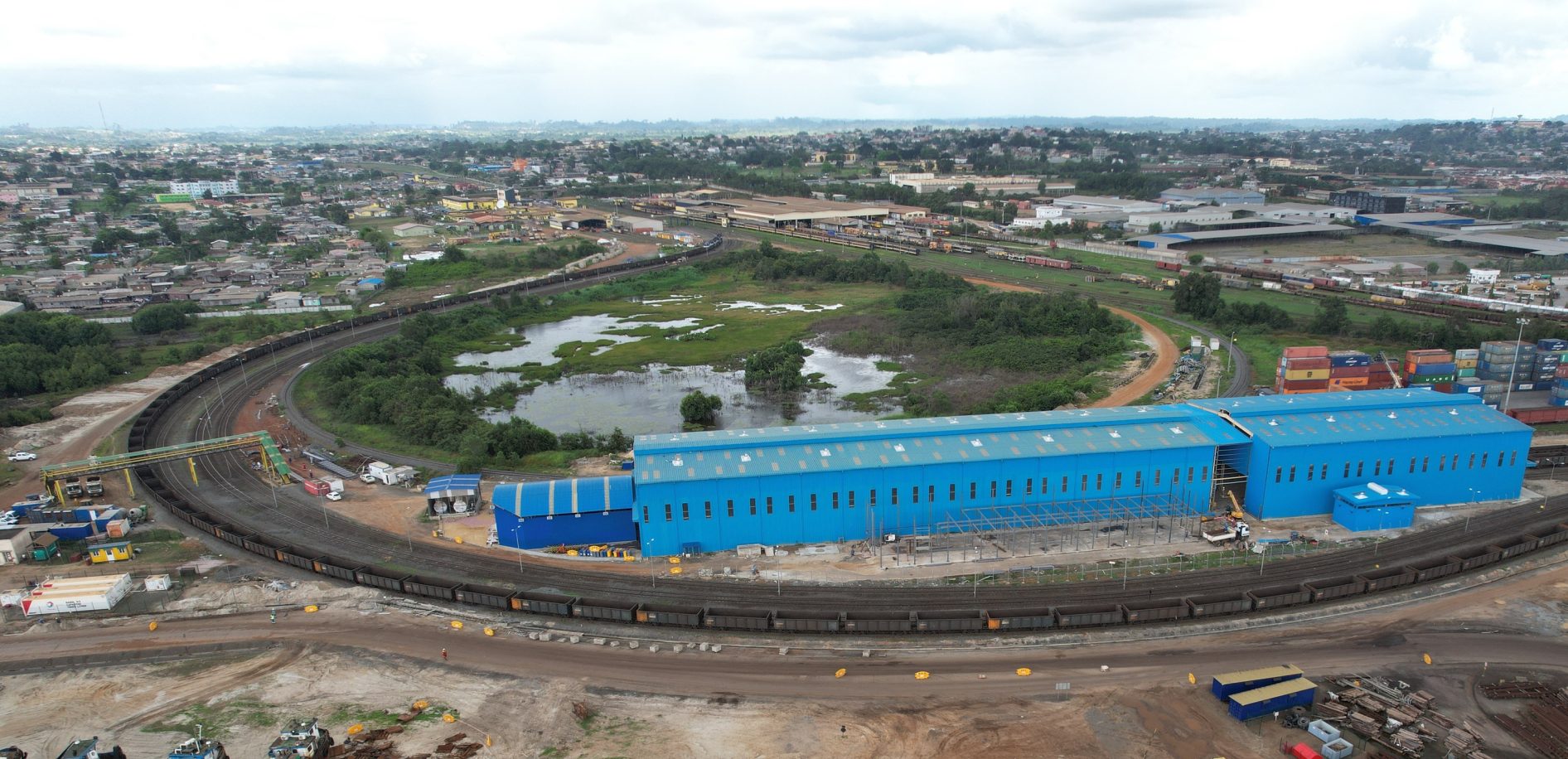
Since its launch, China’s Belt and Road Initiative (BRI) has struggled to cope with the political challenges of infrastructure development in low-income and often politically unstable developing countries. Dams, ports, highways and the like run-up debt, displace people, damage the natural environment, and invite corruption. The risk of corruption is further elevated by the endemic nature of such practices among Chinese actors. Zha Daojiong, a professor of international relations at Peking University remarks: “Good old-fashioned aid, with China doing everything by itself, meaning Chinese money, Chinese companies, Chinese construction materials and even Chinese workers – frankly speaking, that is an invitation to malpractice and outright corruption.”

A 2013 power plant project in Kyrgyzstan offers an illustration of the problems inherent to China’s early BRI practices. Securing bids from a Russian company and a Chinese company called TBEA to refurbish a power plant, the government choose TBEA even though the Russian company had far more experience. The choice was connected to the Chinese embassy’s message that Chinese financing would only be available if TBEA were given the contract. Ultimately, the power plant broke down after the refurbishment and the prime minister and other top officials were placed on trial for corruption after it was discovered that they profited by inflating the price of the contract by $111 million.

Due to the above problems, infrastructure projects often produce popular resistance despite potential economic payoffs down the road. Popular protest has hindered BRI projects in countries such as Indonesia, Myanmar, Bangladesh, Zambia and Krygyzstan. In recent years, two dozen Chinese nationals have been killed or kidnapped in Africa. This problem is connected to the fact that, as journalist Tom Miller notes, “Chinese firms … are happy working with local elites and unelected officials, but much less adept at dealing with civil society.”

In Pakistan, the $62 billion China-Pakistan Economic Corridor (CPEC) has been threatened by Baluchi separatists, who have blown up gas pipelines, assaulted Chinese engineers and attacked the Chinese consulate in Karachi. In 2016, Pakistan’s army deployed 15,000 troops to protect CPEC projects, with the top commander pledging that: “Pakistan’s army shall ensure security of CPEC at all costs.” In 2021, the terrorist group Tehreek e-Taliban Pakistan claimed credit for setting off a car bomb in a failed attack aimed at the Chinese ambassador to Pakistan. Following a surge in violence directed at Chinese nationals and projects in early 2024, a Chinese Foreign Ministry spokesperson declared: “We ask Pakistan to take effective measures to protect the safety and security of Chinese nationals, institutions and projects in Pakistan.”

Given this track record, it is perhaps not surprising that one survey of Chinese firms found that the foremost concern about investing abroad – cited by 71% of respondents – was political risk. Yin Yili, Vice President of China Communication Construction Company, has remarked that Chinese firms “lack the ability to discern where to invest or effectively manage overseas risks.” An American Enterprise Institute study of unsuccessful overseas Chinese investment projects found that one quarter failed due to political factors. AidData has documented 94 Chinese projects with a total value of $56 billion that were cancelled or suspended between 2000 and 2021.

International development consultant David Landry observes: “Because of their late entry into new markets, Chinese firms may also be more likely to invest in … projects deemed too unprofitable or risky by other investors” that are “far outside their field of competence.” The RWR Advisory Group reports that one third of BRI projects in Southeast Asia through 2018 were delayed or canceled due to lack of feasibility. Lee Jones and Yizheng Zou observe that: “Chinese SOEs enter risky markets like ‘rogue’ states or disputed maritime areas, not because top leaders instruct them to, for ‘geopolitical’ gain, but because these profit-hungry firms are relative latecomers to international markets, and Western firms already dominate more stable territories.” This conclusion is echoed in the anonymous remarks of a Chinese official with the National Development and Reform Commission: “China had no choice but to lend a lot to risky countries because they had the commodities we needed and because the western multinational organisations already dominated the rest of the world.”

The continued willingness of Chinese banks and SOEs to undertake risky overseas projects during the BRI’s early years stemmed from the role played by the state-owned China Export & Credit Insurance Corporation, commonly known as Sinosure. Sinosure insures Chinese banks and firms involved in BRI projects against losses due to government seizures, nationalization, political violence and other risks. Sinosure paid out $1.73 billion on claims related to BRI investments and exports between 2013 and 2017 as its overseas operations rapidly expanded. This backstop served to induce moral hazard among Chinese investors. Indeed, the chief economist at Sinosure referred to the due diligence procedures of China’s policy banks as “downright inadequate.” In recent years, Sinosure has pulled back on support for riskier projects and countries, leading to greater caution on the part of Chinese banks and SOEs.

As projects struggle, China has been compelled to intervene to safeguard its investments, its people, and its political influence. In 2018, the Ministry of Foreign Affairs issued security regulations for Chinese firms operating overseas. At the CCP’s 20th Party Congress in 2022, Xi Jinping declared: “We will strengthen our capacity to ensure overseas security and protect the lawful rights and interests of Chinese citizens and legal entities overseas.” The People’s Liberation Army has been instructed to develop options for protecting “overseas interests” while the People’s Liberation Army Navy is rapidly expanding its capacity to land expeditionary forces abroad.

In some cases, China may seek to shore up repressive regimes or bypass democratic institutions to avert lost investments and influence. Losing confidence in Pakistan’s civilian leadership, for instance, China successfully pushed for the Pakistani army to take charge of overseeing the China-Pakistan Economic Corridor. Chinese private security firms are also moving abroad to provide security for China’s overseas investments. China recently announced plans to train 3,000 foreign law enforcement personnel to protect Chinese interests overseas, including the security of Belt and Road projects. Securitization of China’s economic engagement in Africa is an important aspect of the Global Security Initiative, which featured prominently at the most recent Forum on China-Africa Cooperation. In general, China’s oft-touted foreign policy principle of non-interference in the political affairs of other countries has become increasingly untenable.

An authoritarian, single-party state has certain advantages in managing the political pressures associated with large-scale infrastructure projects. Lee Chih-horng, a research fellow at the Longus Institute in Singapore, observes that Chinese officials “can easily stifle public debate and concerns about infrastructure projects.” Legal challenges are limited by the Communist Party’s ultimate control over the court system. The state owns major media outlets and both traditional and new media are subject to various forms of censorship and management. Non-governmental organizations are limited in size and scope, heavily regulated, and incapable of directly challenging state priorities. Grassroots protests mounted by those negatively impacted by infrastructure development are managed through a combination of repression and cooptation.

Political conditions are very different in BRI host countries. Few developing country governments possess such extensive capacities to control the political risks of infrastructure development, even though, according to Ding Yifan of China’s Development Research Centre of the State Council, Chinese companies “think other countries are just like China.” As a result, many BRI projects have become embroiled in controversy, resistance and delay.

Though BRI loans go to both democratic and authoritarian regimes, an AidData study found: “When a country transitions from being fully democratic to fully autocratic … it can expect to secure an almost tenfold increase in Chinese debt.” The same study found that aid from China, other things being equal, “erodes democratic governance and reduces the probability of democratic transition.” Large-scale infrastructure development is especially important for authoritarian leaders. Lacking the procedural legitimacy that comes from an electoral mandate, authoritarian leaders must lean more heavily upon performance legitimacy, which may be bolstered through infrastructure development (Kuik, 2024).

China has attempted to export aspects of its governance model to help its development partners manage the social and political risks of state-led growth. The Chinese-funded Baise Executive Leadership Academy in Guangxi China offers 10-day workshops to help officials from ASEAN countries “understand China’s governance and economic model,” according to Deputy Dean Lui Xuanqi. From 2012 to 2017, the Chinese Academy of Governance provided training opportunities for over 10,000 foreign civil servants from 159 countries. In 2016, the Institute of South-South Cooperation and Development was established at Peking University for the purpose of training professionals from developing countries in skills relevant to building state capacity in governance and development. Through 2021, the program enrolled 220 graduate students from 50 countries.

Paul Nantulya reports that “Through the Forum on China Africa Local Government Cooperation, an arm of the [Chinese Communist Party], over 10,000 local government leaders train each year at China’s political schools.” China’s State Council states that 7,000 training sessions and seminars for foreign officials and technical personnel were organized under BRI auspices between 2013 and 2018. At the 2024 FOCAC summit, China promised to establish 25 China-Africa research centers and train 1000 African officials and political party members through an African Leadership Academy.

China’s pervasive surveillance systems have also been widely adopted abroad. Chinese companies have provided twenty-two African countries with public security systems that include cameras, biometrics, internet controls, other types of surveillance tools. Among the most sophisticated is Huawei’s Safe Cities program, which has been deployed in Kampala, Uganda and Nairobi, Kenya. Nevertheless, the impact of these technologies in Africa have been mediated by local political realities and limited state capacity, with the result that they offer authorities with less extensive social control than is the case in China.

Minxin Pei chronicles the massive and multi-layered surveillance system within China itself, which depends not simply upon technology, but also upon the organization and human capacities of a Leninist state. Pei notes: “Placing modern technologies in the hands of a poorly organized surveillance state is sure to produce inferior outcomes.” An AidData study finds that the deployment of Huawei technology in Africa facilitates repression by authoritarian states but has no such effect in democratic societies.

The most successful BRI partnerships have arisen where the pre-existing structure of the recipient state shared similar characteristics with China’s own party-state. Zhengli Huang and Tom Goodfellow offer Ethiopia as a case in point. Between 2000 and 2018, Ethiopia was the second largest recipient of Chinese lending in Africa, at $13.7 billion across 52 projects. Huang and Goodfellow argue: “Ethiopia’s long history of state centralization and hierarchical control made it a particularly suitable partner for Chinese financial institutions, with a relatively strong capacity to implement infrastructure projects on a massive scale.” On the one hand, a capable bureaucracy enabled the Ethiopian state to prevail in many disputes with Chinese SOEs. On the other hand, Chinese firms relied upon bureaucratic partners such as the Ethiopian Railway Corporation (ERC) to manage conflicts with local governments and civil society organizations. Huang and Goodfellow quote one Chinese SOE representative to the effect that: “the political struggles in this country are too complicated for us to understand. We are not able to intervene with any of these issues. That’s why we have to go through ERC when it comes to governmental issues.”

The impact of BRI projects on the host country depends in part upon state strength and capacity. Trade expert Isaac Shinyekwa of Makerere University in Uganda has observed of Chinese investors: “If they find you with strict regulations and systems, they will abide by that; and if they find you are weak and your systems are corrupt, they will work with the corrupt system.”

Overall, the impact of China’s efforts to shape the political institutional landscape within which the BRI has unfolded has been shallow. China’s limited success in managing the political risks of the BRI has resulted in reputational costs and played a role in China’s curtailed flow of BRI lending in recent years.

Reprinted from The Diplomat. Excerpted from David Skidmore, China, the West, and the Global Development Finance Regime: Competitive Convergence.
Leave a comment

Filed under Uncategorized

The Limits of Western Security Guarantees for Ukraine

There are certain fundamental contradictions plaguing proposals for Western security guarantees to Ukraine as part of a peace agreement, or even a cease fire in the absence of a formal agreement (on the model of Korea).

The reality is that Western countries have not been willing to provide troops on the ground (or planes in the air) in defense of Ukraine in the face of Russian aggression, whether in 2014 or 2022. Part of the reason for this is the fear of direct military confrontation between nuclear-armed states – Russia on the one side and the U.S., Britain, and France on the other.

Moreover, the credibility of any U.S. commitment – even if limited to a promise of air support – is highly doubtful given the inconstancy of Donald Trump and the overall partisan divisions in American politics over U.S. commitments abroad. So even in the case of apparently strong Western guarantees, including Western forces stationed in Ukraine as a trip-wire, it is unclear whether this would serve as an effective deterrent against renewed Russian aggression at some future point. Certainly, Putin has shown a willingness to bet upon a divided West, though with mixed results.

The situation is worse if the West offers only weak and vague guarantees, which would guarantee renewed Russian aggression without certainty of effective support.

If deterrence did fail and Russia again resorted to war, and the West directly engaged with Russian forces, that would not only ensure a highly destructive war that might expand beyond Ukraine’s borders, but would also raise the risk of escalation to nuclear war. On the other hand, if the West failed to honor its commitments, then not only would Ukraine pay a price, but the credibility of the Article 5 commitment of mutual defense among NATO members would fall by the wayside. Unappealing choices indeed.

The reality is that external security guarantees – whether weak or strong – are inadequate given the fickleness of popular and elite support in Western countries for Ukraine combined with the unyielding determination of Vladimir Putin to bring all of Ukraine to heel, at any cost.

As in the past and today, Ukraine must rely upon its own people to secure its future. Rather than depend upon uncertain Western promises of rescue that may fail and would pose tremendous risks even if kept, Ukraine should use whatever reprieve a halt to the current fighting offers to strengthen its military capacity, societal resilience, and political unity. The West should provide the weapons, economic assistance, and intelligence support that will allow Ukraine to defend itself. A Ukraine that is strong enough to defeat any threat is the strongest deterrent against its belligerent neighbor.

Leave a comment

Filed under Uncategorized

U.S. Foreign Aid with Chinese Characteristics

As President Donald Trump takes a chainsaw to U.S. foreign aid programs, it would be easy to attribute such extreme measures to MAGA isolationism or DOGE zealotry. While anti-globalist and anti-government ideologies certainly played a role, the shift away from traditional foreign aid is not limited to the U.S. and does not represent a full-scale abandonment of development finance. Indeed, Trump’s moves represent the culmination of a decade-long realignment of Western approaches to development, inspired by China’s Belt and Road Initiative (BRI).

The retreat from traditional foreign assistance cuts across the Western world. By 2026, estimates hold that foreign aid budgets will have fallen by over one-quarter in Canada and Germany and by close to 40 percent in Britain, compared with 2023 levels. Overall, G-7 countries, which account for 75 percent of foreign assistance, spent 28 percent less in 2025 than in 2024.

Yet even as Trump’s Big Beautiful Bill cut foreign aid, it also provided new funding — a $3 billion revolving fund — for the International Development Finance Corporation (IDFC), which was created by the 2017 BUILD Act. The IDFC is up for renewal this year, and the House Foreign Affairs Committee has already voted in support of authorizing its operations for another seven years with a lending cap of $120 billion, double the initial level.

The IDFC was intended as an answer to China’s BRI, which represented an alternative to traditional Western approaches to aid.

The Development Assistance Committee (DAC) — a club of Western donor countries — defines Official Development Assistance (ODA) as concessional finance directed toward developmental projects in low- and middle-income countries. The DAC encourages transparency and discourages the tying of aid to purchases of goods and services from the donor country. Most DAC countries emphasize “soft” aid, focused on health, education, and humanitarian assistance. ODA typically draws upon budgeted funds that must be renewed annually.

Very little of Chinese development finance meets these criteria. Instead, China’s development finance is commercial in orientation. Most loans are initiated by policy banks — the China Development Bank and the China Export-Import Bank — that raise funds by issuing bonds to investors. Loans carry near-market interest rates and must be repaid in full. Much of Chinese development finance has been channeled through the BRI, which focuses on infrastructure construction. Loans through these policy banks and others have amounted to well over a trillion dollars over the past decade.

Western countries have followed China’s lead both in commercializing development finance and in driving more resources toward infrastructure development. The latter move has transpired under the guise of various initiatives: the BUILD Act (U.S.), Build Back Better World (U.S.), the Global Gateway initiative (European Union), the Blue Dot Network (U.S., Australia, Japan), the Quality Infrastructure Investment Initiative (Japan), and the Partnership for Global Infrastructure and Investment (G-7).

The competitive ambitions of the West have been limited by a paucity of available public funds, which makes it difficult to match the scale of China’s BRI. This problem gave rise to efforts to leverage public money to mobilize private capital for development purposes through blended finance initiatives.

At the multilateral level, a group of multilateral development banks issued a planning document titled “From Billions to Trillions: Transforming Development Finance” in 2015. This paper outlined a vision for mobilizing private financial resources toward Global South infrastructure and other developmental needs. This was followed by the World Bank’s “Maximizing Finance for Development” initiative and the United Nation’s “Global Investors for Sustainable Development Alliance.”

These projects and those discussed below constituted what Daniela Gabor characterized as a “Wall Street Consensus.” Many types of infrastructure take the form of public (or semi-public) goods. Public goods, by their nature, are underproduced relative to their social utility because producers cannot exclude consumers from benefiting once the goods are produced. The Wall Street Consensus aims to make infrastructure projects “bankable” or attractive to private investors by shifting the risk of unprofitability to the state. If successful, private money is pooled with public funding through blended financing models such as syndicated bond issues. In this “development as derisking” model, private capital is “escorted” into the process of financing infrastructure through the creation of new asset classes freed of investor risk. In 2018, the G-20 declared support for a Roadmap to Infrastructure as an Asset Class.

Two types of risks must be minimized for private investors: regulatory risk and financial risk. Reducing regulatory risk includes lower environmental and safety standards, guaranteed grid access, legal protections against nationalization, and liability limits. Financial risk is managed through guaranteed toll revenues, preferential credit, loan guarantees, tax relief, or subsidies. Multilateral Development Banks (MDBs) or DAC donors help build state capacity in project identification and development, provide expertise in securitizing infrastructure assets for the market, and offer partial financing or loan guarantees.

The necessity for subsidies and other forms of state support arises from the fact that more than half of infrastructure projects in emerging economies do not promise sufficient cash flow to attract private investors. Even projects with dedicated revenue streams often carry demand risks, meaning they turn unprofitable if demand for the service declines. Governments may be compelled to include contract provisions that promise to cover revenue shortfalls with public funds when demand falls below certain thresholds.

Seth Schindler, Ilias Alami, and Nicholas Jepson noted that what Gabor referred to as the “derisking state” becomes both more dependent upon global finance and increasingly interventionist in shaping market outcomes. This contrasts with the Washington Consensus, which counseled state neutrality vis-à-vis the market, but also differs from the East Asian development model, where state intervention sought to shape the behavior of national capital rather than global capital.

By relieving private investors of risk, states aim to amplify the capital that can be mobilized toward critical development needs beyond national savings or the resources of MDBs and bilateral donors. The trade-off is the acceptance of risk by the developing state, a danger highlighted when the COVID-19 pandemic and rising interest rates threatened the solvency of many highly indebted countries.

The U.S. International Development Finance Corporation fits this model. The BUILD Act described its purpose as to “provide countries a robust alternative to state-directed investments by authoritarian governments and United States strategic competitors.” With a financing authority of $60 billion, the IDFC seeks to “crowd-in” private capital with a flexible toolkit that includes nonconcessional loans, loan guarantees, export credits, political risk insurance, equity investments, and technical assistance.

Largely due to IDFC activity, nonconcessional development finance flows jumped from 4 percent of overall U.S. aid spending in 2020 to 36 percent in 2021. Among the major projects funded by the IDFC are investments related to the Lobito Corridor in Southern Africa, which aims to create transportation links allowing Western firms to access critical minerals that are presently monopolized by China.

Ironically, this growing Western emphasis on nonconcessional, commercialized development finance with an emphasis on infrastructure development comes at a time when China has scaled back the BRI (largely due to growing evidence that many recipient countries have exceeded their borrowing capacities) and begun allocating more resources to “soft” aid through the Global Development Initiative.

An obvious drawback of the blended finance model is that it diverts attention and resources from traditional concessional aid and the investment in health, education, and disaster assistance that remain essential.

But even on its own terms, the effectiveness of the Wall Street Consensus remains in doubt. A 2020 report by the Center for Global Development concluded that the overall flow of blended finance had been disappointing and that the great bulk of MDB-mobilized private financing was directed to middle-income rather than low-income countries. A 2019 study by ODI Global reached similar conclusions. In low-income countries, on average, each $1 in public development financing mobilized only $0.37 in private finance.

Blended finance was constrained by the low risk tolerance of both public and private actors in the face of environments hampered by poor governance and few profitable investment opportunities. Since most blended finance flowed to middle-income countries and to “hard” sectors, such as transport and energy, as opposed to social sectors, the report suggested that the increased priority given such investments came at the expense of programs that more directly targeted poverty in low-income countries.

Indeed, the proposed doubling in the funding cap for the IDFC cannot substitute for the human costs that follow from the cuts to U.S. Official Development Assistance, which one study suggests will lead to 14 million deaths over the next five years. Traditional aid may have drawbacks, whether evaluated as a tool of U.S. foreign policy or in terms of development effectiveness, but abandoning it in favor of the privatization of development finance is neither wise nor humane.

This piece originally appeared in The Diplomat.

Leave a comment

Filed under Uncategorized

Making America Weak Again

Let’s review some of the ways that the Trump Administration is eroding America’s global influence, reputation, and competitiveness.

Soft Power

A 2024 Pew Research survey found that America’s average approval rating across residents of 34 countries was 54%, as opposed 31% who disapproved. A year later, the U.S. approval rating had dropped modestly to 49%, but the disapproval rating jumped to 49% among 24 countries surveyed. Moreover, only 34% of respondents expressed confidence in Donald Trump to “do the right thing” in world affairs, as opposed to 62% who lacked confidence (compared with 49% who lacked confidence in Joe Biden in 2024).

Foreign Aid

The Trump Administration has dismantled the U.S. Agency for International Development, fired most of its employees, and transferred a handful of remaining programs to the Department of State. A research report published in the Lancet, a British medical journal, projected that the Trump Administration’s 85% cut to U.S. humanitarian assistance abroad would result in an estimated 14 million premature and preventable deaths in low-income countries. The abandonment of foreign aid as a tool of American foreign policy will result in a loss of influence abroad and fuel political instability in poor countries that previously depended heavily upon American assistance.

Diplomacy

In July, 2025, the Trump Administration announced the firing of over 1300 civil servants and diplomatic staff in the State Department. Trump has proposed closing ten U.S. embassies and seventeen consulates abroad. The Trump Administration has sought to eliminate funding for the National Endowment for Democracy and the U.S. Institute for Peace. This unilateral diplomatic disarmament will hinder our visibility into potential threats abroad, forego fruitful collaborations, and lessen our diplomatic capacity to resolve conflicts.

Public Diplomacy

The Trump Administration has sought to defund the U.S. Agency for Global Media, which is the host agency for Radio Free Europe/Radio Liberty, Radio Marti, Voice of America, Radio Free Asia, and the Middle East Broadcasting Network. These agencies provide access to accurate news and information for people living in countries lacking a free press. They also support American soft power.

Science and Innovation

America’s economic competitiveness, especially in relation to China, depends upon robust support for science and innovation. Yet the Trump Administration has carried out dramatic cuts to research funding by the National Science Foundation and the National Institutes of Health. Overall, basic science funding has been cut by one third and research universities are being pummeled in a multi-front assault by the Trump Administration, that includes higher taxes on endowments, lower overhead reimbursement rates on Federal grants, and caps on Federal loans for graduate study. Innovation is also connected to America’s traditional ability to attract the best and the brightest from around the world. Indeed, half of billion dollar startups in the U.S. are founded by immigrants. Unfortunately, international student flows to the US are being hampered an anti-immigrant climate and a threat to deny visas to applicants who may have posted critical remarks about the U.S. or the Trump Administration on social media.

Multilateral Organizations

Shortly after taking office, the Trump Administration announced U.S. withdrawal from the Paris Climate Accord, the United Nations Human Rights Council, the United Nations Relief and Works Agency (UNRWA), and the World Health Organization. The Trump Administration has zeroed out funding for U.N. peacekeeping. U.S. funding previously accounted for 27% of the U.N.’s peacekeeping budget. Overall, Trump’s FY 2026 budget request cuts U.N. funding by 87%.

Trade and Tariffs

The Trump Administration’s global tariff war is not only disrupting global supply chains and raising costs for American consumers, but also prompting our trade partners to seek out closer trade ties among themselves and to lessen dependence upon the United States. While many continue to explore trade deals with the U.S., they do so aware that any agreement could be quickly overturned by Donald Trump and so is worth little more than the paper on which it is written.

Alliances

While the administration deserves some credit for pushing NATO allies to spend more on defense, Russia’s invasion of Ukraine played a bigger role in prompting a rethinking of European defense needs. Though Trump’s threats to pull the U.S. out of NATO seem to have receded for now, European confidence in America’s commitment to the continent’s security remains at a low ebb. As a result, Germany, Britain, and France have begun strengthening formal and informal ties as a hedge against American isolationism.

Intelligence

Trump appointees have carried out ideological purges of top officials in various intelligence agencies. In early May, the Trump administration announced plans to cut thousands of positions in the CIA, NSA, and other intelligence organizations.

Trump has repeatedly cast public aspersions on the findings of the intelligence community. During his first term, Trump publicly declared his faith in Vladimir Putin’s denials of Russian interference in the 2016 election in direct contradiction of his own intelligence community’s assessment. In March, 2025, Director of National Intelligence Tulsi Gabbard testified before Congress that the intelligence community had concluded that Iran had not made a decision to assemble a nuclear weapon and had not reconstituted weaponization efforts abandoned in 2003. Later, when asked about Gabbard’s statements, Trump declared: “I don’t care what she said” and claimed that Iran was close to possessing a bomb. After the bombing of Iranian nuclear facilities, Trump denounced a preliminary assessment by the Defense Intelligence Agency that the attack left Iraq in a position to reconstitute its nuclear enrichment program within months. Trump called the report “flat out wrong” and contended that Iran’s nuclear program had been “obliterated.”

The politicization of intelligence and the loss of a great deal of institutional memory and knowledge will undercut the reputation of the U.S. intelligence community and weaken the willingness of allied countries to share information with the U.S. or to rely upon intelligence that the U.S. shares with them.

Overall, the foundations of American leadership built over the past century are quickly being eroded. “America First” threatens to make “America Last.”

Leave a comment

Filed under Uncategorized

Trump’s Assault on Rural America

Rural people are among Donald Trump’s most loyal supporters. So why is he pursuing policies that will cause rural communities irreparable harm?

Farmers are getting hammered the hardest. Under current plans, the Department of Agriculture will lose over one-third of its employees. These include major reductions in agricultural research and marketing services. Cuts to meteorological services and programs that track the impacts of climate change will reduce the information available to farmers to plan for adverse weather events.

Reductions in food aid abroad, SNAP (food stamps) at home, and school nutrition programs all reduce demand for farm goods. Not to mention that low-income rural communities themselves rely heavily on SNAP funding. Trump’s tariff wars risk retaliation by other countries against U.S. agricultural exports. Plus, higher tariffs will raise the cost to farmers of imported agricultural inputs, as well as many consumer goods.

Iowa farmers profit from the placement of wind turbines on their land, yet Trump’s elimination of Federal incentives to further expand wind energy will choke off this income source. And, like city dwellers, rural people will pay higher electricity bills as many low-cost wind and solar projects stall. Since 80% of the green energy projects planned under the previous administration’s Inflation Reduction Act funding were to be sited in Red States, many rural areas will lose access to the good-paying manufacturing jobs that would have been created had funding not been cut in Trump’s recent budget bill.

Cuts to the Corporation for Public Broadcasting will lead to the closure of many public television and radio stations in rural news deserts, where there are few other outlets for covering local news. Similarly, the loss of funding for Planned Parenthood will reduce the availability of low-cost reproductive and women’s health services.

Rural communities also disproportionately rely upon Medicaid, so the $1 trillion cut to that program will hit these areas hard. Beyond the harm caused when individuals lose Medicaid coverage, the Medicaid cutbacks will force the closure of many rural hospitals. Thus, even many people who have private insurance or Medicare will now have to travel great distances to obtain medical services.

In short, the coming years will bring severe economic pain and social distress to communities that are already reeling. These disruptions will be directly attributable to Donald Trump’s assault on rural America. So what will be the political fallout?

If rural voters were swayed by pocketbook issues, then Republicans would pay a heavy political price for the policies and impacts reviewed above. Yet voters have become more and more deeply attached to tribal identities rooted in cultural divides. Rural resentment toward urban America, which is equated with the Democratic Party, and its values, drives political allegiances. Beyond this, many have developed intense loyalty toward Donald Trump, not because he has delivered for them in material terms, but because he positions himself as their defender against groups and forces that many people find threatening. Moreover, many voters, whether urban or rural, have a difficult time connecting adverse developments in their lives and communities to the political sources that are responsible for those problems.

Despite this reality, the dire consequences of Trump’s policies for rural America need only trim his support among rural voters by modest amounts to make a difference to electoral outcomes in swing states and districts. For Democrats, the challenge is to develop a strategy that clearly assigns responsibility for rural woes to Republican policies and offers positive alternatives for rebuilding rural economies. Democrats would also be wise to mute cultural issues and while building a big tent that can attract and welcome people to the party who do not agree with the Democratic mainstream on every issue.

Leave a comment

Filed under Uncategorized

America’s Strength Has Always Been Its Civil Society. Is It Still?

I spent the 2010-11 academic year in Hong Kong on a Fulbright Scholarship. While there, the U.S. Consulate in Guangzhou, China invited me to participate in a panel discussion to celebrate the anniversary of the United Nations Convention on Human Rights. Of course, a public event dealing with human rights could not be labeled such in mainland China, so the Consulate publicized the topic of the panel as “Fighting Discrimination.”

The panel included one other American Fulbright Scholar and two Chinese nationals. A woman discussed women’s rights in China while the other Chinese panelist described his work on labor rights. His talk was especially interesting. He left a lucrative legal position to start up a non-profit focused on defending the rights of migrant workers, a major issue in China. At one point, he was jailed after the authorities took offense at his work.

Thanks for reading Politics at Home and Abroad! Subscribe for free to receive new posts and support my work.

When my turn came around, I began thusly: “The topic of today’s panel brings to mind the case of a towering defender of democracy and Nobel Prize winner who faced persecution and jail over his tireless work on behalf of freedom and justice.” At this point, the audience of around 30 Chinese individuals began nervously looking at one another, no doubt thinking “Is he really going to go there?” For a Chinese listener, my intro would be understood to refer to Liu Xiaobo, an imprisoned pro-democracy dissident who had recently been awarded the Nobel Peace Prize. I later learned that the audience included four signers of Liu Xiaobo’s manifesto, Charter ‘08.

But puzzled expressions turned to smiles as I went on: “I refer, of course, to Martin Luther King Jr.” The audience appreciated my tacit acknowledgement that my own country, which so often preaches to others, has a dark history of its own. I touched on slavery and the treatment of native Americans as examples. But, I argued, the United States had been capable of overcoming unjust institutions and practices again and again by virtue of the strength of its civil society, combined with a Constitution that enshrined basic rights. I mentioned the abolitionist movement, the suffragettes, the labor movement, and the civil rights movement. In each case, the powerful resisted change but were forced to cede to the pressures exerted from below by ordinary people willing to take risks and make sacrifices in the pursuit of justice.

Many of those in attendance that day looked up to the United States, even as they understood its many faults. No doubt sentiment in China has shifted over the intervening years as relations between the U.S. and China have turned increasingly confrontational. But those in China who continue to admire the ideals they once associated with the United States – and there are many – have also become disillusioned by the authoritarian turn in our politics. Dark days are back again.

But we have been here before. Can we today summon the courage to defend the gains that prior generations fought to obtain? Will the civic traditions that underpin democracy once again triumph over the dark currents of American society? The answer matter not only to us and our children, but also to those abroad – in China and elsewhere – who have at times taken inspiration from what is best in America.

Leave a comment

Filed under Uncategorized

The Class Warfare Act

What Donald Trump and Congressional Republicans refer to as their “Big, Beautiful Bill” should instead be called the “Class Warfare Act.” Masquerading as a budget and tax measure, this legislation would enact the largest transfer of wealth from the poor to the rich in American history.

Yes, under the bill passed by the House, the bottom 60% of income earners would, on average, avoid the $500 bump in taxes that would have resulted from the expiration of Trump’s 2017 tax cuts. But the top 1% of income earners would, on average, come out $60,000 per person better off. A feast at the top and crumbs for those below. But even the crumbs are illusory.

To partially fund the tax cut extension, along with a host of new tax cuts, Republicans plan to cut almost $300 billion from the food stamp program over the coming decade. Add to this an $800 billion reduction in Medicaid spending, which would result in between 10 and 13 million people losing health insurance.

It gets worse. Most of the tax cuts are not matched by spending cuts, which means that they are funded through increases in the national debt, estimated at roughly $4 trillion. This will add to the existing $36 trillion in Federal debt. A decade ago, the Federal debt was manageable in size and interest rates were low. No longer. The debt has ballooned as a result of pandemic-era spending while interest rates have risen.

As a result, annual interest payments on the debt are approaching $1 trillion annually, exceeding even the defense budget. Reflecting worries about the sustainability of this trend, the credit rating agency Moody’s just downgraded U.S. treasuries for the first time in over a century. That move alone will cause investors to demand a higher risk premium when buying government securities. You can see the potential for a downward financial spiral.

There is more. By slashing green energy credits, the House bill would put the brakes on the massive surge in renewable energy investment of recent years and cede such industries to China while the U.S. remains wedded to the inferior and massively polluting technologies of the fossil fuel era. That means foregoing the millions of good-paying jobs that building out a post-fossil fuel economy would have created.

As with many of the moves that Trump and the Republican Party have taken over the past few months – including poisoning U.S. alliances, isolating the U.S. economy from global supply chains, undercutting U.S. leadership in higher education, diminishing American soft power, and much more – this peculiarly vicious piece of legislation seems surgically aimed at curtailing American power and prosperity.

The biggest irony, however, is that Republicans are engaged in a frontal assault on the very working-class voters who twice put Trump in the Oval Office. Indeed, Trump, his billionaire friends, and their loyal servants in the U.S. Congress are in the process of pulling off the greatest bait-and-switch in American history. Will Trump’s MAGA followers finally figure out that they got hoodwinked?

Leave a comment

Filed under Uncategorized

The Resistance 2.0

Heady from Joe Biden’s triumph, I penned a piece for the Des Moines Register on November 22, 2020, arguing that “the Resistance worked.” In the face of Trump’s norm-breaking presidency, judges defended the rule of law, the media fearlessly reported on Trump’s transgressions, Congressional Democrats blocked some of his most damaging policies, public servants did their jobs, whistleblowers exposed wrongdoing, fact-checkers corrected lies, protesters took to the streets, donors funded Democratic campaigns, and voters removed Donald Trump from office after four years of turmoil and trouble. America’s democratic institutions survived one of the most serious tests of the past century

Alas, less than two months later, Donald Trump directed both an insurrection and a false elector scheme designed to deny Biden the White House. While these shocking moves failed, so did subsequent efforts to impeach Trump or to hold him accountable in court. Instead, Trump is back, and so too are the threats to our democracy.

This time, the dangers are far worse. Trump’s lesson from his first term’s failures is that no independent centers of power must go unchallenged.  

Trump is attacking universities, the media, elite law firms, and the Federal Reserve. Republicans are challenging the tax status of non-profits, withdrawing Federal grants, launching partisan investigations, robbing government agencies of congressionally mandated independence, weakening civil service protections, kneecapping media organizations, and mobilizing the anger of MAGA nation against perceived enemies.

In authoritarian fashion, Trump seeks to intimidate opponents, drain their funds, undermine their legal status, discredit critics, and dismantle the eco-system that supports the Democratic Party and the broader liberal and progressive movements.

Some steps are explicitly partisan. Republicans have forced the Democratic fundraising platform ActBlue to spend precious time and money defending itself against dubious Congressional and Justice Department investigations. Even if no legal action is taken, a wounded ActBlue could hamper the ability of Democrats to raise competitive war chests ahead of the 2026 midterm elections as the whiff of scandal scares off donors.

Trump has long sought to delegitimize the mainstream media, which he perceives to have a liberal bias. His efforts to limit the Associated Press’s White House access and to intimidate the corporate owners of CBS’s 60 Minutes aim to undermine media independence and make reporters and editors think twice about critical coverage.

Likewise, Trump is using the withholding of Federal grants, threats to the non-profit tax status of universities, Title IX investigations, impediments to the enrollment of international students, and legal attacks on accreditation bodies to undermine academic freedom and remold higher education in a MAGA image.

Trump is blackmailing elite law firms that represent his perceived enemies: hire conservative lawyers, drop liberal clients, and provide pro bono legal representation for Trump-approved groups, or else lose access to Federal agencies and courts. Trump has directed the Justice Department to bring legal sanctions against lawyers who sue him or his government. This misuse of state power threatens to dry up the pool of high-quality attorneys available to pursue the more than 150 (and counting) lawsuits brought against Trump’s illegal executive orders.

While lower courts have upheld challenges to many of Trump’s Executive Orders, it remains to be seen how far the Supreme Court will go to rein in our rogue president. The Justices have shown a reluctance to draw clear red lines in response to Trump’s lawless behavior, perhaps fearful that their orders will be ignored. The reality is that the judicial branch has limited tools for compelling a lawbreaking president to comply with its edicts, especially since the Supreme Court ruled that presidents have criminal immunity for official acts.

The real brake on an authoritarian president is political. The good news is that effective opposition to Trump 2.0 is emerging. Massive protests have been mounted. The stock and bond markets have punished Trump’s wacky tariff policies. Firms that rely upon imports are challenging the legally of Trump’s tariffs in court. Following the lead of Harvard University, which is suing the administration, higher education is mounting a defense of academic freedom. Four hundred college and university presidents issued a public letter denouncing government intrusion into higher education. The faculty senates at Big Ten universities have begun exploring mutual defense pacts. While some elite law firms quickly caved to Trump’s pressure tactics, others are taking him to court. Democrats and progressive non-profits have attracted a flood of donations. Small cracks have even begun to appear within the Republican Party and among Trump’s advisers.

Most importantly, the public is quickly souring on Trumpian chaos and cruelty. Trump’s approval rating is falling fast. Majorities disapprove of Trump’s handling of the economy, tariffs, inflation, immigration, and the Ukraine war. Voters are rejecting Trump’s threats to democracy. In a New York Times/Siena poll, 54% of respondents felt Trump was exceeding the power of the presidency. Overwhelming majorities insist that the president obey Supreme Court decisions.

Two-thirds described his first months as chaotic and 59% as scary. Only 44% expressed confidence that Trump “understands the problems facing people like you.”

Neither is Trump impervious to resistance. He pulled back on the most extreme tariffs and the threat to remove Federal Reserve Chair Jerome Powell after the stock and bond markets tanked. Trump rescinded orders to terminate international students in the face of skeptical judges. And he appears to be distancing himself from Elon Musk. Trump has a record of buckling when the political heat becomes too intense.

Trump’s initial whirlwind of pressure on major institutions has been destructive on a historic scale. Opposition has taken time to mobilize and has yet to fully recover from Trump’s early blows. But it is rapidly building now. As is clear from the Signal-gate scandal and Trump’s erratic tariff policies, the incompetence and incoherence of Trumpworld undercuts the president’s ability to sustain his MAGA revolution.

The Resistance worked once. Together, we can ensure that it works again. We can’t afford to fail.

Leave a comment

Filed under Uncategorized

Trump’s Trade War is Threatening American Financial Power

Donald Trump’s trade war is ostensibly meant to resurrect the United States as a manufacturing powerhouse. There is little chance of that. Half of U.S. imports are intermediate goods. As those prices rise, U.S. manufacturers will face higher input prices while firms in export industries will be hit by retaliatory tariffs abroad. U.S.-produced goods will cost more and be less competitive in global markets.

What Trump’s tariffs are instead accomplishing is to destabilize the one sector where the U.S. remains dominant: finance. Traditionally, the U.S. banking system has stood at the center of the world economy. American stock markets have provided the world’s deepest and most liquid capital pool. Investors sought out U.S. Treasuries as a safe and reliable investment asset. And the dollar has served as the closest thing to a global currency. As a result, the U.S. attracted cheap capital from the rest of the world, which in turn financed U.S. government deficits and high rates of consumer spending.

That is why, during times of political and economic turmoil, investors typically buy dollars and Treasuries as safe havens. Not now. Since Trump mounted his trade war with the world, stock prices have fallen, the dollar has slumped, and investors have demanded higher yields in return for holding U.S. government securities.

These trends amount to a deepening vote of no confidence in the political and economic leadership of Washington, D.C. The Trump Administration appears determined to collapse the liberal international order and return the world economy to the kind of zero-sum mercantilism reminiscent of the 18th century.

This crisis of faith in American leadership arises against the backdrop of pre-existing challenges to U.S. financial pre-eminence. The U.S. has used its financial leverage against adversaries (essentially denying countries such as Russia, Iran, North Korea, and Venezuela access to the global banking system) in such an aggressive fashion as to make even friends wonder whether these weapons might someday be turned against them. Further stress on the dollar-based international financial order arises from China’s efforts to promote internationalization of the renminbi – especially in cross-border trade and lending – and its creation of the Cross-Board Interbank Payment System (CIPS) as a China-centered alternative to the SWIFT messaging system that connects the world’s banks.

A long-time pillar of U.S. financial dominance has been the key role of the Federal Reserve in balancing inflation and unemployment while serving as a lender of last resort during crises. Yet the confidence inspired by the Fed rests upon its relative independence from direct political interference. Only a Fed capable of resisting pressures to juice the economy for the political benefit of presidents will retain credibility among investors as an inflation-fighter. This too is being undermined by Donald Trump’ s criticisms of Fed Chair Jerome Powell and his implied threats to replace Powell before his term is up – a power previously considered beyond a president’s reach, but one that could be endorsed by the Supreme Court in a pending case (Trump vs. Wilcox).

In August 2023, Fitch downgraded the rating attached to American government securities based upon concerns about both growing U.S. debt levels, which have reached 137% of GDP, and the periodic standoffs in the Congress over raising the debt ceiling. Another such game of financial chicken may be in the offing in the coming months if enough Democrats, seeking leverage over budgetary policy, join with fiscally conservative Republicans to delay a raise in the debt ceiling past a point of no return.

Vulnerabilities also arise from the heavy dependence of the U.S. on foreign investors, including sovereign states, to finance government debt. China alone holds $750 billion in U.S. Treasuries. The Chinese have been gradually whittling down this total, but could accelerate the process as a means to pressure the U.S. to relent on trade restrictions aimed at Chinese goods. The same is true of other governments that hold large quantities of American debt.

Even if no one of these stressors would be alone capable of inciting financial instability, the combination has created conditions ripe for disruption. Enter Donald Trump’s trade war, which has deepened worries about the recklessness and volatility of U.S. policy. Friends and adversaries alike are considering ways to “derisk” by lessening their exposure to U.S. trade and finance. This could mean a flight from the dollar and an unwillingness of investors to continue financing the U.S. Federal deficits except at an interest premium.

The Economist underscores the shaky fundamentals that underlie American vulnerability: “In the past 12 months, America has disbursed 7% of GDP more than it raised in revenue, and spent more on interest payments than on national defence. Over the next year officials must roll over debt worth nearly $9trn (30% of GDP).”

Vice President J.D. Vance has argued in favor of a weaker dollar while one top Trump economic adviser – Stephen Miran – has suggested taxing foreign Treasury holdings, a move that would likely prompt a bond sell-off

Foreigners hold $32 trillion in U.S. stocks and bonds. A sell-off of bonds and a retreat from the dollar could spike inflation, as a weak dollar pushes up import prices on top of tariffs, and swell the interest payments that the U.S. must pay on its massive debt obligations. The stock market would likely plunge, leading to a vicious downward spiral as investors liquidate assets to meet margin calls, thus further undermining asset prices and so on.

While the dollar remains dominant for now, the proportion of dollars in foreign reserves has gradually fallen from 73% to 58%. A more precipitous decline is not out of the question.

In the long run, a weaker dollar might make U.S. manufacturing for both the domestic and export markets more competitive, but this would be blunted if an ongoing trade war meant higher trade barriers overseas against American goods.

Any advantages from a weaker dollar would also be offset by the blows that Trump’s policies are inflicting upon American service industries in which, unlike manufacturing, the U.S. holds a surplus with the rest of the world. A weakening of the U.S. banking sector would undermine revenue from U.S. financial services abroad. Tourist revenue from overseas visitors has already plummeted, due to the trade war, rising political tensions, slower visa processing, and harsh immigration policies. The revenue that American colleges and universities (and surrounding communities) gain from the enrollment of international students is endangered by high-profile deportations and the unfriendly climate facing visitors from around the world. The administration’s attack on the independence of institutions of higher education also threatens to tarnish the brand of the sector, resulting in diminished flows of international students and high-quality scholars.

The burdens of American leadership in the world have been outweighed by the benefits of global interdependence and financial stability. But leaders can lead only when other are willing to follow. That requires a minimum of trust in the wisdom and reliability of the leader. As the Trump Administration trashes the international and domestic norms and institutions that have underpinned the liberal international order, other states and private actors will seek to derisk their relationship to the U.S., leading to growing American isolation. The short-run gains that might be had from bullying U.S. trade partners into one-sided “deals” pale in comparison with the long-run costs of destroying the bonds of trust that are the true source of American and global prosperity.

Leave a comment

Filed under Uncategorized

Jimmy Carter Exemplified the Role of President as Diplomat

Jimmy Carter | Biography & Facts | Britannica.com

The news of Jimmy Carter’s passing takes me back to 1976, a year that marked my own passage to adulthood. As the bicentennial year dawned, I took first notice of Carter upon his victory in the Iowa Caucuses. I followed his campaign through my high school graduation and into the summer, when I shuttled in my first car between my summer job at Walt Disney World near Orlando, Florida and New Smyrna Beach. I studied Carter’s campaign in my first college course on American politics that fall and proudly cast my first vote for Carter in November.

My enthusiasm for Carter was driven by many things – his comparative youth, his progressive brand of politics and his promise of honesty and integrity after the scandals of the Nixon years.

My interest in Carter endured. Enrolled in a Ph.D. program in political science a few years later, I proposed to write my dissertation on Carter’s foreign policy. Although my adviser initially gave thumbs down, he relented after I persisted in making my case that this was a worthy topic.

A one-term president who left office with low approval ratings, Carter’s presidential performance is often dismissed as a failure. The widespread admiration Carter gained over the years was associated with his post-presidency, which he devoted to fighting tropical disease, monitoring elections, promoting human rights and extolling the power of dialogue as a path to peace.

Yet as I argued in my book Reversing Course, Carter compiled an extraordinarily successful diplomatic record that was unjustly obscured by events, especially the Iranian revolution and the Soviet invasion of Afghanistan, over which Carter had little control.

With America’s global reputation in tatters following the Vietnam War and Watergate, Carter recognized the urgency of restoring a moral foundation for American foreign policy through the championing of human rights. He understood that a sense of moral purpose was not only essential to American leadership abroad but also necessary to gaining domestic support for an expansive U.S. role in the world.

Carter’s human rights policies also had significant practical consequences. Vocal U.S. support for human rights gave added legitimacy and weight to the growing human rights advocacy of non-governmental organizations and international organizations. Authoritarian governments came to realize that systemic human rights violations brought real costs. Arguably, the global diffusion of human rights norms contributed to the later fall of the Soviet-controlled communist bloc and to the spread of democracy in many countries around the world.

Even more impressively, Carter’s presidency illustrated the power of diplomacy.  Carter employed diplomacy as a tool for both resolving insipient conflicts before they spun out of control and, where escalation had already taken place, finding a path toward peace and reconciliation.

This approach paid major dividends. The SALT II arms control agreement with the Soviet Union capped a dangerous and costly nuclear arms race (while never ratified by the Senate, both countries abided by the terms of the accord). The Panama Canal Treaties removed potential threats to the Canal’s security, while eliminating a constant irritant in U.S. relations with Latin America. Diplomatic recognition of China set the stage for China’s growing integration with the existing global political and economic order.

The Camp David Accords removed Egypt and Jordan as military threats to Israel’s security while the transition to majority black-rule in Zimbabwe, brokered by the United States and Great Britain, brought an end to the bloody civil war there. The successful conclusion of the Tokyo Round trade negotiations sustained progress toward a more open global economy. It is difficult to think of another president who used diplomacy to better effect in serving major American interests.

Carter’s record was not unblemished. As domestic political opponents unfairly painted Carter’s emphases on human rights and diplomacy as evidence of weakness, Carter increasingly and unwisely sought opportunities to prove his toughness, with little effect.

A foreign policy that prioritizes diplomacy and broadly-shared values cannot solve all problems. Nevertheless, at a moment in which the American Century faces unprecedented challenges at home and abroad, we as a nation would do well to seek lessons from Carter’s presidential and post-presidential records.

I was fortunate to finally meet and shake hands with Jimmy Carter a number of years ago when he and Rosalynn Carter spoke at Drake University. As Carter has for so long served as both a political inspiration and a scholarly subject for me down through these many years, I will miss his presence in our national life.

This piece originally appeared in Iowa Capital Dispatch, December 30, 2024.

Leave a comment

Filed under Uncategorized