
Tag Archives: finance

U.S. Foreign Aid with Chinese Characteristics

As President Donald Trump takes a chainsaw to U.S. foreign aid programs, it would be easy to attribute such extreme measures to MAGA isolationism or DOGE zealotry. While anti-globalist and anti-government ideologies certainly played a role, the shift away from traditional foreign aid is not limited to the U.S. and does not represent a full-scale abandonment of development finance. Indeed, Trump’s moves represent the culmination of a decade-long realignment of Western approaches to development, inspired by China’s Belt and Road Initiative (BRI).

The retreat from traditional foreign assistance cuts across the Western world. By 2026, estimates hold that foreign aid budgets will have fallen by over one-quarter in Canada and Germany and by close to 40 percent in Britain, compared with 2023 levels. Overall, G-7 countries, which account for 75 percent of foreign assistance, spent 28 percent less in 2025 than in 2024.

Yet even as Trump’s Big Beautiful Bill cut foreign aid, it also provided new funding — a $3 billion revolving fund — for the International Development Finance Corporation (IDFC), which was created by the 2017 BUILD Act. The IDFC is up for renewal this year, and the House Foreign Affairs Committee has already voted in support of authorizing its operations for another seven years with a lending cap of $120 billion, double the initial level.

The IDFC was intended as an answer to China’s BRI, which represented an alternative to traditional Western approaches to aid.

The Development Assistance Committee (DAC) — a club of Western donor countries — defines Official Development Assistance (ODA) as concessional finance directed toward developmental projects in low- and middle-income countries. The DAC encourages transparency and discourages the tying of aid to purchases of goods and services from the donor country. Most DAC countries emphasize “soft” aid, focused on health, education, and humanitarian assistance. ODA typically draws upon budgeted funds that must be renewed annually.

Very little of Chinese development finance meets these criteria. Instead, China’s development finance is commercial in orientation. Most loans are initiated by policy banks — the China Development Bank and the China Export-Import Bank — that raise funds by issuing bonds to investors. Loans carry near-market interest rates and must be repaid in full. Much of Chinese development finance has been channeled through the BRI, which focuses on infrastructure construction. Loans through these policy banks and others have amounted to well over a trillion dollars over the past decade.

Western countries have followed China’s lead both in commercializing development finance and in driving more resources toward infrastructure development. The latter move has transpired under the guise of various initiatives: the BUILD Act (U.S.), Build Back Better World (U.S.), the Global Gateway initiative (European Union), the Blue Dot Network (U.S., Australia, Japan), the Quality Infrastructure Investment Initiative (Japan), and the Partnership for Global Infrastructure and Investment (G-7).

The competitive ambitions of the West have been limited by a paucity of available public funds, which makes it difficult to match the scale of China’s BRI. This problem gave rise to efforts to leverage public money to mobilize private capital for development purposes through blended finance initiatives.

At the multilateral level, a group of multilateral development banks issued a planning document titled “From Billions to Trillions: Transforming Development Finance” in 2015. This paper outlined a vision for mobilizing private financial resources toward Global South infrastructure and other developmental needs. This was followed by the World Bank’s “Maximizing Finance for Development” initiative and the United Nation’s “Global Investors for Sustainable Development Alliance.”

These projects and those discussed below constituted what Daniela Gabor characterized as a “Wall Street Consensus.” Many types of infrastructure take the form of public (or semi-public) goods. Public goods, by their nature, are underproduced relative to their social utility because producers cannot exclude consumers from benefiting once the goods are produced. The Wall Street Consensus aims to make infrastructure projects “bankable” or attractive to private investors by shifting the risk of unprofitability to the state. If successful, private money is pooled with public funding through blended financing models such as syndicated bond issues. In this “development as derisking” model, private capital is “escorted” into the process of financing infrastructure through the creation of new asset classes freed of investor risk. In 2018, the G-20 declared support for a Roadmap to Infrastructure as an Asset Class.

Two types of risks must be minimized for private investors: regulatory risk and financial risk. Reducing regulatory risk includes lower environmental and safety standards, guaranteed grid access, legal protections against nationalization, and liability limits. Financial risk is managed through guaranteed toll revenues, preferential credit, loan guarantees, tax relief, or subsidies. Multilateral Development Banks (MDBs) or DAC donors help build state capacity in project identification and development, provide expertise in securitizing infrastructure assets for the market, and offer partial financing or loan guarantees.

The necessity for subsidies and other forms of state support arises from the fact that more than half of infrastructure projects in emerging economies do not promise sufficient cash flow to attract private investors. Even projects with dedicated revenue streams often carry demand risks, meaning they turn unprofitable if demand for the service declines. Governments may be compelled to include contract provisions that promise to cover revenue shortfalls with public funds when demand falls below certain thresholds.

Seth Schindler, Ilias Alami, and Nicholas Jepson noted that what Gabor referred to as the “derisking state” becomes both more dependent upon global finance and increasingly interventionist in shaping market outcomes. This contrasts with the Washington Consensus, which counseled state neutrality vis-à-vis the market, but also differs from the East Asian development model, where state intervention sought to shape the behavior of national capital rather than global capital.

By relieving private investors of risk, states aim to amplify the capital that can be mobilized toward critical development needs beyond national savings or the resources of MDBs and bilateral donors. The trade-off is the acceptance of risk by the developing state, a danger highlighted when the COVID-19 pandemic and rising interest rates threatened the solvency of many highly indebted countries.

The U.S. International Development Finance Corporation fits this model. The BUILD Act described its purpose as to “provide countries a robust alternative to state-directed investments by authoritarian governments and United States strategic competitors.” With a financing authority of $60 billion, the IDFC seeks to “crowd-in” private capital with a flexible toolkit that includes nonconcessional loans, loan guarantees, export credits, political risk insurance, equity investments, and technical assistance.

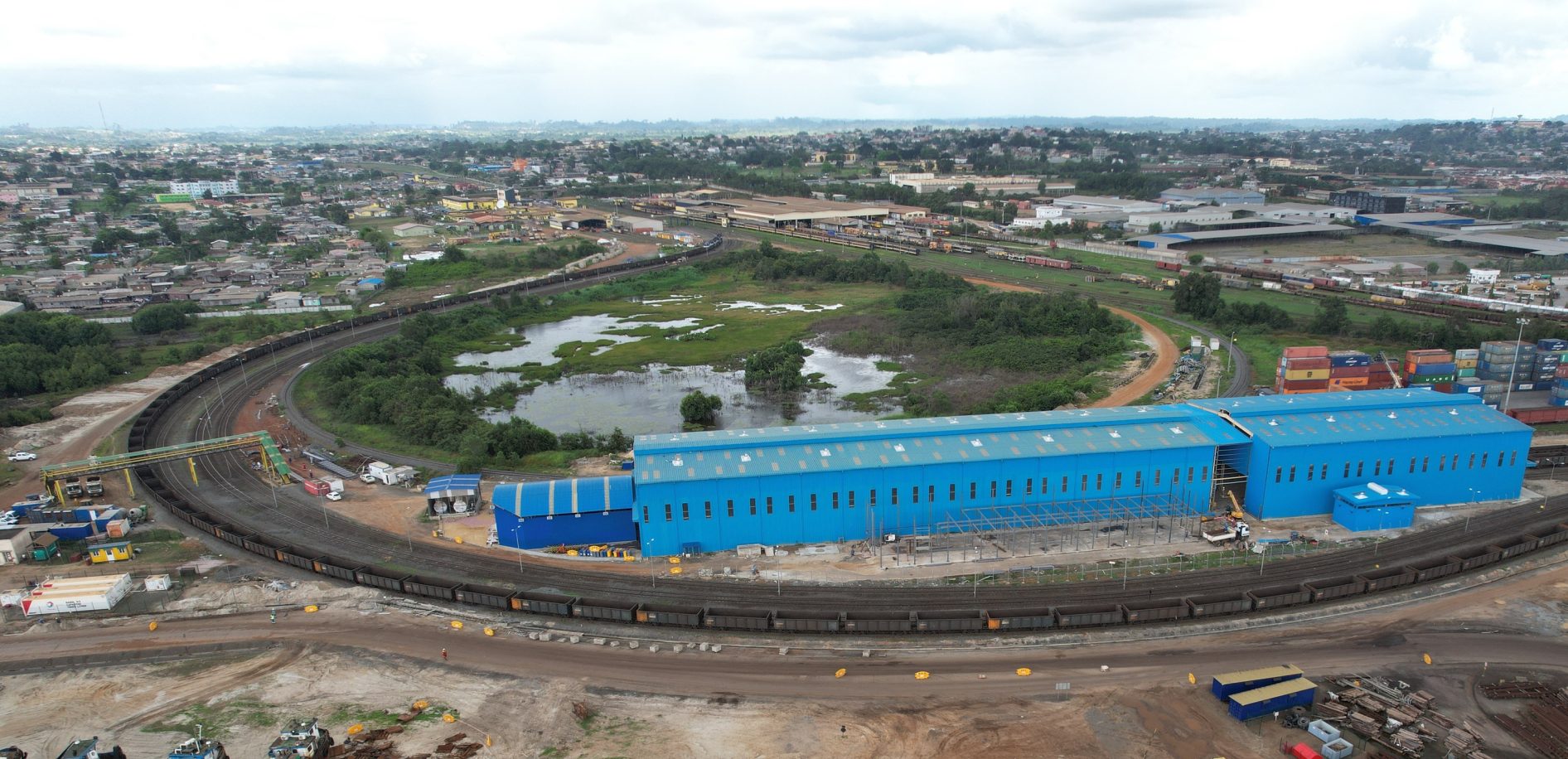
Largely due to IDFC activity, nonconcessional development finance flows jumped from 4 percent of overall U.S. aid spending in 2020 to 36 percent in 2021. Among the major projects funded by the IDFC are investments related to the Lobito Corridor in Southern Africa, which aims to create transportation links allowing Western firms to access critical minerals that are presently monopolized by China.

Ironically, this growing Western emphasis on nonconcessional, commercialized development finance with an emphasis on infrastructure development comes at a time when China has scaled back the BRI (largely due to growing evidence that many recipient countries have exceeded their borrowing capacities) and begun allocating more resources to “soft” aid through the Global Development Initiative.

An obvious drawback of the blended finance model is that it diverts attention and resources from traditional concessional aid and the investment in health, education, and disaster assistance that remain essential.

But even on its own terms, the effectiveness of the Wall Street Consensus remains in doubt. A 2020 report by the Center for Global Development concluded that the overall flow of blended finance had been disappointing and that the great bulk of MDB-mobilized private financing was directed to middle-income rather than low-income countries. A 2019 study by ODI Global reached similar conclusions. In low-income countries, on average, each $1 in public development financing mobilized only $0.37 in private finance.

Blended finance was constrained by the low risk tolerance of both public and private actors in the face of environments hampered by poor governance and few profitable investment opportunities. Since most blended finance flowed to middle-income countries and to “hard” sectors, such as transport and energy, as opposed to social sectors, the report suggested that the increased priority given such investments came at the expense of programs that more directly targeted poverty in low-income countries.

Indeed, the proposed doubling in the funding cap for the IDFC cannot substitute for the human costs that follow from the cuts to U.S. Official Development Assistance, which one study suggests will lead to 14 million deaths over the next five years. Traditional aid may have drawbacks, whether evaluated as a tool of U.S. foreign policy or in terms of development effectiveness, but abandoning it in favor of the privatization of development finance is neither wise nor humane.

This piece originally appeared in The Diplomat.
Leave a comment

Filed under Uncategorized

The Class Warfare Act

What Donald Trump and Congressional Republicans refer to as their “Big, Beautiful Bill” should instead be called the “Class Warfare Act.” Masquerading as a budget and tax measure, this legislation would enact the largest transfer of wealth from the poor to the rich in American history.

Yes, under the bill passed by the House, the bottom 60% of income earners would, on average, avoid the $500 bump in taxes that would have resulted from the expiration of Trump’s 2017 tax cuts. But the top 1% of income earners would, on average, come out $60,000 per person better off. A feast at the top and crumbs for those below. But even the crumbs are illusory.

To partially fund the tax cut extension, along with a host of new tax cuts, Republicans plan to cut almost $300 billion from the food stamp program over the coming decade. Add to this an $800 billion reduction in Medicaid spending, which would result in between 10 and 13 million people losing health insurance.

It gets worse. Most of the tax cuts are not matched by spending cuts, which means that they are funded through increases in the national debt, estimated at roughly $4 trillion. This will add to the existing $36 trillion in Federal debt. A decade ago, the Federal debt was manageable in size and interest rates were low. No longer. The debt has ballooned as a result of pandemic-era spending while interest rates have risen.

As a result, annual interest payments on the debt are approaching $1 trillion annually, exceeding even the defense budget. Reflecting worries about the sustainability of this trend, the credit rating agency Moody’s just downgraded U.S. treasuries for the first time in over a century. That move alone will cause investors to demand a higher risk premium when buying government securities. You can see the potential for a downward financial spiral.

There is more. By slashing green energy credits, the House bill would put the brakes on the massive surge in renewable energy investment of recent years and cede such industries to China while the U.S. remains wedded to the inferior and massively polluting technologies of the fossil fuel era. That means foregoing the millions of good-paying jobs that building out a post-fossil fuel economy would have created.

As with many of the moves that Trump and the Republican Party have taken over the past few months – including poisoning U.S. alliances, isolating the U.S. economy from global supply chains, undercutting U.S. leadership in higher education, diminishing American soft power, and much more – this peculiarly vicious piece of legislation seems surgically aimed at curtailing American power and prosperity.

The biggest irony, however, is that Republicans are engaged in a frontal assault on the very working-class voters who twice put Trump in the Oval Office. Indeed, Trump, his billionaire friends, and their loyal servants in the U.S. Congress are in the process of pulling off the greatest bait-and-switch in American history. Will Trump’s MAGA followers finally figure out that they got hoodwinked?

Leave a comment

Filed under Uncategorized

Trump’s Trade War is Threatening American Financial Power

Donald Trump’s trade war is ostensibly meant to resurrect the United States as a manufacturing powerhouse. There is little chance of that. Half of U.S. imports are intermediate goods. As those prices rise, U.S. manufacturers will face higher input prices while firms in export industries will be hit by retaliatory tariffs abroad. U.S.-produced goods will cost more and be less competitive in global markets.

What Trump’s tariffs are instead accomplishing is to destabilize the one sector where the U.S. remains dominant: finance. Traditionally, the U.S. banking system has stood at the center of the world economy. American stock markets have provided the world’s deepest and most liquid capital pool. Investors sought out U.S. Treasuries as a safe and reliable investment asset. And the dollar has served as the closest thing to a global currency. As a result, the U.S. attracted cheap capital from the rest of the world, which in turn financed U.S. government deficits and high rates of consumer spending.

That is why, during times of political and economic turmoil, investors typically buy dollars and Treasuries as safe havens. Not now. Since Trump mounted his trade war with the world, stock prices have fallen, the dollar has slumped, and investors have demanded higher yields in return for holding U.S. government securities.

These trends amount to a deepening vote of no confidence in the political and economic leadership of Washington, D.C. The Trump Administration appears determined to collapse the liberal international order and return the world economy to the kind of zero-sum mercantilism reminiscent of the 18th century.

This crisis of faith in American leadership arises against the backdrop of pre-existing challenges to U.S. financial pre-eminence. The U.S. has used its financial leverage against adversaries (essentially denying countries such as Russia, Iran, North Korea, and Venezuela access to the global banking system) in such an aggressive fashion as to make even friends wonder whether these weapons might someday be turned against them. Further stress on the dollar-based international financial order arises from China’s efforts to promote internationalization of the renminbi – especially in cross-border trade and lending – and its creation of the Cross-Board Interbank Payment System (CIPS) as a China-centered alternative to the SWIFT messaging system that connects the world’s banks.

A long-time pillar of U.S. financial dominance has been the key role of the Federal Reserve in balancing inflation and unemployment while serving as a lender of last resort during crises. Yet the confidence inspired by the Fed rests upon its relative independence from direct political interference. Only a Fed capable of resisting pressures to juice the economy for the political benefit of presidents will retain credibility among investors as an inflation-fighter. This too is being undermined by Donald Trump’ s criticisms of Fed Chair Jerome Powell and his implied threats to replace Powell before his term is up – a power previously considered beyond a president’s reach, but one that could be endorsed by the Supreme Court in a pending case (Trump vs. Wilcox).

In August 2023, Fitch downgraded the rating attached to American government securities based upon concerns about both growing U.S. debt levels, which have reached 137% of GDP, and the periodic standoffs in the Congress over raising the debt ceiling. Another such game of financial chicken may be in the offing in the coming months if enough Democrats, seeking leverage over budgetary policy, join with fiscally conservative Republicans to delay a raise in the debt ceiling past a point of no return.

Vulnerabilities also arise from the heavy dependence of the U.S. on foreign investors, including sovereign states, to finance government debt. China alone holds $750 billion in U.S. Treasuries. The Chinese have been gradually whittling down this total, but could accelerate the process as a means to pressure the U.S. to relent on trade restrictions aimed at Chinese goods. The same is true of other governments that hold large quantities of American debt.

Even if no one of these stressors would be alone capable of inciting financial instability, the combination has created conditions ripe for disruption. Enter Donald Trump’s trade war, which has deepened worries about the recklessness and volatility of U.S. policy. Friends and adversaries alike are considering ways to “derisk” by lessening their exposure to U.S. trade and finance. This could mean a flight from the dollar and an unwillingness of investors to continue financing the U.S. Federal deficits except at an interest premium.

The Economist underscores the shaky fundamentals that underlie American vulnerability: “In the past 12 months, America has disbursed 7% of GDP more than it raised in revenue, and spent more on interest payments than on national defence. Over the next year officials must roll over debt worth nearly $9trn (30% of GDP).”

Vice President J.D. Vance has argued in favor of a weaker dollar while one top Trump economic adviser – Stephen Miran – has suggested taxing foreign Treasury holdings, a move that would likely prompt a bond sell-off

Foreigners hold $32 trillion in U.S. stocks and bonds. A sell-off of bonds and a retreat from the dollar could spike inflation, as a weak dollar pushes up import prices on top of tariffs, and swell the interest payments that the U.S. must pay on its massive debt obligations. The stock market would likely plunge, leading to a vicious downward spiral as investors liquidate assets to meet margin calls, thus further undermining asset prices and so on.

While the dollar remains dominant for now, the proportion of dollars in foreign reserves has gradually fallen from 73% to 58%. A more precipitous decline is not out of the question.

In the long run, a weaker dollar might make U.S. manufacturing for both the domestic and export markets more competitive, but this would be blunted if an ongoing trade war meant higher trade barriers overseas against American goods.

Any advantages from a weaker dollar would also be offset by the blows that Trump’s policies are inflicting upon American service industries in which, unlike manufacturing, the U.S. holds a surplus with the rest of the world. A weakening of the U.S. banking sector would undermine revenue from U.S. financial services abroad. Tourist revenue from overseas visitors has already plummeted, due to the trade war, rising political tensions, slower visa processing, and harsh immigration policies. The revenue that American colleges and universities (and surrounding communities) gain from the enrollment of international students is endangered by high-profile deportations and the unfriendly climate facing visitors from around the world. The administration’s attack on the independence of institutions of higher education also threatens to tarnish the brand of the sector, resulting in diminished flows of international students and high-quality scholars.

The burdens of American leadership in the world have been outweighed by the benefits of global interdependence and financial stability. But leaders can lead only when other are willing to follow. That requires a minimum of trust in the wisdom and reliability of the leader. As the Trump Administration trashes the international and domestic norms and institutions that have underpinned the liberal international order, other states and private actors will seek to derisk their relationship to the U.S., leading to growing American isolation. The short-run gains that might be had from bullying U.S. trade partners into one-sided “deals” pale in comparison with the long-run costs of destroying the bonds of trust that are the true source of American and global prosperity.

Leave a comment

Filed under Uncategorized