A few brief takes on the U.S. invasion of Venezuela.
Remember when Trump’s beef with Maduro was all about fentanyl, despite experts assuring us that Venezuela does not ship fentanyl to the US? Now the revised indictment does not even mention fentanyl.
By giving the Nobel Peace Prize to Machado, the Nobel Committee effectively gave cover to Trump’s invasion.
Trump’s complaint that Maduro stole an election is undercut by the fact that he tried to do the same thing. Also, Trump is not even pretending that the US aim is to install the actual winner of the last election.
A big loser will be Cuba, whose oil supply depends upon Venezuela through a barter arrangement. For Rubio, the ability to squeeze Cuba’s energy supply may be a primary motivation. Don’t be surprised if the US goes after the Cuban government down the road.
Trump had a Freudian moment in his press conference when he blurted out “it was an attack on sovereignty.”
The press is using the White House’s language in calling Maduro’s capture an “arrest” rather than a kidnapping. The latter is especially apt to describe the detainment of Maduro’s wife and son. Pam Bondi had to scramble to add the wife to the indictment at the last minute.
Trump claims that the US occupation will be costless because we can pay for it with Venezuela’s oil. The last time we heard that was after the invasion of Iraq.
The explanation of what comes next is all of the place – from Rubio’s earlier assurance that we were done with Maduro’s capture, to Trump’s claim that we would run the country, to his later argument that we would just take the oil.
This is about as obvious an example of blatant 19th century imperialism as one can imagine. Trump made it clear as day by invoking the Monroe Doctrine.
Beyond the resource grab, Trump also seeks to assemble a bloc of right-wing, MAGA style government across the hemisphere, including Argentina, Chile, Honduras, Venezuela, and El Salvador. Meanwhile, he is seeking to undermine left wing governments, including those in Brazil, Columbia, and Cuba.
Let’s review some of the ways that the Trump Administration is eroding America’s global influence, reputation, and competitiveness.
Soft Power
A 2024 Pew Research survey found that America’s average approval rating across residents of 34 countries was 54%, as opposed 31% who disapproved. A year later, the U.S. approval rating had dropped modestly to 49%, but the disapproval rating jumped to 49% among 24 countries surveyed. Moreover, only 34% of respondents expressed confidence in Donald Trump to “do the right thing” in world affairs, as opposed to 62% who lacked confidence (compared with 49% who lacked confidence in Joe Biden in 2024).
Foreign Aid
The Trump Administration has dismantled the U.S. Agency for International Development, fired most of its employees, and transferred a handful of remaining programs to the Department of State. A research report published in the Lancet, a British medical journal, projected that the Trump Administration’s 85% cut to U.S. humanitarian assistance abroad would result in an estimated 14 million premature and preventable deaths in low-income countries. The abandonment of foreign aid as a tool of American foreign policy will result in a loss of influence abroad and fuel political instability in poor countries that previously depended heavily upon American assistance.
Diplomacy
In July, 2025, the Trump Administration announced the firing of over 1300 civil servants and diplomatic staff in the State Department. Trump has proposed closing ten U.S. embassies and seventeen consulates abroad. The Trump Administration has sought to eliminate funding for the National Endowment for Democracy and the U.S. Institute for Peace. This unilateral diplomatic disarmament will hinder our visibility into potential threats abroad, forego fruitful collaborations, and lessen our diplomatic capacity to resolve conflicts.
Public Diplomacy
The Trump Administration has sought to defund the U.S. Agency for Global Media, which is the host agency for Radio Free Europe/Radio Liberty, Radio Marti, Voice of America, Radio Free Asia, and the Middle East Broadcasting Network. These agencies provide access to accurate news and information for people living in countries lacking a free press. They also support American soft power.
Science and Innovation
America’s economic competitiveness, especially in relation to China, depends upon robust support for science and innovation. Yet the Trump Administration has carried out dramatic cuts to research funding by the National Science Foundation and the National Institutes of Health. Overall, basic science funding has been cut by one third and research universities are being pummeled in a multi-front assault by the Trump Administration, that includes higher taxes on endowments, lower overhead reimbursement rates on Federal grants, and caps on Federal loans for graduate study. Innovation is also connected to America’s traditional ability to attract the best and the brightest from around the world. Indeed, half of billion dollar startups in the U.S. are founded by immigrants. Unfortunately, international student flows to the US are being hampered an anti-immigrant climate and a threat to deny visas to applicants who may have posted critical remarks about the U.S. or the Trump Administration on social media.
Multilateral Organizations
Shortly after taking office, the Trump Administration announced U.S. withdrawal from the Paris Climate Accord, the United Nations Human Rights Council, the United Nations Relief and Works Agency (UNRWA), and the World Health Organization. The Trump Administration has zeroed out funding for U.N. peacekeeping. U.S. funding previously accounted for 27% of the U.N.’s peacekeeping budget. Overall, Trump’s FY 2026 budget request cuts U.N. funding by 87%.
Trade and Tariffs
The Trump Administration’s global tariff war is not only disrupting global supply chains and raising costs for American consumers, but also prompting our trade partners to seek out closer trade ties among themselves and to lessen dependence upon the United States. While many continue to explore trade deals with the U.S., they do so aware that any agreement could be quickly overturned by Donald Trump and so is worth little more than the paper on which it is written.
Alliances
While the administration deserves some credit for pushing NATO allies to spend more on defense, Russia’s invasion of Ukraine played a bigger role in prompting a rethinking of European defense needs. Though Trump’s threats to pull the U.S. out of NATO seem to have receded for now, European confidence in America’s commitment to the continent’s security remains at a low ebb. As a result, Germany, Britain, and France have begun strengthening formal and informal ties as a hedge against American isolationism.
Intelligence
Trump appointees have carried out ideological purges of top officials in various intelligence agencies. In early May, the Trump administration announced plans to cut thousands of positions in the CIA, NSA, and other intelligence organizations.
Trump has repeatedly cast public aspersions on the findings of the intelligence community. During his first term, Trump publicly declared his faith in Vladimir Putin’s denials of Russian interference in the 2016 election in direct contradiction of his own intelligence community’s assessment. In March, 2025, Director of National Intelligence Tulsi Gabbard testified before Congress that the intelligence community had concluded that Iran had not made a decision to assemble a nuclear weapon and had not reconstituted weaponization efforts abandoned in 2003. Later, when asked about Gabbard’s statements, Trump declared: “I don’t care what she said” and claimed that Iran was close to possessing a bomb. After the bombing of Iranian nuclear facilities, Trump denounced a preliminary assessment by the Defense Intelligence Agency that the attack left Iraq in a position to reconstitute its nuclear enrichment program within months. Trump called the report “flat out wrong” and contended that Iran’s nuclear program had been “obliterated.”
The politicization of intelligence and the loss of a great deal of institutional memory and knowledge will undercut the reputation of the U.S. intelligence community and weaken the willingness of allied countries to share information with the U.S. or to rely upon intelligence that the U.S. shares with them.
Overall, the foundations of American leadership built over the past century are quickly being eroded. “America First” threatens to make “America Last.”
Rural people are among Donald Trump’s most loyal supporters. So why is he pursuing policies that will cause rural communities irreparable harm?
Farmers are getting hammered the hardest. Under current plans, the Department of Agriculture will lose over one-third of its employees. These include major reductions in agricultural research and marketing services. Cuts to meteorological services and programs that track the impacts of climate change will reduce the information available to farmers to plan for adverse weather events.
Reductions in food aid abroad, SNAP (food stamps) at home, and school nutrition programs all reduce demand for farm goods. Not to mention that low-income rural communities themselves rely heavily on SNAP funding. Trump’s tariff wars risk retaliation by other countries against U.S. agricultural exports. Plus, higher tariffs will raise the cost to farmers of imported agricultural inputs, as well as many consumer goods.
Iowa farmers profit from the placement of wind turbines on their land, yet Trump’s elimination of Federal incentives to further expand wind energy will choke off this income source. And, like city dwellers, rural people will pay higher electricity bills as many low-cost wind and solar projects stall. Since 80% of the green energy projects planned under the previous administration’s Inflation Reduction Act funding were to be sited in Red States, many rural areas will lose access to the good-paying manufacturing jobs that would have been created had funding not been cut in Trump’s recent budget bill.
Cuts to the Corporation for Public Broadcasting will lead to the closure of many public television and radio stations in rural news deserts, where there are few other outlets for covering local news. Similarly, the loss of funding for Planned Parenthood will reduce the availability of low-cost reproductive and women’s health services.
Rural communities also disproportionately rely upon Medicaid, so the $1 trillion cut to that program will hit these areas hard. Beyond the harm caused when individuals lose Medicaid coverage, the Medicaid cutbacks will force the closure of many rural hospitals. Thus, even many people who have private insurance or Medicare will now have to travel great distances to obtain medical services.
In short, the coming years will bring severe economic pain and social distress to communities that are already reeling. These disruptions will be directly attributable to Donald Trump’s assault on rural America. So what will be the political fallout?
If rural voters were swayed by pocketbook issues, then Republicans would pay a heavy political price for the policies and impacts reviewed above. Yet voters have become more and more deeply attached to tribal identities rooted in cultural divides. Rural resentment toward urban America, which is equated with the Democratic Party, and its values, drives political allegiances. Beyond this, many have developed intense loyalty toward Donald Trump, not because he has delivered for them in material terms, but because he positions himself as their defender against groups and forces that many people find threatening. Moreover, many voters, whether urban or rural, have a difficult time connecting adverse developments in their lives and communities to the political sources that are responsible for those problems.
Despite this reality, the dire consequences of Trump’s policies for rural America need only trim his support among rural voters by modest amounts to make a difference to electoral outcomes in swing states and districts. For Democrats, the challenge is to develop a strategy that clearly assigns responsibility for rural woes to Republican policies and offers positive alternatives for rebuilding rural economies. Democrats would also be wise to mute cultural issues and while building a big tent that can attract and welcome people to the party who do not agree with the Democratic mainstream on every issue.
Heady from Joe Biden’s triumph, I penned a piece for the Des Moines Register on November 22, 2020, arguing that “the Resistance worked.” In the face of Trump’s norm-breaking presidency, judges defended the rule of law, the media fearlessly reported on Trump’s transgressions, Congressional Democrats blocked some of his most damaging policies, public servants did their jobs, whistleblowers exposed wrongdoing, fact-checkers corrected lies, protesters took to the streets, donors funded Democratic campaigns, and voters removed Donald Trump from office after four years of turmoil and trouble. America’s democratic institutions survived one of the most serious tests of the past century
Alas, less than two months later, Donald Trump directed both an insurrection and a false elector scheme designed to deny Biden the White House. While these shocking moves failed, so did subsequent efforts to impeach Trump or to hold him accountable in court. Instead, Trump is back, and so too are the threats to our democracy.
This time, the dangers are far worse. Trump’s lesson from his first term’s failures is that no independent centers of power must go unchallenged.
Trump is attacking universities, the media, elite law firms, and the Federal Reserve. Republicans are challenging the tax status of non-profits, withdrawing Federal grants, launching partisan investigations, robbing government agencies of congressionally mandated independence, weakening civil service protections, kneecapping media organizations, and mobilizing the anger of MAGA nation against perceived enemies.
In authoritarian fashion, Trump seeks to intimidate opponents, drain their funds, undermine their legal status, discredit critics, and dismantle the eco-system that supports the Democratic Party and the broader liberal and progressive movements.
Some steps are explicitly partisan. Republicans have forced the Democratic fundraising platform ActBlue to spend precious time and money defending itself against dubious Congressional and Justice Department investigations. Even if no legal action is taken, a wounded ActBlue could hamper the ability of Democrats to raise competitive war chests ahead of the 2026 midterm elections as the whiff of scandal scares off donors.
Trump has long sought to delegitimize the mainstream media, which he perceives to have a liberal bias. His efforts to limit the Associated Press’s White House access and to intimidate the corporate owners of CBS’s 60 Minutes aim to undermine media independence and make reporters and editors think twice about critical coverage.
Likewise, Trump is using the withholding of Federal grants, threats to the non-profit tax status of universities, Title IX investigations, impediments to the enrollment of international students, and legal attacks on accreditation bodies to undermine academic freedom and remold higher education in a MAGA image.
Trump is blackmailing elite law firms that represent his perceived enemies: hire conservative lawyers, drop liberal clients, and provide pro bono legal representation for Trump-approved groups, or else lose access to Federal agencies and courts. Trump has directed the Justice Department to bring legal sanctions against lawyers who sue him or his government. This misuse of state power threatens to dry up the pool of high-quality attorneys available to pursue the more than 150 (and counting) lawsuits brought against Trump’s illegal executive orders.
While lower courts have upheld challenges to many of Trump’s Executive Orders, it remains to be seen how far the Supreme Court will go to rein in our rogue president. The Justices have shown a reluctance to draw clear red lines in response to Trump’s lawless behavior, perhaps fearful that their orders will be ignored. The reality is that the judicial branch has limited tools for compelling a lawbreaking president to comply with its edicts, especially since the Supreme Court ruled that presidents have criminal immunity for official acts.
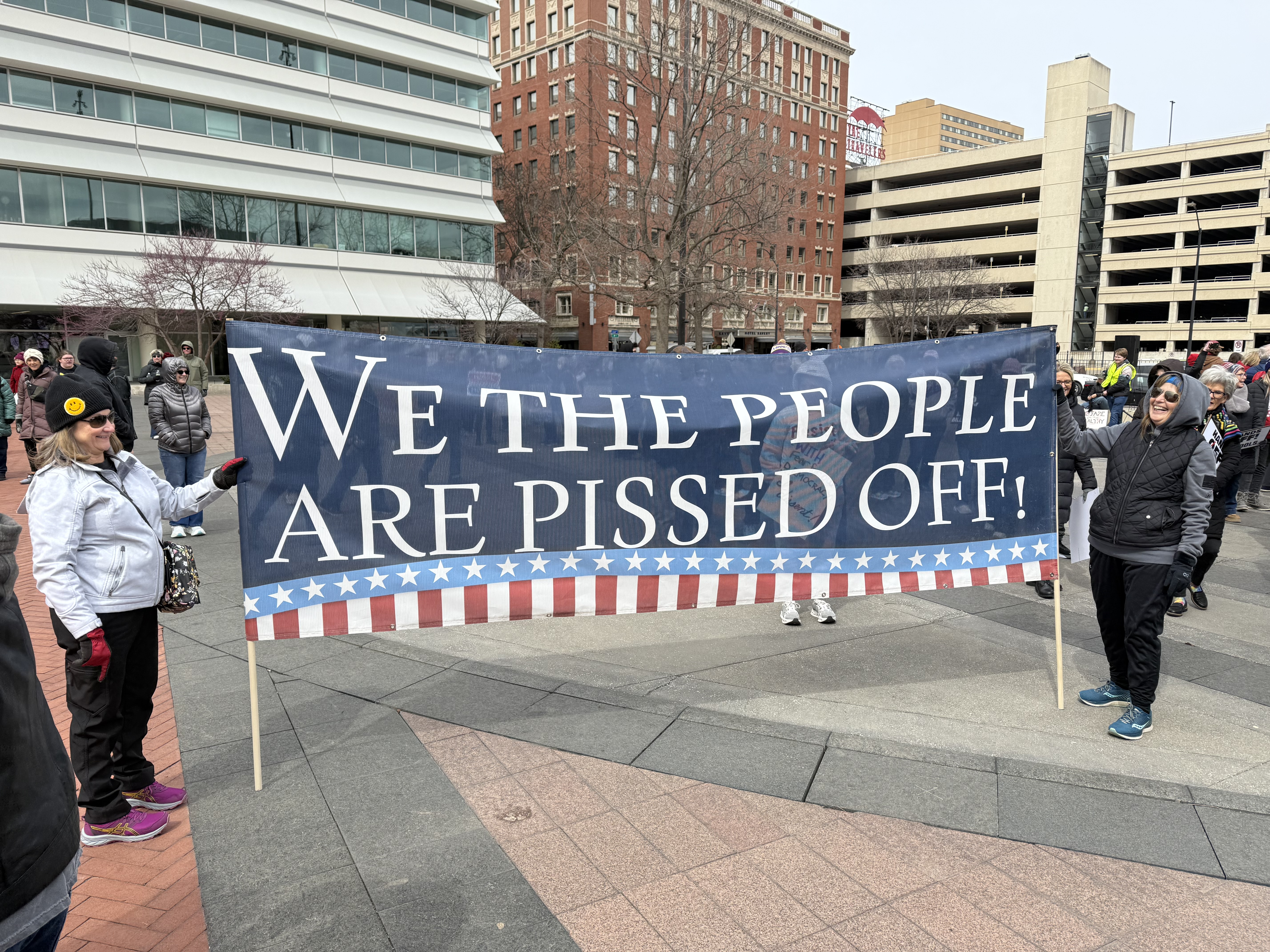
The real brake on an authoritarian president is political. The good news is that effective opposition to Trump 2.0 is emerging. Massive protests have been mounted. The stock and bond markets have punished Trump’s wacky tariff policies. Firms that rely upon imports are challenging the legally of Trump’s tariffs in court. Following the lead of Harvard University, which is suing the administration, higher education is mounting a defense of academic freedom. Four hundred college and university presidents issued a public letter denouncing government intrusion into higher education. The faculty senates at Big Ten universities have begun exploring mutual defense pacts. While some elite law firms quickly caved to Trump’s pressure tactics, others are taking him to court. Democrats and progressive non-profits have attracted a flood of donations. Small cracks have even begun to appear within the Republican Party and among Trump’s advisers.
Most importantly, the public is quickly souring on Trumpian chaos and cruelty. Trump’s approval rating is falling fast. Majoritiesdisapprove of Trump’s handling of the economy, tariffs, inflation, immigration, and the Ukraine war. Voters are rejecting Trump’s threats to democracy. In a New York Times/Siena poll, 54% of respondents felt Trump was exceeding the power of the presidency. Overwhelming majorities insist that the president obey Supreme Court decisions.
Two-thirds described his first months as chaotic and 59% as scary. Only 44% expressed confidence that Trump “understands the problems facing people like you.”
Neither is Trump impervious to resistance. He pulled back on the most extreme tariffs and the threat to remove Federal Reserve Chair Jerome Powell after the stock and bond markets tanked. Trump rescinded orders to terminate international students in the face of skeptical judges. And he appears to be distancing himself from Elon Musk. Trump has a record of buckling when the political heat becomes too intense.
Trump’s initial whirlwind of pressure on major institutions has been destructive on a historic scale. Opposition has taken time to mobilize and has yet to fully recover from Trump’s early blows. But it is rapidly building now. As is clear from the Signal-gate scandal and Trump’s erratic tariff policies, the incompetence and incoherence of Trumpworld undercuts the president’s ability to sustain his MAGA revolution.
The Resistance worked once. Together, we can ensure that it works again. We can’t afford to fail.
The past century and a half brought three waves of major political reform in the United States: the Progressive Era, the New Deal, and the Civil Rights revolution. Each period of reform led to a progressively fairer, more prosperous, and more democratic society.
Yet what took more than a century to build is being deconstructed in a matter of months. The destruction has been deep and swift with more to come. If not curtailed by the courts and other forms of resistance, the damage will be difficult to reverse.
It is worth considering some history in order to appreciate what is at stake. Politics in late 19th century America was dominated by wealthy oligarchs who routinely bought politicians. The Federal government was too feeble to serve as a counterweight and, in any case, its workforce was composed of political loyalists who swept in and out with each change of administration.
The Progressive Era reforms of the early 20th century sought to replace corrupt, machine politics with a more capable and responsive system of governance. Chief among these reforms was the creation of the modern civil service – an apolitical, permanent bureaucracy built upon merit and expertise. New independent agencies, such as the Interstate Commerce Commission, the Federal Reserve, the Food and Drug Administration, and the Federal Trade Commission, were empowered by Congress to regulate business in the interest of workers and consumers. The powers of the state expanded to manage the complexities of a rapidly growing and modernizing economy.
The growth of an administrative state was balanced by greater popular say over politicians and policies. Senators were chosen through direct election for the first time, women gained the right to vote, and legislation allowing referendum, initiatives and recall elections was passed.
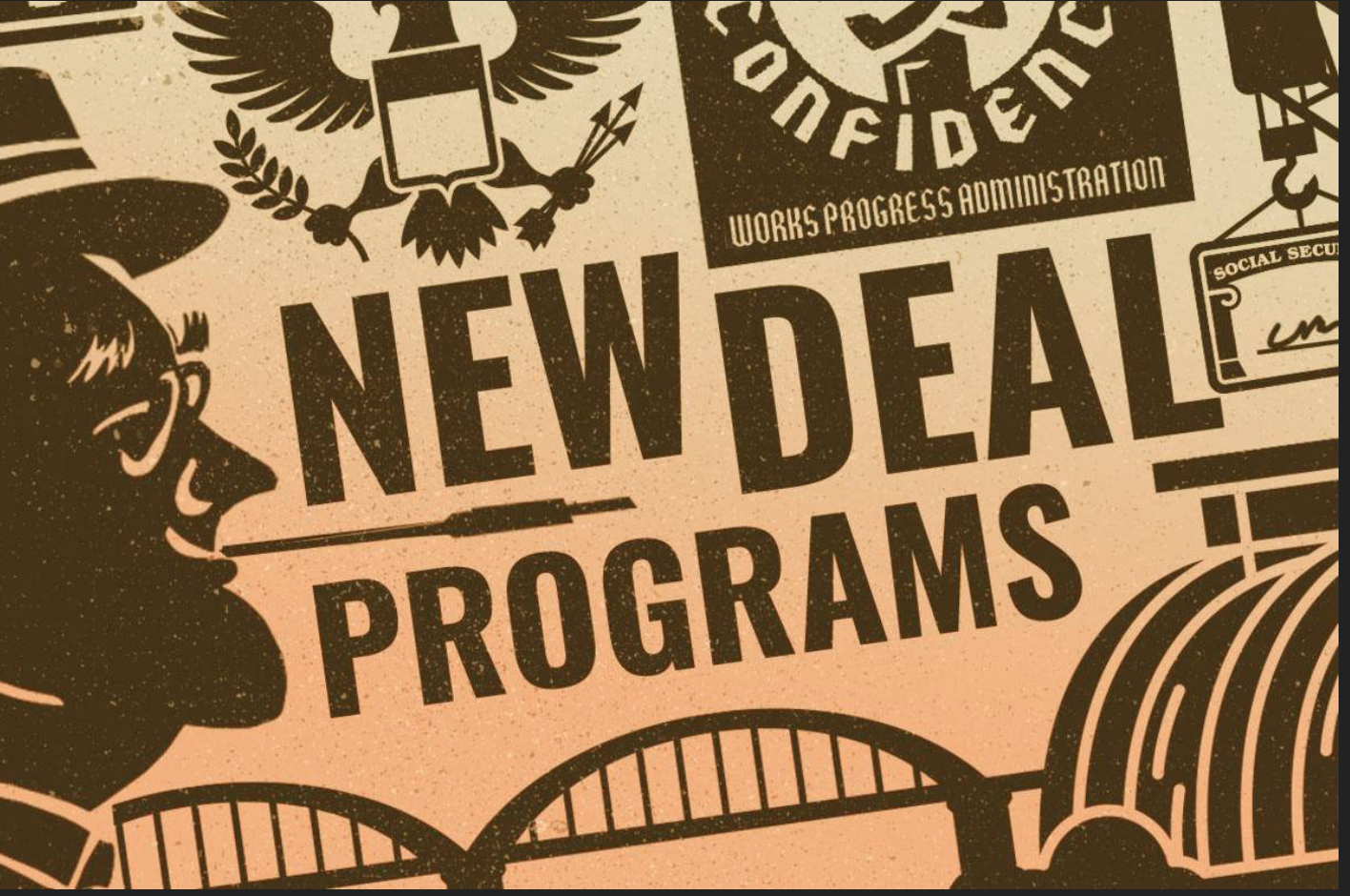
In the 1930s, Franklin Roosevelt’s New Deal extended the state’s role to the provision of economic security for all citizens even in the face of a howling economic downturn. Programs that we now take for granted – Social Security, unemployment insurance, collective bargaining, and banking regulation – were created during this period. President Lyndon Johnson built upon these protections through his Great Society. Subsequent presidents have championed programs that further strengthened the nation’s social safety net.
The third major set of political reforms addressed the stark racial inequalities that stood as the foremost stain on the American experiment. A mass movement for racial justice and equality led to major pieces of legislation aimed at ensuring equal voting rights, equal opportunities for housing, education, and employment, and the end of legalized racial segregation.
None of these reforms solved all problems. Some Americans perceive the state as too big, or costly, or intrusive. Still, America is a far better country because of the reforms so many struggled and sacrificed to bring about.
Yet these accomplishments are now at risk across the board. During his short time in office, Donald Trump has attacked each pillar of progress.
Under the Constitutionally dubious Unitary Executive doctrine, Trump seeks direct control over regulatory agencies that enjoy independent powers bestowed by the Congress. Already, he has fired agency heads without cause in direct contradiction of Congressional mandates. Congress endowed these agencies with some degree of autonomy to ensure that decisions requiring deep expertise – such as drug approvals or financial and environmental regulations – would not be subject to partisan battles or presidential whims. To remove this insulation, as Trump seeks to do, would no doubt weaken the ability of these agencies to ensure the health, safety, and financial security of the American people. The matter will come to a head within the next few months as a case challenging Trump’s removal of agency heads reaches the Supreme Court. It is expected that the Court’s conservative majority will side with the president, though the Court may seek a way to preserve the autonomy of the Federal Reserve given that Fed independence is crucial to investor confidence in the U.S. financial system.
In another attack on Progressive Era reforms, Trump has fired hundreds of thousands of civil servants and weakened civil service protections from many who remain in their jobs. He seeks to eliminate key agencies such as the Department of Education, the Federal Emergency Management Agency, and the Consumer Financial Protection Agency. Trump would undermine the capacity of our government to protect us during disasters, ensure public health, educate our children, keep our air and water clean, and prevent profit-driven corporations from endangering our health and safety.
The president has also directly challenged the 1974 Impoundment Act by refusing to spend money appropriated by the Congress. The legality of this too will likely be decided by the Supreme Court.
The legacies of the New Deal are also at risk. Elon Musk’s DOGE has cut thousands of employees who help the disabled and elderly navigate the Social Security system. Since Trump took office, cuts have been made to food stamps and school nutrition programs. The recently passed Congressional Republican budget blueprint will require devastating cuts to Medicaid funding, upon which roughly 80 million disabled and low-income people rely. Since this would be coupled with the extension and addition of massive tax cuts for the wealthy, the combination would represent the largest regressive shift of income from the poor to the rich in American history. Republicans seek to shred the nation’s social safety net.
Nor are the gains of the civil rights revolution safe. The Republican campaign against Diversity, Equity, and Inclusion (DEI) programs seeks to reverse decades of progress in building a more racially inclusive society. The contributions of African-Americans and other minorities to American history and culture are being wiped from Federal web sites, museums, and schools. Immigrant communities live in fear of ICE. The Supreme Court will soon rule on the constitutionality of Trump’s efforts to deny birthright citizenship to certain groups of people born in the U.S. Transgender people are being driven from public life. An executive order pushing local election officials to require proof of citizenship puts another hurdle in the way of voting rights while disproportionately impact the poor. Trump issued another executive order revoking Lyndon Johnson’s executive order requiring equal opportunity for minorities and women in Federal contracting, recruiting and training. The White House also issued a memo overturning a requirement that contractors do not operate segregated facilities.
Trump wants to transform American into a 21st century version of the Gilded Age, where oligarchs reign, patronage politics permeates the state, expertise is banished, social programs are starved, and citizens enjoy a much constrained set of rights.
This vision should be enough to mobilize Americans to rally to protect the key legacies of prior eras of social and political reform. Let’s hope the people’s voice will prove stronger than the autocratic impulses of Donald Trump.
Over recent decades, the Democratic and Republican parties have traded core constituencies. Working class voters, once securely in the Democratic fold, have gravitated to the Republican Party, while highly educated professionals, once reliably Republican, have shifted to the Democratic Party.
Yet the policies pursued by Republican office-holders clearly serve business elites rather than working people. This would seem to offer the Democratic Party an opportunity to regain working class support by championing pro-worker policies.
These might, for instance, include a higher minimum wage, the appointment of pro-union members of the National Labor Relations Board, and a ban on no-compete clauses in labor contracts. Or increased access to affordable health care and a reduction in the prices of widely used drugs. Expanded child tax credits and support for pre-K education would also benefit workers.
A pro-worker strategy would commit major resources to rebuilding infrastructure while investing in green energy and key high tech industries, such as semi-conductors, thus creating blue collar, predominately male jobs in Red states. The Democrats could support higher taxes on the wealthy and corporations while beefing up IRS enforcement against tax dodges and cracking down on offshore tax havens. Consumers would benefit from tougher enforcement of anti-trust and consumer protection laws. Taken together, these policies would offer a stark contrast with the anti-worker, pro-billionaire policies pursued during the first Trump Administration.
But here is the rub. Democrats have pursued all of these policies over the past four years, yet the Democratic share of the working class vote fell in 2024, just as it had in 2020 and 2016, while white working class identification with the Republican Party has been growing for decades. Most alarmingly, Democrats lost ground this time around among black and brown working class voters while remaining deeply unpopular among white workers.
This reality places Bernie Sander’s claim that the Democrats abandoned the working class in ironic perspective. The reality is that Joe Biden was far more pro-worker than either Barack Obama or Bill Clinton. Yet none of it swayed working class voters.
The problem was in part a failure of communication. While Biden touted his pro-worker policies at every opportunity, Democrats failed to embed specific policies or outcomes in a broader narrative about the rise of inequality, the hollowing out of American manufacturing, and the financialization of the economy. When 70% of Americans feel the country is headed in the wrong direction, it behooves those in power to offer a diagnosis of what is wrong, who is to blame, and how to fix matters. The Democrats have touted fixes without laying the groundwork by explaining how things got so bad.
To do so would have required a critique of the neoliberal order that Democrats, as much as Republicans, helped to build. Without such a narrative, Democrats were unable to explain the downward mobility experienced by many workers. Nor could they pin responsibility. Instead, they offered technocratic policy prescriptions without context.
Biden and mainstream Democrats embraced some of the policies offered by Bernie Sanders without the underlying anti-corporate rationale that Sanders has so insistently articulated. The reasons are obvious. While Democrats seek to win back working class voters, they also depend heavily upon corporate support. Indeed, many Democratic-leaning urban professionals are employed within those corporate sectors most supportive of the Democratic Party. Overly blunt efforts to rally working class support would threaten to erode the loyalty of the party’s professional and corporate constituencies.
In the absence of a clear Democratic message, Trump offered working class voters a coherent – if badly flawed – narrative attributing their problems to immigrants, foreign imports, globalists, bureaucrats, and a cultural elite. In doing so, he not only gave working class voters targets to blame for their economic grievances, he also exploited social and cultural divides over race, gender, and identity.
The Democratic Party has taken Trump’s bait by embracing a set of cultural and social litmus tests that drive away many working class voters. It is not just that the Democratic brand is now associated with a set of values and beliefs contrary to the sentiments of tradition-minded rural and working class people, but it is also that rural whites – especially males – feel targeted as scapegoats for social ills – such as racial or gender inequality – that they neither created nor have the power to eradicate. Instead, many rural whites feel unfairly shamed and looked down upon while their own struggles with opioid addition or the depopulation of rural communities are ignored by urban politicians.
Pro-worker policies are necessary but not sufficient for winning back working class voters. Democrats need to embed such policies in a clear, compelling narrative that helps workers make sense of the forces buffeting their lives. Democrats should also return to the notion of a big-tent party, one that tolerates ideological diversity while taking seriously the material and cultural needs of the rural working class.
Democrats should also frankly acknowledge that policies aimed at pleasing core urban professional supporters often have pernicious impacts on working class people. Broad-based student debt relief helps college-educated voters but does nothing for those who have never stepped foot on a college campus. When residents of well-off urban neighborhoods successful oppose the construction of high-density housing, this worsens the housing crisis and push up home prices. Low-wage immigrant labor keeps prices low on services used by upper-middle class consumers but poses competition for unskilled native born workers. The reality is that the professed commitments to social justice among what author Musa Al-Gharbi calls “symbolic capitalists” are often belied by the latter’s pursuit of narrow material gains.
The process of rebuilding a working class-based Democratic Party will be long and difficult. In many Red states, Democrats have been virtually vanquished. The chaos of the next four years and the damage that the Trump Administration’s proposed policies will do to rural and working class people will provide an opening, but Democrats must rethink their own messaging and strategy in order to take advantage of the opportunities that will arise. This will require a more coherent narrative about the gross inequalities that afflict the American economy, greater openness to cultural and ideological diversity within the party, and frank acknowledgement of conflicting class interests between the current Democratic base and the working class support that the party needs to attract in order to win.
Led by billionaire Donald Trump and former venture capitalist J.D. Vance, the Republican Party now proclaims itself the party of working-class people. Vance, referring to himself as a “working-class boy,” hit this theme hard in his speech at the Republican Convention. Vance lauded Trump as “a leader who’s not in the pocket of big business, but answers to the working man, union and non-union alike. A leader who won’t sell out to multinational corporations.” He went on to lament lost jobs, stagnant wages, and closed factories, which he attributed to free trade, corporate outsourcing, and illegal immigration.
The convention featured an address by Teamster President Sean O’Brien, once an unthinkable choice for Republicans. Following the convention, Republican Senator Josh Hawley published a piece in Compact magazine titled “The Promise of Pro-Labor Conservatism.”
How seriously should we take this turnabout from a party once looked upon as home to the country-club set? In short, the answer is not much. This is evident by looking at Trump’s record during his stint as president as well as his promises for a second term.
Referring to his cabinet, Trump declared in 2016: “I want people who have made a fortune.” He delivered, as one lineup of cabinet officials had a net worth of $3.2 billion. Trump’s affinity for the rich was also evident from his 2017 tax cuts, which will save the top 1% of earners an average of more than $60,000 in 2025, compared with average savings of only $500 for the bottom 60% of earners. Trump has suggested that he would double down on this generosity toward the rich by cutting the corporate tax rate from 21% to 15% in a second term.
On the other hand, Trump’s National Labor Relations Board made rulings that made it harder for unions to organize and curtailed union bargaining rights. In 2017, Trump also tried, but failed, to repeal the Affordable Care Act, which provides health benefits to 40 million Americans.
A Trump-appointed judge recently blocked a Biden Administration rule that would have outlawed non-compete clauses in employment contracts. Meanwhile, Trump-appointed justices on the Supreme Court have weakened the power of Federal agencies to enforce workplace health and safety regulations.
Looking forward, Project 2025, a blueprint for Trump’s next term compiled by the Heritage Foundation and other groups closely associated with Trump, proposes to revoke civil service protections from vast swathes of the Federal workforce, allowing workers to be fired at will and replaced by political loyalists. This greatly expands upon a similar executive order issued near the end of Trump’s first term but reversed by Joe Biden.
Trump has promised a 10% across-the-board tariff increase on imported goods and a 60% increase on Chinese goods. Since importers would simply pass on the increased costs to consumers, economists estimate that increased tariffs would cost Americans $1700 per year, on average.
Donald Trump’s marquee issue has been immigration, which Trump has proposed to curtail. Trump claims that immigrants – especially illegal immigrants – steal jobs from American workers and lower wages for unskilled work. J. Daniel Kim of the University of Pennsylvania’s Wharton School has summarized the results of his recent co-authored study: “What we find … is that immigrants act more as job creators than they act as job takers in the United States.” Immigrants are more entrepreneurial than native-born Americans. Less-skilled immigrants often take jobs that few native-born Americans want. Amidst a period of high levels of both legal and illegal immigration, the unemployment rate has hit record lows and wages have grown faster than prices, with the biggest gains at the bottom of the pay scale. By expanding the workforce, immigration stimulates economic growth, increasing the pie for everyone.
Trump plans to deport 10 million undocumented residents in a second term, 79% of whom have been in the United States for at least 12 years (and 44% for more than 20 years). Aside from the unthinkable human toll from mass deportation, the economic effects would be disastrous. The construction industry would lose 1.5 million workers, the hospitality industry 1.1 million workers, and the agricultural sector 283,000 workers. Overall, Trump’s plan would eliminate 4.5% of the U.S. workforce, which could produce a 9% drop in national income while also costing one million jobs among native born Americans.
Mass deportation would force up prices on many goods. Trump’s immigration policies combined with tax cuts for the wealthy and higher tariffs would create tremendous inflationary pressures.
None of this benefits American workers. Whatever Trump and Vance’s new Republican Party may be, it is not pro-labor.


 The Internationalist