Reversing Three Eras of Political Reform

The past century and a half brought three waves of major political reform in the United States: the Progressive Era, the New Deal, and the Civil Rights revolution. Each period of reform led to a progressively fairer, more prosperous, and more democratic society.

Yet what took more than a century to build is being deconstructed in a matter of months. The destruction has been deep and swift with more to come. If not curtailed by the courts and other forms of resistance, the damage will be difficult to reverse.

It is worth considering some history in order to appreciate what is at stake. Politics in late 19th century America was dominated by wealthy oligarchs who routinely bought politicians. The Federal government was too feeble to serve as a counterweight and, in any case, its workforce was composed of political loyalists who swept in and out with each change of administration.

The Progressive Era reforms of the early 20th century sought to replace corrupt, machine politics with a more capable and responsive system of governance. Chief among these reforms was the creation of the modern civil service – an apolitical, permanent bureaucracy built upon merit and expertise. New independent agencies, such as the Interstate Commerce Commission, the Federal Reserve, the Food and Drug Administration, and the Federal Trade Commission, were empowered by Congress to regulate business in the interest of workers and consumers. The powers of the state expanded to manage the complexities of a rapidly growing and modernizing economy.

The growth of an administrative state was balanced by greater popular say over politicians and policies. Senators were chosen through direct election for the first time, women gained the right to vote, and legislation allowing referendum, initiatives and recall elections was passed.

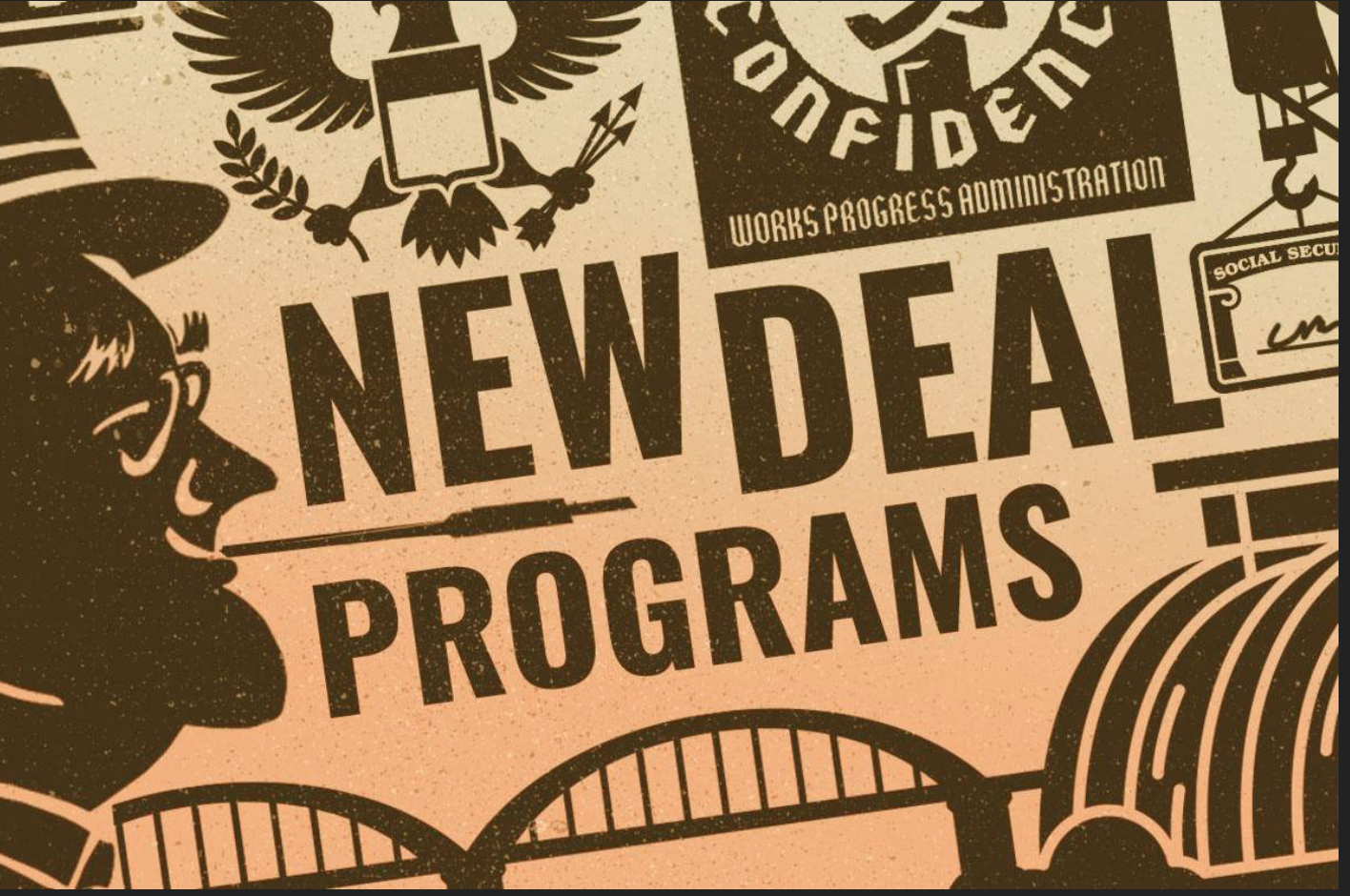
In the 1930s, Franklin Roosevelt’s New Deal extended the state’s role to the provision of economic security for all citizens even in the face of a howling economic downturn. Programs that we now take for granted – Social Security, unemployment insurance, collective bargaining, and banking regulation – were created during this period. President Lyndon Johnson built upon these protections through his Great Society. Subsequent presidents have championed programs that further strengthened the nation’s social safety net.

The third major set of political reforms addressed the stark racial inequalities that stood as the foremost stain on the American experiment. A mass movement for racial justice and equality led to major pieces of legislation aimed at ensuring equal voting rights, equal opportunities for housing, education, and employment, and the end of legalized racial segregation.

None of these reforms solved all problems. Some Americans perceive the state as too big, or costly, or intrusive. Still, America is a far better country because of the reforms so many struggled and sacrificed to bring about.

Yet these accomplishments are now at risk across the board. During his short time in office, Donald Trump has attacked each pillar of progress.

Under the Constitutionally dubious Unitary Executive doctrine, Trump seeks direct control over regulatory agencies that enjoy independent powers bestowed by the Congress. Already, he has fired agency heads without cause in direct contradiction of Congressional mandates. Congress endowed these agencies with some degree of autonomy to ensure that decisions requiring deep expertise – such as drug approvals or financial and environmental regulations – would not be subject to partisan battles or presidential whims. To remove this insulation, as Trump seeks to do, would no doubt weaken the ability of these agencies to ensure the health, safety, and financial security of the American people. The matter will come to a head within the next few months as a case challenging Trump’s removal of agency heads reaches the Supreme Court. It is expected that the Court’s conservative majority will side with the president, though the Court may seek a way to preserve the autonomy of the Federal Reserve given that Fed independence is crucial to investor confidence in the U.S. financial system.

In another attack on Progressive Era reforms, Trump has fired hundreds of thousands of civil servants and weakened civil service protections from many who remain in their jobs. He seeks to eliminate key agencies such as the Department of Education, the Federal Emergency Management Agency, and the Consumer Financial Protection Agency. Trump would undermine the capacity of our government to protect us during disasters, ensure public health, educate our children, keep our air and water clean, and prevent profit-driven corporations from endangering our health and safety.

The president has also directly challenged the 1974 Impoundment Act by refusing to spend money appropriated by the Congress. The legality of this too will likely be decided by the Supreme Court.

The legacies of the New Deal are also at risk. Elon Musk’s DOGE has cut thousands of employees who help the disabled and elderly navigate the Social Security system. Since Trump took office, cuts have been made to food stamps and school nutrition programs. The recently passed Congressional Republican budget blueprint will require devastating cuts to Medicaid funding, upon which roughly 80 million disabled and low-income people rely. Since this would be coupled with the extension and addition of massive tax cuts for the wealthy, the combination would represent the largest regressive shift of income from the poor to the rich in American history. Republicans seek to shred the nation’s social safety net.

Nor are the gains of the civil rights revolution safe. The Republican campaign against Diversity, Equity, and Inclusion (DEI) programs seeks to reverse decades of progress in building a more racially inclusive society. The contributions of African-Americans and other minorities to American history and culture are being wiped from Federal web sites, museums, and schools. Immigrant communities live in fear of ICE. The Supreme Court will soon rule on the constitutionality of Trump’s efforts to deny birthright citizenship to certain groups of people born in the U.S. Transgender people are being driven from public life. An executive order pushing local election officials to require proof of citizenship puts another hurdle in the way of voting rights while disproportionately impact the poor. Trump issued another executive order revoking Lyndon Johnson’s executive order requiring equal opportunity for minorities and women in Federal contracting, recruiting and training. The White House also issued a memo overturning a requirement that contractors do not operate segregated facilities.

Trump wants to transform American into a 21st century version of the Gilded Age, where oligarchs reign, patronage politics permeates the state, expertise is banished, social programs are starved, and citizens enjoy a much constrained set of rights.

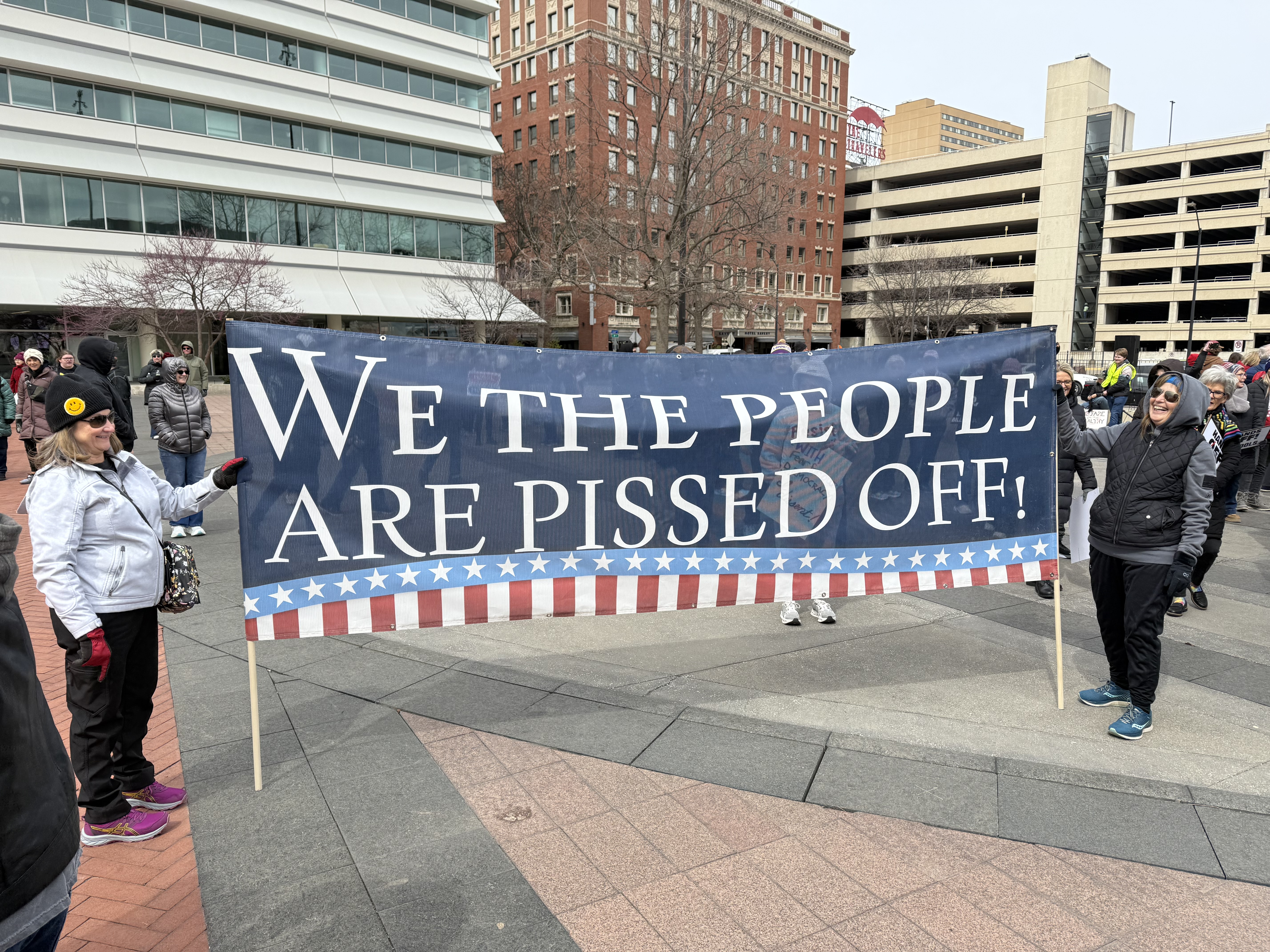
This vision should be enough to mobilize Americans to rally to protect the key legacies of prior eras of social and political reform. Let’s hope the people’s voice will prove stronger than the autocratic impulses of Donald Trump.

Leave a comment

Filed under Uncategorized

Trump’s Trade War is Threatening American Financial Power

Donald Trump’s trade war is ostensibly meant to resurrect the United States as a manufacturing powerhouse. There is little chance of that. Half of U.S. imports are intermediate goods. As those prices rise, U.S. manufacturers will face higher input prices while firms in export industries will be hit by retaliatory tariffs abroad. U.S.-produced goods will cost more and be less competitive in global markets.

What Trump’s tariffs are instead accomplishing is to destabilize the one sector where the U.S. remains dominant: finance. Traditionally, the U.S. banking system has stood at the center of the world economy. American stock markets have provided the world’s deepest and most liquid capital pool. Investors sought out U.S. Treasuries as a safe and reliable investment asset. And the dollar has served as the closest thing to a global currency. As a result, the U.S. attracted cheap capital from the rest of the world, which in turn financed U.S. government deficits and high rates of consumer spending.

That is why, during times of political and economic turmoil, investors typically buy dollars and Treasuries as safe havens. Not now. Since Trump mounted his trade war with the world, stock prices have fallen, the dollar has slumped, and investors have demanded higher yields in return for holding U.S. government securities.

These trends amount to a deepening vote of no confidence in the political and economic leadership of Washington, D.C. The Trump Administration appears determined to collapse the liberal international order and return the world economy to the kind of zero-sum mercantilism reminiscent of the 18th century.

This crisis of faith in American leadership arises against the backdrop of pre-existing challenges to U.S. financial pre-eminence. The U.S. has used its financial leverage against adversaries (essentially denying countries such as Russia, Iran, North Korea, and Venezuela access to the global banking system) in such an aggressive fashion as to make even friends wonder whether these weapons might someday be turned against them. Further stress on the dollar-based international financial order arises from China’s efforts to promote internationalization of the renminbi – especially in cross-border trade and lending – and its creation of the Cross-Board Interbank Payment System (CIPS) as a China-centered alternative to the SWIFT messaging system that connects the world’s banks.

A long-time pillar of U.S. financial dominance has been the key role of the Federal Reserve in balancing inflation and unemployment while serving as a lender of last resort during crises. Yet the confidence inspired by the Fed rests upon its relative independence from direct political interference. Only a Fed capable of resisting pressures to juice the economy for the political benefit of presidents will retain credibility among investors as an inflation-fighter. This too is being undermined by Donald Trump’ s criticisms of Fed Chair Jerome Powell and his implied threats to replace Powell before his term is up – a power previously considered beyond a president’s reach, but one that could be endorsed by the Supreme Court in a pending case (Trump vs. Wilcox).

In August 2023, Fitch downgraded the rating attached to American government securities based upon concerns about both growing U.S. debt levels, which have reached 137% of GDP, and the periodic standoffs in the Congress over raising the debt ceiling. Another such game of financial chicken may be in the offing in the coming months if enough Democrats, seeking leverage over budgetary policy, join with fiscally conservative Republicans to delay a raise in the debt ceiling past a point of no return.

Vulnerabilities also arise from the heavy dependence of the U.S. on foreign investors, including sovereign states, to finance government debt. China alone holds $750 billion in U.S. Treasuries. The Chinese have been gradually whittling down this total, but could accelerate the process as a means to pressure the U.S. to relent on trade restrictions aimed at Chinese goods. The same is true of other governments that hold large quantities of American debt.

Even if no one of these stressors would be alone capable of inciting financial instability, the combination has created conditions ripe for disruption. Enter Donald Trump’s trade war, which has deepened worries about the recklessness and volatility of U.S. policy. Friends and adversaries alike are considering ways to “derisk” by lessening their exposure to U.S. trade and finance. This could mean a flight from the dollar and an unwillingness of investors to continue financing the U.S. Federal deficits except at an interest premium.

The Economist underscores the shaky fundamentals that underlie American vulnerability: “In the past 12 months, America has disbursed 7% of GDP more than it raised in revenue, and spent more on interest payments than on national defence. Over the next year officials must roll over debt worth nearly $9trn (30% of GDP).”

Vice President J.D. Vance has argued in favor of a weaker dollar while one top Trump economic adviser – Stephen Miran – has suggested taxing foreign Treasury holdings, a move that would likely prompt a bond sell-off

Foreigners hold $32 trillion in U.S. stocks and bonds. A sell-off of bonds and a retreat from the dollar could spike inflation, as a weak dollar pushes up import prices on top of tariffs, and swell the interest payments that the U.S. must pay on its massive debt obligations. The stock market would likely plunge, leading to a vicious downward spiral as investors liquidate assets to meet margin calls, thus further undermining asset prices and so on.

While the dollar remains dominant for now, the proportion of dollars in foreign reserves has gradually fallen from 73% to 58%. A more precipitous decline is not out of the question.

In the long run, a weaker dollar might make U.S. manufacturing for both the domestic and export markets more competitive, but this would be blunted if an ongoing trade war meant higher trade barriers overseas against American goods.

Any advantages from a weaker dollar would also be offset by the blows that Trump’s policies are inflicting upon American service industries in which, unlike manufacturing, the U.S. holds a surplus with the rest of the world. A weakening of the U.S. banking sector would undermine revenue from U.S. financial services abroad. Tourist revenue from overseas visitors has already plummeted, due to the trade war, rising political tensions, slower visa processing, and harsh immigration policies. The revenue that American colleges and universities (and surrounding communities) gain from the enrollment of international students is endangered by high-profile deportations and the unfriendly climate facing visitors from around the world. The administration’s attack on the independence of institutions of higher education also threatens to tarnish the brand of the sector, resulting in diminished flows of international students and high-quality scholars.

The burdens of American leadership in the world have been outweighed by the benefits of global interdependence and financial stability. But leaders can lead only when other are willing to follow. That requires a minimum of trust in the wisdom and reliability of the leader. As the Trump Administration trashes the international and domestic norms and institutions that have underpinned the liberal international order, other states and private actors will seek to derisk their relationship to the U.S., leading to growing American isolation. The short-run gains that might be had from bullying U.S. trade partners into one-sided “deals” pale in comparison with the long-run costs of destroying the bonds of trust that are the true source of American and global prosperity.

Leave a comment

Filed under Uncategorized

Jimmy Carter Exemplified the Role of President as Diplomat

Jimmy Carter | Biography & Facts | Britannica.com

The news of Jimmy Carter’s passing takes me back to 1976, a year that marked my own passage to adulthood. As the bicentennial year dawned, I took first notice of Carter upon his victory in the Iowa Caucuses. I followed his campaign through my high school graduation and into the summer, when I shuttled in my first car between my summer job at Walt Disney World near Orlando, Florida and New Smyrna Beach. I studied Carter’s campaign in my first college course on American politics that fall and proudly cast my first vote for Carter in November.

My enthusiasm for Carter was driven by many things – his comparative youth, his progressive brand of politics and his promise of honesty and integrity after the scandals of the Nixon years.

My interest in Carter endured. Enrolled in a Ph.D. program in political science a few years later, I proposed to write my dissertation on Carter’s foreign policy. Although my adviser initially gave thumbs down, he relented after I persisted in making my case that this was a worthy topic.

A one-term president who left office with low approval ratings, Carter’s presidential performance is often dismissed as a failure. The widespread admiration Carter gained over the years was associated with his post-presidency, which he devoted to fighting tropical disease, monitoring elections, promoting human rights and extolling the power of dialogue as a path to peace.

Yet as I argued in my book Reversing Course, Carter compiled an extraordinarily successful diplomatic record that was unjustly obscured by events, especially the Iranian revolution and the Soviet invasion of Afghanistan, over which Carter had little control.

With America’s global reputation in tatters following the Vietnam War and Watergate, Carter recognized the urgency of restoring a moral foundation for American foreign policy through the championing of human rights. He understood that a sense of moral purpose was not only essential to American leadership abroad but also necessary to gaining domestic support for an expansive U.S. role in the world.

Carter’s human rights policies also had significant practical consequences. Vocal U.S. support for human rights gave added legitimacy and weight to the growing human rights advocacy of non-governmental organizations and international organizations. Authoritarian governments came to realize that systemic human rights violations brought real costs. Arguably, the global diffusion of human rights norms contributed to the later fall of the Soviet-controlled communist bloc and to the spread of democracy in many countries around the world.

Even more impressively, Carter’s presidency illustrated the power of diplomacy.  Carter employed diplomacy as a tool for both resolving insipient conflicts before they spun out of control and, where escalation had already taken place, finding a path toward peace and reconciliation.

This approach paid major dividends. The SALT II arms control agreement with the Soviet Union capped a dangerous and costly nuclear arms race (while never ratified by the Senate, both countries abided by the terms of the accord). The Panama Canal Treaties removed potential threats to the Canal’s security, while eliminating a constant irritant in U.S. relations with Latin America. Diplomatic recognition of China set the stage for China’s growing integration with the existing global political and economic order.

The Camp David Accords removed Egypt and Jordan as military threats to Israel’s security while the transition to majority black-rule in Zimbabwe, brokered by the United States and Great Britain, brought an end to the bloody civil war there. The successful conclusion of the Tokyo Round trade negotiations sustained progress toward a more open global economy. It is difficult to think of another president who used diplomacy to better effect in serving major American interests.

Carter’s record was not unblemished. As domestic political opponents unfairly painted Carter’s emphases on human rights and diplomacy as evidence of weakness, Carter increasingly and unwisely sought opportunities to prove his toughness, with little effect.

A foreign policy that prioritizes diplomacy and broadly-shared values cannot solve all problems. Nevertheless, at a moment in which the American Century faces unprecedented challenges at home and abroad, we as a nation would do well to seek lessons from Carter’s presidential and post-presidential records.

I was fortunate to finally meet and shake hands with Jimmy Carter a number of years ago when he and Rosalynn Carter spoke at Drake University. As Carter has for so long served as both a political inspiration and a scholarly subject for me down through these many years, I will miss his presence in our national life.

This piece originally appeared in Iowa Capital Dispatch, December 30, 2024.

Leave a comment

Filed under Uncategorized

A Working Class Party without Working Class Voters

Over recent decades, the Democratic and Republican parties have traded core constituencies. Working class voters, once securely in the Democratic fold, have gravitated to the Republican Party, while highly educated professionals, once reliably Republican, have shifted to the Democratic Party.

Yet the policies pursued by Republican office-holders clearly serve business elites rather than working people. This would seem to offer the Democratic Party an opportunity to regain working class support by championing pro-worker policies.

These might, for instance, include a higher minimum wage, the appointment of pro-union members of the National Labor Relations Board, and a ban on no-compete clauses in labor contracts. Or increased access to affordable health care and a reduction in the prices of widely used drugs. Expanded child tax credits and support for pre-K education would also benefit workers.

A pro-worker strategy would commit major resources to rebuilding infrastructure while investing in green energy and key high tech industries, such as semi-conductors, thus creating blue collar, predominately male jobs in Red states. The Democrats could support higher taxes on the wealthy and corporations while beefing up IRS enforcement against tax dodges and cracking down on offshore tax havens. Consumers would benefit from tougher enforcement of anti-trust and consumer protection laws. Taken together, these policies would offer a stark contrast with the anti-worker, pro-billionaire policies pursued during the first Trump Administration.

But here is the rub. Democrats have pursued all of these policies over the past four years, yet the Democratic share of the working class vote fell in 2024, just as it had in 2020 and 2016, while white working class identification with the Republican Party has been growing for decades. Most alarmingly, Democrats lost ground this time around among black and brown working class voters while remaining deeply unpopular among white workers.

This reality places Bernie Sander’s claim that the Democrats abandoned the working class in ironic perspective. The reality is that Joe Biden was far more pro-worker than either Barack Obama or Bill Clinton. Yet none of it swayed working class voters.

The problem was in part a failure of communication. While Biden touted his pro-worker policies at every opportunity, Democrats failed to embed specific policies or outcomes in a broader narrative about the rise of inequality, the hollowing out of American manufacturing, and the financialization of the economy. When 70% of Americans feel the country is headed in the wrong direction, it behooves those in power to offer a diagnosis of what is wrong, who is to blame, and how to fix matters. The Democrats have touted fixes without laying the groundwork by explaining how things got so bad.

To do so would have required a critique of the neoliberal order that Democrats, as much as Republicans, helped to build. Without such a narrative, Democrats were unable to explain the downward mobility experienced by many workers. Nor could they pin responsibility. Instead, they offered technocratic policy prescriptions without context.

Biden and mainstream Democrats embraced some of the policies offered by Bernie Sanders without the underlying anti-corporate rationale that Sanders has so insistently articulated. The reasons are obvious. While Democrats seek to win back working class voters, they also depend heavily upon corporate support. Indeed, many Democratic-leaning urban professionals are employed within those corporate sectors most supportive of the Democratic Party. Overly blunt efforts to rally working class support would threaten to erode the loyalty of the party’s professional and corporate constituencies.

In the absence of a clear Democratic message, Trump offered working class voters a coherent – if badly flawed – narrative attributing their problems to immigrants, foreign imports, globalists, bureaucrats, and a cultural elite. In doing so, he not only gave working class voters targets to blame for their economic grievances, he also exploited social and cultural divides over race, gender, and identity.

The Democratic Party has taken Trump’s bait by embracing a set of cultural and social litmus tests that drive away many working class voters. It is not just that the Democratic brand is now associated with a set of values and beliefs contrary to the sentiments of tradition-minded rural and working class people, but it is also that rural whites – especially males – feel targeted as scapegoats for social ills – such as racial or gender inequality – that they neither created nor have the power to eradicate. Instead, many rural whites feel unfairly shamed and looked down upon while their own struggles with opioid addition or the depopulation of rural communities are ignored by urban politicians.

Pro-worker policies are necessary but not sufficient for winning back working class voters. Democrats need to embed such policies in a clear, compelling narrative that helps workers make sense of the forces buffeting their lives. Democrats should also return to the notion of a big-tent party, one that tolerates ideological diversity while taking seriously the material and cultural needs of the rural working class.

Democrats should also frankly acknowledge that policies aimed at pleasing core urban professional supporters often have pernicious impacts on working class people. Broad-based student debt relief helps college-educated voters but does nothing for those who have never stepped foot on a college campus. When residents of well-off urban neighborhoods successful oppose the construction of high-density housing, this worsens the housing crisis and push up home prices. Low-wage immigrant labor keeps prices low on services used by upper-middle class consumers but poses competition for unskilled native born workers. The reality is that the professed commitments to social justice among what author Musa Al-Gharbi calls “symbolic capitalists” are often belied by the latter’s pursuit of narrow material gains.

The process of rebuilding a working class-based Democratic Party will be long and difficult. In many Red states, Democrats have been virtually vanquished. The chaos of the next four years and the damage that the Trump Administration’s proposed policies will do to rural and working class people will provide an opening, but Democrats must rethink their own messaging and strategy in order to take advantage of the opportunities that will arise. This will require a more coherent narrative about the gross inequalities that afflict the American economy, greater openness to cultural and ideological diversity within the party, and frank acknowledgement of conflicting class interests between the current Democratic base and the working class support that the party needs to attract in order to win.

Leave a comment

Filed under Uncategorized

Is the GOP Now Pro-Worker? Not Really

Led by billionaire Donald Trump and former venture capitalist J.D. Vance, the Republican Party now proclaims itself the party of working-class people. Vance, referring to himself as a “working-class boy,” hit this theme hard in his speech at the Republican Convention. Vance lauded Trump as “a leader who’s not in the pocket of big business, but answers to the working man, union and non-union alike. A leader who won’t sell out to multinational corporations.” He went on to lament lost jobs, stagnant wages, and closed factories, which he attributed to free trade, corporate outsourcing, and illegal immigration.

The convention featured an address by Teamster President Sean O’Brien, once an unthinkable choice for Republicans. Following the convention, Republican Senator Josh Hawley published a piece in Compact magazine titled “The Promise of Pro-Labor Conservatism.”

How seriously should we take this turnabout from a party once looked upon as home to the country-club set? In short, the answer is not much. This is evident by looking at Trump’s record during his stint as president as well as his promises for a second term.

Referring to his cabinet, Trump declared in 2016: “I want people who have made a fortune.” He delivered, as one lineup of cabinet officials had a net worth of $3.2 billion. Trump’s affinity for the rich was also evident from his 2017 tax cuts, which will save the top 1% of earners an average of more than $60,000 in 2025, compared with average savings of only $500 for the bottom 60% of earners. Trump has suggested that he would double down on this generosity toward the rich by cutting the corporate tax rate from 21% to 15% in a second term.

On the other hand, Trump’s National Labor Relations Board made rulings that made it harder for unions to organize and curtailed union bargaining rights. In 2017, Trump also tried, but failed, to repeal the Affordable Care Act, which provides health benefits to 40 million Americans.

A Trump-appointed judge recently blocked a Biden Administration rule that would have outlawed non-compete clauses in employment contracts. Meanwhile, Trump-appointed justices on the Supreme Court have weakened the power of Federal agencies to enforce workplace health and safety regulations.

Looking forward, Project 2025, a blueprint for Trump’s next term compiled by the Heritage Foundation and other groups closely associated with Trump, proposes to revoke civil service protections from vast swathes of the Federal workforce, allowing workers to be fired at will and replaced by political loyalists. This greatly expands upon a similar executive order issued near the end of Trump’s first term but reversed by Joe Biden.

Trump has promised a 10% across-the-board tariff increase on imported goods and a 60% increase on Chinese goods.  Since importers would simply pass on the increased costs to consumers, economists estimate that increased tariffs would cost Americans $1700 per year, on average.

Donald Trump’s marquee issue has been immigration, which Trump has proposed to curtail. Trump claims that immigrants – especially illegal immigrants – steal jobs from American workers and lower wages for unskilled work. J. Daniel Kim of the University of Pennsylvania’s Wharton School has summarized the results of his recent co-authored study: “What we find … is that immigrants act more as job creators than they act as job takers in the United States.” Immigrants are more entrepreneurial than native-born Americans. Less-skilled immigrants often take jobs that few native-born Americans want. Amidst a period of high levels of both legal and illegal immigration, the unemployment rate has hit record lows and wages have grown faster than prices, with the biggest gains at the bottom of the pay scale. By expanding the workforce, immigration stimulates economic growth, increasing the pie for everyone.

Trump plans to deport 10 million undocumented residents in a second term, 79% of whom have been in the United States for at least 12 years (and 44% for more than 20 years). Aside from the unthinkable human toll from mass deportation, the economic effects would be disastrous. The construction industry would lose 1.5 million workers, the hospitality industry 1.1 million workers, and the agricultural sector 283,000 workers. Overall, Trump’s plan would eliminate 4.5% of the U.S. workforce, which could produce a 9% drop in national income while also costing one million jobs among native born Americans.

Mass deportation would force up prices on many goods. Trump’s immigration policies combined with tax cuts for the wealthy and higher tariffs would create tremendous inflationary pressures.

None of this benefits American workers. Whatever Trump and Vance’s new Republican Party may be, it is not pro-labor.

Leave a comment

Filed under Uncategorized

Mike Johnson’s Historic Choice

Republican House Speaker Mike Johnson faces a critical decision that could align his legacy with that of Senator Henry Cabot Lodge, who, in 1920, spearheaded the Senate Republicans’ rejection of the Treaty of Versailles, thus declining United States membership in the new League of Nations.

This was a stunning defeat for President Woodrow Wilson, who had championed the League as an alternative to the imperialism and power politics he considered responsible for World War I. The League sought to ensure peace by committing members to come to the defense of any other members who faced aggression. The prospect of a collective response would give pause to any aggressor otherwise tempted to attack a weaker neighbor.

But without the leadership of the United States, already the greatest power of the era, the League’s collective security mechanism lost all credibility. When Japan invaded China in 1931, the League sent a fact-finding team, but otherwise failed to act. Following Italy’s invasion of Ethiopia in 1935, the League imposed some ineffective sanctions, but was otherwise helpless to reverse Italy’s aggression. The League likewise stood by while Nazi Germany took the Sudetenland in 1938.

Through all these events, as the world stumbled toward a second world war within a generation, the United States sought safety in isolation. A meek giant, lulled into complacency by its geographic remoteness, the United States sat on the sidelines as aggressors threatened the peace in both Europe and Asia. Massive rallies organized under the slogan “America First,” sought to avoid the kinds of sacrifices that had been made along the trench lines in Europe a generation earlier.

Alas, peace and security could not be bought so cheaply. American security was bound up with the security of others. The American economy could not thrive if hostile rivals used violence to gain exclusive control over vast concentrations of industrial power and raw materials. Our democracy would be imperiled in a world dominated by autocracies. The isolationist illusion was finally punctured by the Japanese attack on Pearl Harbor.

Following World War II, a new generation of leaders accepted the responsibilities of global leadership and built a set of American-centered alliances to keep the peace in Europe and East Asia. These alliances have secured the basis for spheres of remarkable peace, prosperity, and democracy in both regions, even in the face of great power threats both past and present.

The continued stability and peace in Europe and Asia depend upon the strength and credibility of the American commitments to the security of our partners. And this is where Mike Johnson faces a choice potentially as momentous as that of Senator Henry Cabot Lodge. Johnson holds the fate of Ukraine in his hands, and so too the standing of America’s international leadership.

Although Ukraine is not a treaty ally, the United States, both individually and through NATO, has made public commitments to assist Ukraine in defending itself from Russian aggression. The very fact that the current arms aid package for Ukraine has been held up in Congress for months has already harmed the credibility of America’s word.

Should the standoff result in a failure to resume arms shipments – especially if followed by major Russian battlefield advances – America’s friends and rivals alike will be forced to reconsider their strategic position in a world of renewed American isolationism. Already, Donald Trump’s reckless threats to pull out of NATO have damaged the alliance regardless of whether he wins the presidency or carries through on the threat. Our allies now understand that America’s commitment to their security is in question. And so do our rivals.

Speaker Johnson should calm such fears by bringing an aid package for Ukraine to a vote in the House, where it would likely pass. If he fails to do so, then this moment may well be remembered as a turning point akin to the failure of the League of Nations vote in the Senate, and the first step into a new era of isolationism and insecurity.

Leave a comment

Filed under Uncategorized

Henry Kissinger: China’s ‘Old Friend’

In the West, no shortage of commentators were quick to denounce Henry Kissinger as a war criminal upon his death. China’s media, by contrast, hailed Kissinger as an “old friend of the Chinese people” and a “distinguished American diplomat” known around the world for the “wisdom” of his diplomacy.

China’s embrace of Henry Kissinger began with his secret 1971 trip to Beijing to launch the process of normalization of relations between the United States and China. This past July, during Kissinger’s 100th trip to China, he was treated to a personal meeting with Chinese President Xi Jinping in the very meeting place where Kissinger sat down with Premier Zhou Enlai fifty-two years earlier. Xi went out of his way to flatter Kissinger: “The Chinese people never forget their old friends, and Sino-U.S. relations will always be linked with the name of Henry Kissinger.”

The term “old friend” has an oddly personal and sentimental ring that seems out of place in a diplomatic context, yet it is frequently applied not only to Kissinger but also to other foreigners who are viewed with favor by the Chinese leadership. The term was first used in a 1956 edition of the People’s Daily in reference to American missionary James Gareth Endicott who became an unwavering defender of the Chinese Communist Party after the 1949 revolution.

Another early “old friend” was Edgar Snow, an American journalist who joined the Communist forces at their Yunnan base in the 1930s and who wrote a widely influential and flattering portrait of the movement titled Red Star Over China. Between 1956 and 2011, over six hundred individuals from 123 countries were granted the title of “old friend.”

In his once-classified study of Chinese negotiating behavior written for the RAND Corporation in 1985, former U.S. State Department and National Security Council official Richard Solomon noted: “The frequently used term “friendship” implies to the Chinese a strong sense of obligation for the ‘old friend’ to provide support and assistance to China.”

In her 2000 dissertation for Australian National University, political scientist Anne-Marie Brady quotes from a 1995 official Chinese handbook on foreign affairs: “The more friends we have the better, yet we also have to be selective. We especially want to make friends with such foreigners who are friendly to us, have some social prestige, have economic power, or academic achievements, or have political influence; this will be most advantageous for the achievement of a peaceful international environment and to support our nation’s economic construction.”

In short, the term “old friend” is bestowed on individuals considered sympathetic to Chinese views and aims who are in a position to serve China’s interests. An “old friend” will be feted with “special access and privileges” to the extent that they continue to act in ways desired by the Chinese state.

Ryan Ho Kilpatrick points out that the two countries accounting for the most “old friends” are the United States and Japan – both having histories of conflict with China. This makes sense because the utility of an “old friend” lies in their willingness to defend China even when this conflicts with the policies of their own government.

Henry Kissinger was a sophisticated man who well understood the transactional nature of his status as an “old friend” of China and he lived up to his end of the bargain. With access to the highest levels of power in both the United States and China, Kissinger played the role of an intermediary, passing backchannel messages between the leaderships and shaping coverage of events through media interviews and commentaries.

Kissinger sometimes allowed himself to be used by Beijing in ways that were embarrassing to D.C. Xi’s meeting with Kissinger during the latter’s aforementioned trip to Beijing in July 2023, served as an implicit rebuke of the Biden Administration set against Xi’s refusal to hold a one-on-one with U.S. climate enjoy and former Secretary of State John Kerry, whose visit to Beijing overlapped with that of Kissinger.

Kissinger was of greatest service to China during times of crisis in the bilateral relationship. Shortly following the violent suppression of pro-democracy protests in Tiananmen Square Beijing on June 4, 1989, Kissinger responded to Congressional moves to sanction China with an op-ed declaring: “A crackdown was inevitable” and “China remains too important for America’s national security to risk the relationship on the emotions of the moment.” Kissinger privately counseled President George H.W. Bush to resist pressures to punish Beijing and lobbied Congress against sanctions. In November of that year, Kissinger travelled to Beijing where, in a meeting with senior leaders, he is reported to have said regarding international reactions to the massacre: “China’s propaganda work has been insufficient.”

Kissinger gained much as an “old friend” of China. His continued access and relevance in China heightened Kissinger’s value to the many corporate boards on which he served and created business opportunities for his firm Kissinger Associates. By reminding onlookers of his key role in the opening to China, Kissinger burnished a reputation that otherwise took a beating as critical treatments of overall record in office proliferated over time.

Friendship is a precious commodity. Long ago, China made an investment in Henry Kissinger by bestowing him with the title of “old friend” along with the privileges that came with it. That investment brought a half century of returns.

Leave a comment

Filed under Uncategorized

Beyond the Biden-Xi Summit: We have Staunched the Bleeding in US-China Relations. Now Can the Patient Be Revived?

While the relationship between the United States and China has been through many ups and downs since President Richard Nixon’s historic trip to Beijing in 1972, the turn toward outright confrontation over the past few years has threatened the interests of both countries and the world. By all accounts, the meeting between Presidents Joseph Biden and Xi Jinping on the sidelines of the Asia Pacific Economic Cooperation Summit in San Francisco has, for the time being, served to halt this downward spiral.

But can we do better than simply staunch the bleeding? Can a healthier relationship between Washington and Beijing be revived? It may seem a long shot given the hawkish moods in each country and the very real conflicting interests between a long-time global leader and a rising challenger. But the alternative path – leading to a massive arms race, military brinkmanship, and painful economic disruption – is not one we should lightly accept. Moreover, critical global problems cannot be successfully addressed without cooperation between the world’s two most powerful states. To move beyond the minimal goal of stabilizing a seriously degraded big power relationship, the U.S. needs to develop a strategy of cooperation, alongside the competitive strategies so often touted by the Biden Administration.

The Biden Administration’s recent diplomatic blitz to reengage with China is partly motivated by a realization of such costs. But it also arises from a sense that efforts during the early years of the Biden presidency to strengthen U.S. alliances and military posture in the region along with a strong U.S. economic recovery combined with China’s sputtering economic performance have strengthened America’s hand in dealing with China. The timing for reengagement is ripe.

But how to move beyond the plucking of a few low-hanging fruit? Here are five principles that should guide U.S. efforts to steer U.S.-China relations back to healthier and more sustainable balance between competition and cooperation.

First, avoid overemphasizing the ideological aspects of U.S.-China competition. Biden has repeatedly underlined the conflict between democracy and authoritarianism as a key organizing framework for U.S. foreign policy. This framing has reinforced Beijing’s fear that the U.S. aims to challenge the legitimacy of its communist system of government and spur popular opposition to its rule. This, for instance, is how Xi Jinping interpreted the Hong Kong democracy protests of 2019, which China’s media frequently attributed to foreign subversion. Biden’s repeated references to Xi Jinping as a “dictator” are interpreted in a similar vein.

The U.S. message must be that, while we hold dear our own commitment to democracy and reserve the right to speak out against major human rights abuses, such as those against Muslim minorities in Xinjiang, America does not seek to undermine the internal authority of the Chinese Communist Party. Rather, Washington’s interest lies in influencing the external policies of China where they impact U.S. interests and those of our allies. An overly ideological approach only sparks Beijing’s paranoia while also making it more difficult to rally non-democratic states to our own side when their support is needed. 

Second, the U.S. should right-size our estimation of China’s strengths and weaknesses. A few years ago, many Americans held an exaggerated sense of China’s strength, with many despairing that the U.S. was doomed to fall behind. More recently, an opposite narrative has taken hold. China’s slowing growth, massive debt, and aging population are viewed as weaknesses meaning that we have already witnessed “peak China,” with inexorable decline to follow. Both are exaggerations. China is a formidable great power and a far stronger challenger to U.S. power than the Soviet Union ever was. But the U.S. has strengths in technology, accumulated wealth, geographic position, alliance relationships, military assets, and soft power that China is unlikely to surpass. Exaggerating China’s strengths leads to panicked reactions, such as mutually costly efforts to kneecap China’s economic development. The opposite assessment can lead either to complacency or to dangerously assertive bullying. A measured evaluation of the China challenge will motivate the U.S. to take steps to enhance our own political and economic well-being from a position of self-confidence.

Third, the U.S. should seek to strengthen a vibrant multilateral order that includes China. The biggest factor working in the U.S. favor is the strength of the multilateral institutions, such as the United Nations, World Bank and World Trade Organization, that the U.S. itself helped to create. These organizations enhance collaboration, provide collective goods, maintain order, and strengthen the international rule of law. The most important thing that the U.S. can do in its relationship with China is to both strengthen these institutions and make sure China is included. The Biden Administration, unlike the Trump Administration and much of the Republican Party, has championed the first part of this formulation but not the second. Biden has attempted to repair the damage done by the Trump Administration’s hostility toward multilateral institutions. But he has given preference to institutions that exclude China and to ad hoc groupings aimed against China.

Yet China’s engagement with international institutions, even where in a fashion that challenges U.S. dominance, gives China a stake in the status quo and brings the weight of the international community to bear on restraining Chinese behavior. Although the theory that engagement with China would lead to its democratic transformation proved erroneous, the institutionalist argument for engagement has stronger support. China, for example, is now seeking to join the Comprehensive and Progressive Agreement for Trans-Pacific Partnership (CPTPP), a project that the U.S. initiated and then abandoned. Were it to join, China would be required to meet high level trade standards and reform many of the practices that are the sources of complaints by foreign investors and trade partners. The U.S. should not only welcome China’s entry to the CPTPP, but negotiate its own reentry to the agreement.

Fourth, the current bias in favor of sticks should be leavened with a dose of carrots, and both should be tied to explicit conditions. U.S. policy toward China in recent years has been all sticks and no carrots. Worse, the U.S. has seldom stated what China could do to earn relief from sanctions. The theory behind the application of unconditional sticks is that the U.S. should focus on undercutting China’s capabilities because nothing the U.S. attempts can realistically change China’s behavior. But this may actually turn reality on its head. Given time, target states can typically find ways to blunt the impact of economic sanctions or match increases in military arms. Behavior, on the other hand, is easier to influence by changing the cost/benefit calculus of the target. Either sticks or carrots may be employed for this purpose, but to be effective, both must be connected to specific demands with the prospect that sticks will be withdrawn, or carrots delivered should the demands be met.

An example of the ineffective use of leverage are the trade tariffs that were imposed by the Trump Administration and remain in place. While the tariffs are ultimately paid by American consumers, China would like the tariffs removed since their exporters are placed at a disadvantage. Imposed as a stick, the tariffs could now serve as a carrot to obtain concessions from China, yet the U.S. refuses to state what steps the Chinese would need to take for the tariffs to be lifted. Generally, the U.S. should focus less on punishing China than on employing an efficient set of incentives designed to alter Chinese behavior.

Fifth, the U.S. should seek to reassure China where the latter holds unfounded fears of U.S. intentions. When states take steps to enhance their own security, they can unwittingly set in motion security dilemmas, whereby such steps threaten the security of other states. Each state then becomes ensnared in a spiral of hostility and arms racing. The only way out of a security dilemma is to provide the rival state with signals of reassurance and restraint in hopes of gaining reciprocity from the other side. There are many opportunities where this idea could be applied in U.S.-China relations. For instance, the U.S. has responded to the increasingly lopsided military balance across the Taiwan strait by taking steps to reinforce deterrence. Beijing, however, has interpreted these moves as a creeping strategy for eventual recognition of Taiwanese independence. China then rachets up pressures on Taiwan and the risks of war rise. The U.S. should seek ways to balance deterrence against a Chinese military strike on Taiwan with reassurance that the U.S. does not and will not support any unilateral Taiwanese move toward independence.  Strategies of cooperation bring risks. The other side may not reciprocate or may take undue advantage by pocketing concessions without offering any of its own. A rival may interpret gestures of cooperation as weakness and increase demands. That is why strategies of cooperation must be carefully hedged, so that the initiator has the option of shifting back to a more confrontational approach if necessary. In the current atmosphere, perhaps the best that can be expected is to put a floor beneath the U.S.-China relationship. Yet it is worth considering the possibilities of a more ambitious effort to normalize the relationship, if only because the risks and costs of failing to do so are so great.

David Skidmore is a Professor of Political Science at Drake University in Des Moines, Iowa. He is currently at work on a book dealing with China’s international development finance and the West’s response.

Leave a comment

Filed under Uncategorized

SCRUTINIZING KISSINGER

(On the occasion of Henry Kissinger’s 100th birthday, I am sharing this review of Walter Isaacson’s biography of Kissinger that first appeared in The Review of Politics in 1994.)

Walter Isaacson: Kissinger: A Biography. (New York: Simon & Schuster, 1992.
Pp. 893. $30.00.)

If, as Henry Kissinger once confided, power is the ultimate aphrodisiac, then few men have more fully or openly surrendered themselves to its seductions than America’s most celebrated statesman of recent decades. Walter Isaacson’s entertaining biography offers an intimate glimpse into Kissinger’s lifelong love affair with power politics.

Isaacson follows Kissinger life from his childhood in Germany, through his rise to power during the Nixon era and, finally, to his most recent roles as media pundit and business entrepreneur. Opinions about Henry Kissinger, pro or con, are often strongly held. In contrast with many previous treat­ments, Isaacson strikes a careful balance in his portrayal of the man. Avoid­ing caricature, the author’s tone is neither fawning nor condemnatory.

Isaacson pays tribute to Kissinger’s intellectual brilliance and lauds his principal achievements, including the initiation of detente with the Soviet Union and the opening to China. Kissinger is credited with preserving American power and engagement with the world at a time when the domes­tic mood tilted dangerously toward isolationism.

Yet there remains plenty of grist here for Kissinger’s many critics. Although Isaacson’s own judgments are rather reserved, perhaps overly so, the overall portrait he paints is hardly a flattering one. Kissinger emerges as a deeply flawed character, guilty of overweening ambition and capable of needless cruelty. While his record in power includes significant accomplishments, the overall legacy seems less profound or lasting in hindsight.

Isaacson emphasizes the degree to which the nation’s diplomacy came to reflect Kissinger’s own personal style and beliefs. Yet, owing to Kissinger’s multiple personas, the relationship was seldom simple. There was Kissinger the grand geopolitical thinker, his mind ranging across sweeping historical generalizations, Kissinger the tireless diplomat, wearing down negotiating partners with his tireless command of detail, and Kissinger the petty ma­nipulator, obsessed with perceived slights and endlessly engaged in devious bureaucratic games.

Despite his well-deserved reputation for imperious arrogance, Kissinger suffered from deep-seated insecurities. He craved the approval of others and felt compelled to explain himself to his critics. While tyrannical toward his subordinates and manipulative toward his peers, Kissinger often indulged in displays of obsequious deference toward his superiors. Kissinger sought out a series of mentors over the years including Fritz Kraemer, his army superior, William Elliot, his graduate adviser at Harvard, Nelson Rockefeller, his early political patron, and Richard Nixon, his White House boss.

Kissinger’s relationship with Nixon was tortuous. Among his subordi­nates, Kissinger spoke of Nixon with undisguised contempt. While admir­ing Nixon’s courage and perseverance, Kissinger considered the president a lonely and pathetic figure who lived in a Walter Mitty-like world of se!f­ delusion. Yet Kissinger was the ultimate courtier in Nixon’s presence. Kissinger suffered Nixon’s anti-Semitic remarks without complaint and ingratiated himself with his boss by reinforcing Nixon’s paranoid fears and embracing the cult of toughness that Nixon so fervently preached. He spent many hours stroking Nixon’s fragile ego and assiduously sought to mo­nopolize Nixon’s access to foreign policy advice.

Kissinger’s political philosophy, his personality and his diplomatic prac­tice were all driven by political realism, a doctrine which provided the intellectual and spiritual core of Kissinger’s life. Isaacson traces his embrace of realism to Kissinger’s childhood experiences. As a Jewish boy growing up in Germany, Kissinger witnessed the chaotic disintegration of the Weimar Republic and the rise of Nazism. This left him with a deep appreciation for the values of order, stability and legitimacy. Pessimistic about human nature, Kissinger rejected the liberal belief in the inevitability of progress. He viewed power, not moral ideals, as the driving force of history. The role of the statesman was to maneuver within the confines of choice carved out by the objective forces of historical movement. He thus rejected the extremes of either historical determinism or limitless free will.

Kissinger’s brand of realism could take brutal form. Adopting a globalist viewpoint that took scant account of local realities, Kissinger saw every affront to American power as a Soviet-inspired test of U.S. resolve. Only an unblinking demonstration of strength could preserve American credibility. This hard-nosed perspective lay behind Kissinger’s endorsement of the bombing and invasion of Cambodia, the Christmas bombing of Hanoi, the campaign to destabilize Salvador Allende’s government in Chile and U.S. aid to rebel factions in Angola. Kissinger’s sometimes appalling moral blind­ness was evident in his long-held (though eventually reversed) backing of the white minority regime in South Africa and his support for continued military assistance to Indonesia despite its bloody invasion and suppression of neighboring East Timor.

Nixon, of course, shared Kissinger’s fondness for realpolitik. Both em­braced a paranoid view of the world that took various forms, including, eventually, a large measure of distrust and jealousy toward one another. Nixon and Kissinger’s secretiveness, along with their contempt for both the Congress and the foreign affairs bureaucracy, are legendary. Isaacson ar­gues, perhaps correctly, that a degree of secrecy and surprise were necessary to the success of some of the administration’s principal initiatives. If pursued openly through formal channels, it is unlikely that either the initial steps toward detente with the Soviet Union or the opening to China would have survived bureaucratic or congressional resistance.

Yet secrecy and the banishment of expertise each exacted their price. Relying upon his own backchannel to bypass the formal U.S. bargaining team, Kissinger bungled crucial aspects of the SALT I negotiations and provided the Soviets with the opportunity to play the two channels against one another. In the 1 971 India-Pakistan war, Kissinger insisted, against accurate State Department advice to the contrary, upon viewing India as a Soviet proxy. Kissinger’s subsequent tilt toward the brutal Pakistani regime had tragic consequences.

Nixon and Kissinger’s obsession with secrecy had other costs as well. Concerned about leaks, especially with regard to the secret bombing of Cambodia, Kissinger ordered wiretaps placed upon his closest aides. Al­though not directly implicated in subsequent events, Kissinger’s frantic reaction to the release of the Pentagon Papers encouraged Nixon to autho­rize formation of the infamous Plumber’s Unit. The paranoid atmosphere inside the Nixon administration often reached comical extremes. Cut off from vital information by Kissinger, Defense Secretary Melvin Laird used the National Security Agency to intercept Kissinger’s backchannel messages while Navy Chief of Staff Elmo Zumwalt went so far as to place a personal spy within Kissinger’s inner circle.

When not engaged in petty machinations, Nixon and Kissinger did manage to infuse U.S. foreign policy with a rare degree of intellectual and strategic vision. They sought to construct a structure of peace built upon the triangular relationship between the United States, the Soviet Union and China. Kissinger hoped that America’s pivotal role in this tripolar diplo­macy would serve to constrain Soviet behavior while preserving U.S. power during a period of underlying decline. The audacity and ingenuity of this attempt to rearrange the global balance of power was breathtaking.

Yet Isaacson notes that Nixon and Kissinger’s structure of peace lacked solidity. The complexities of Kissinger’s strategy of linkage proved over­whelming. Most importantly, domestic obstacles, including but not limited to Watergate, interfered with Kissinger’s grand geopolitical scheme. Kissinger oversold detente to the public and his instinctive secrecy and distrust of democracy eventually led to a backlash against his style of diplomacy. The nation turned first to Jimmy Carter’s moralism and later to Ronald Reagan’s ideological anticommunism. Isaacson observes that while Kissinger often defended peace and order as moral imperatives in themselves, he never understood the desire of most Americans that their country stand for some set of higher ideals and purposes. Kissinger’s realism, for all its intellectual appeal, proved out of sync with the American character.


Isaacson’s biography usefully illustrates how a single strong-wil!ed personality can, for better or worse, leave a distinctive imprint on the foreign policy of a major power. ln the tradition of Otto von Bismarck, his nine­teenth-century twin, Kissinger attempted to rise above history by manipu­lating antagonisms at home and abroad. Like circus showmen, both Bis­marck and Kissinger amazed audiences with their clever balancing acts. Yet while each mastered events for a time, neither succeeded in deflecting the movement of deeper historical forces beyond the reach of realist analysis or the will of individual humans.

Leave a comment

Filed under Uncategorized

Who Really Wants to Indoctrinate Students?

Pouring over the bills that survived Iowa legislature’s March 3 “funnel” deadline, I came across House File 12, which immediately gave me a sense of déjà vu. The Republican-sponsored bill would require both public and charter high schools across Iowa to offer a United States government course that would, in addition to covering electoral procedures and the U.S. Constitution, entail a “comparative discussion of political ideologies, including communism and totalitarianism that conflict with the principles of freedom and democracy that were essential to the founding of the United States.”

This bill follows a similar one signed into law in June 2021 by Florida Governor Ron DeSantis which requires high school government courses to include “a comparative discussion of political ideologies, such as Communism and totalitarianism, that conflict with the principles of freedom and democracy essential to the founding principles of the United States.” DeSantis followed up in May, 2022 with a mandate that schools offer at least 45 minutes of instruction about the “evils of communism” on Florida’s newly designated “Victims of Communism Day,” set for November 7.

Florida Senator Rick Scott (R) recently introduced a bill in the U.S. House that would require schools nationwide to teach students “the dangers of communism.”

This sudden urgency to protect the precious minds of today’s youth from the allures of communism whisked me back to my senior year of high school in 1976 (the Bicentennial Year!). I recall whiling away hours in the back of the class, counting down the days until graduation, in a required course dreaded by all seniors titled “Americanism vs. Communism.”

In 1961, following the failed Bay of Pigs invasion, the Florida legislature passed a law requiring that all students take AVC, as it was universally called, to graduate. In addition to providing students with “a greater appreciation of democratic processes, freedom under law, and the will to preserve that freedom,” the law required that the course place “particular emphasis upon the dangers of communism, the ways to fight communism, the evils of communism, the fallacies of communism, and the false doctrines of communism.”

Initially, the State Department of Education used official reports of the House Committee on Un-American Activities and FBI Director J. Edgar Hoover’s book A Study of Communism as texts. Instructors were forbidden from presenting communism in a favorable light. The course continued, in various forms, until the law was finally repealed in 1991, following the collapse of the Soviet Union.

One study of Florida’s “Americanism vs. Communism” law refers to it as an effort to dispense an “official ideology,” mirroring the practices of the political systems the lawmakers intended to warn against.

Now we have been suddenly transported back a half century, which is puzzling. It is not as if the earlier precedent was a stunning success. One researcher interviewed faculty and students who taught or took AVC in Central Florida high schools in the mid-1960s. Students universally panned the course, considering it boring propaganda. I can certainly attest to this conclusion. I recall students with their heads on their desks, films showing red ink blots spreading across the globe to illustrate the communist threat and readings informing us that Karl Marx was a bad father. The teacher appeared to enjoy the course least of all.

Indeed, former instructors interviewed for the study generally disliked being forced to teach pre-cooked answers dictated by politicians rather than genuine social science. The bolder instructors sought to transcend the limitations of the required teaching materials by following established methods for teaching comparative government in the classroom, although this sometimes led to harassment in an environment where faculty were required to take loyalty oaths.

The irony of House File 12 is that it fails to recognize that communism and other forms of totalitarianism have failed in most places where they have been tried precisely because humans are generally averse to propaganda and indoctrination. AVC was a waste of precious class time and a distraction from the kind of education that serves as the real bulwark to closed and rigid ideologies: critical thinking and exposure to a diversity of ideas.

The retro-Cold War classrooms that the current crop of Republican legislators want to create as part of their broader culture war branding may prove good politics in the short run but will not serve any meaningful educational purpose. Perhaps that is the point.

Leave a comment

Filed under Uncategorized