
Monthly Archives: July 2025

U.S. Foreign Aid with Chinese Characteristics

As President Donald Trump takes a chainsaw to U.S. foreign aid programs, it would be easy to attribute such extreme measures to MAGA isolationism or DOGE zealotry. While anti-globalist and anti-government ideologies certainly played a role, the shift away from traditional foreign aid is not limited to the U.S. and does not represent a full-scale abandonment of development finance. Indeed, Trump’s moves represent the culmination of a decade-long realignment of Western approaches to development, inspired by China’s Belt and Road Initiative (BRI).

The retreat from traditional foreign assistance cuts across the Western world. By 2026, estimates hold that foreign aid budgets will have fallen by over one-quarter in Canada and Germany and by close to 40 percent in Britain, compared with 2023 levels. Overall, G-7 countries, which account for 75 percent of foreign assistance, spent 28 percent less in 2025 than in 2024.

Yet even as Trump’s Big Beautiful Bill cut foreign aid, it also provided new funding — a $3 billion revolving fund — for the International Development Finance Corporation (IDFC), which was created by the 2017 BUILD Act. The IDFC is up for renewal this year, and the House Foreign Affairs Committee has already voted in support of authorizing its operations for another seven years with a lending cap of $120 billion, double the initial level.

The IDFC was intended as an answer to China’s BRI, which represented an alternative to traditional Western approaches to aid.

The Development Assistance Committee (DAC) — a club of Western donor countries — defines Official Development Assistance (ODA) as concessional finance directed toward developmental projects in low- and middle-income countries. The DAC encourages transparency and discourages the tying of aid to purchases of goods and services from the donor country. Most DAC countries emphasize “soft” aid, focused on health, education, and humanitarian assistance. ODA typically draws upon budgeted funds that must be renewed annually.

Very little of Chinese development finance meets these criteria. Instead, China’s development finance is commercial in orientation. Most loans are initiated by policy banks — the China Development Bank and the China Export-Import Bank — that raise funds by issuing bonds to investors. Loans carry near-market interest rates and must be repaid in full. Much of Chinese development finance has been channeled through the BRI, which focuses on infrastructure construction. Loans through these policy banks and others have amounted to well over a trillion dollars over the past decade.

Western countries have followed China’s lead both in commercializing development finance and in driving more resources toward infrastructure development. The latter move has transpired under the guise of various initiatives: the BUILD Act (U.S.), Build Back Better World (U.S.), the Global Gateway initiative (European Union), the Blue Dot Network (U.S., Australia, Japan), the Quality Infrastructure Investment Initiative (Japan), and the Partnership for Global Infrastructure and Investment (G-7).

The competitive ambitions of the West have been limited by a paucity of available public funds, which makes it difficult to match the scale of China’s BRI. This problem gave rise to efforts to leverage public money to mobilize private capital for development purposes through blended finance initiatives.

At the multilateral level, a group of multilateral development banks issued a planning document titled “From Billions to Trillions: Transforming Development Finance” in 2015. This paper outlined a vision for mobilizing private financial resources toward Global South infrastructure and other developmental needs. This was followed by the World Bank’s “Maximizing Finance for Development” initiative and the United Nation’s “Global Investors for Sustainable Development Alliance.”

These projects and those discussed below constituted what Daniela Gabor characterized as a “Wall Street Consensus.” Many types of infrastructure take the form of public (or semi-public) goods. Public goods, by their nature, are underproduced relative to their social utility because producers cannot exclude consumers from benefiting once the goods are produced. The Wall Street Consensus aims to make infrastructure projects “bankable” or attractive to private investors by shifting the risk of unprofitability to the state. If successful, private money is pooled with public funding through blended financing models such as syndicated bond issues. In this “development as derisking” model, private capital is “escorted” into the process of financing infrastructure through the creation of new asset classes freed of investor risk. In 2018, the G-20 declared support for a Roadmap to Infrastructure as an Asset Class.

Two types of risks must be minimized for private investors: regulatory risk and financial risk. Reducing regulatory risk includes lower environmental and safety standards, guaranteed grid access, legal protections against nationalization, and liability limits. Financial risk is managed through guaranteed toll revenues, preferential credit, loan guarantees, tax relief, or subsidies. Multilateral Development Banks (MDBs) or DAC donors help build state capacity in project identification and development, provide expertise in securitizing infrastructure assets for the market, and offer partial financing or loan guarantees.

The necessity for subsidies and other forms of state support arises from the fact that more than half of infrastructure projects in emerging economies do not promise sufficient cash flow to attract private investors. Even projects with dedicated revenue streams often carry demand risks, meaning they turn unprofitable if demand for the service declines. Governments may be compelled to include contract provisions that promise to cover revenue shortfalls with public funds when demand falls below certain thresholds.

Seth Schindler, Ilias Alami, and Nicholas Jepson noted that what Gabor referred to as the “derisking state” becomes both more dependent upon global finance and increasingly interventionist in shaping market outcomes. This contrasts with the Washington Consensus, which counseled state neutrality vis-à-vis the market, but also differs from the East Asian development model, where state intervention sought to shape the behavior of national capital rather than global capital.

By relieving private investors of risk, states aim to amplify the capital that can be mobilized toward critical development needs beyond national savings or the resources of MDBs and bilateral donors. The trade-off is the acceptance of risk by the developing state, a danger highlighted when the COVID-19 pandemic and rising interest rates threatened the solvency of many highly indebted countries.

The U.S. International Development Finance Corporation fits this model. The BUILD Act described its purpose as to “provide countries a robust alternative to state-directed investments by authoritarian governments and United States strategic competitors.” With a financing authority of $60 billion, the IDFC seeks to “crowd-in” private capital with a flexible toolkit that includes nonconcessional loans, loan guarantees, export credits, political risk insurance, equity investments, and technical assistance.

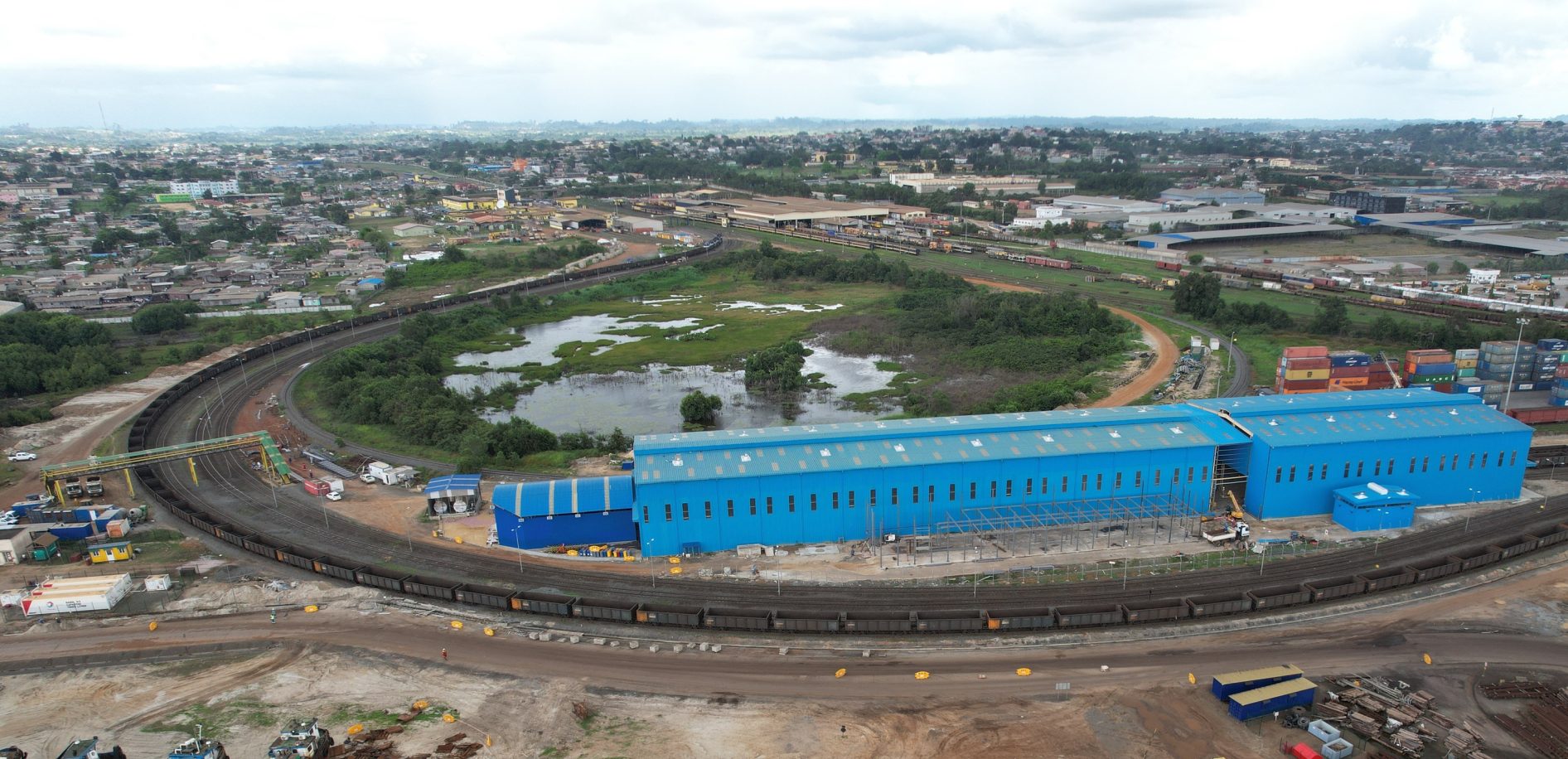
Largely due to IDFC activity, nonconcessional development finance flows jumped from 4 percent of overall U.S. aid spending in 2020 to 36 percent in 2021. Among the major projects funded by the IDFC are investments related to the Lobito Corridor in Southern Africa, which aims to create transportation links allowing Western firms to access critical minerals that are presently monopolized by China.

Ironically, this growing Western emphasis on nonconcessional, commercialized development finance with an emphasis on infrastructure development comes at a time when China has scaled back the BRI (largely due to growing evidence that many recipient countries have exceeded their borrowing capacities) and begun allocating more resources to “soft” aid through the Global Development Initiative.

An obvious drawback of the blended finance model is that it diverts attention and resources from traditional concessional aid and the investment in health, education, and disaster assistance that remain essential.

But even on its own terms, the effectiveness of the Wall Street Consensus remains in doubt. A 2020 report by the Center for Global Development concluded that the overall flow of blended finance had been disappointing and that the great bulk of MDB-mobilized private financing was directed to middle-income rather than low-income countries. A 2019 study by ODI Global reached similar conclusions. In low-income countries, on average, each $1 in public development financing mobilized only $0.37 in private finance.

Blended finance was constrained by the low risk tolerance of both public and private actors in the face of environments hampered by poor governance and few profitable investment opportunities. Since most blended finance flowed to middle-income countries and to “hard” sectors, such as transport and energy, as opposed to social sectors, the report suggested that the increased priority given such investments came at the expense of programs that more directly targeted poverty in low-income countries.

Indeed, the proposed doubling in the funding cap for the IDFC cannot substitute for the human costs that follow from the cuts to U.S. Official Development Assistance, which one study suggests will lead to 14 million deaths over the next five years. Traditional aid may have drawbacks, whether evaluated as a tool of U.S. foreign policy or in terms of development effectiveness, but abandoning it in favor of the privatization of development finance is neither wise nor humane.

This piece originally appeared in The Diplomat.

Leave a comment

Filed under Uncategorized

Making America Weak Again

Let’s review some of the ways that the Trump Administration is eroding America’s global influence, reputation, and competitiveness.

Soft Power

A 2024 Pew Research survey found that America’s average approval rating across residents of 34 countries was 54%, as opposed 31% who disapproved. A year later, the U.S. approval rating had dropped modestly to 49%, but the disapproval rating jumped to 49% among 24 countries surveyed. Moreover, only 34% of respondents expressed confidence in Donald Trump to “do the right thing” in world affairs, as opposed to 62% who lacked confidence (compared with 49% who lacked confidence in Joe Biden in 2024).

Foreign Aid

The Trump Administration has dismantled the U.S. Agency for International Development, fired most of its employees, and transferred a handful of remaining programs to the Department of State. A research report published in the Lancet, a British medical journal, projected that the Trump Administration’s 85% cut to U.S. humanitarian assistance abroad would result in an estimated 14 million premature and preventable deaths in low-income countries. The abandonment of foreign aid as a tool of American foreign policy will result in a loss of influence abroad and fuel political instability in poor countries that previously depended heavily upon American assistance.

Diplomacy

In July, 2025, the Trump Administration announced the firing of over 1300 civil servants and diplomatic staff in the State Department. Trump has proposed closing ten U.S. embassies and seventeen consulates abroad. The Trump Administration has sought to eliminate funding for the National Endowment for Democracy and the U.S. Institute for Peace. This unilateral diplomatic disarmament will hinder our visibility into potential threats abroad, forego fruitful collaborations, and lessen our diplomatic capacity to resolve conflicts.

Public Diplomacy

The Trump Administration has sought to defund the U.S. Agency for Global Media, which is the host agency for Radio Free Europe/Radio Liberty, Radio Marti, Voice of America, Radio Free Asia, and the Middle East Broadcasting Network. These agencies provide access to accurate news and information for people living in countries lacking a free press. They also support American soft power.

Science and Innovation

America’s economic competitiveness, especially in relation to China, depends upon robust support for science and innovation. Yet the Trump Administration has carried out dramatic cuts to research funding by the National Science Foundation and the National Institutes of Health. Overall, basic science funding has been cut by one third and research universities are being pummeled in a multi-front assault by the Trump Administration, that includes higher taxes on endowments, lower overhead reimbursement rates on Federal grants, and caps on Federal loans for graduate study. Innovation is also connected to America’s traditional ability to attract the best and the brightest from around the world. Indeed, half of billion dollar startups in the U.S. are founded by immigrants. Unfortunately, international student flows to the US are being hampered an anti-immigrant climate and a threat to deny visas to applicants who may have posted critical remarks about the U.S. or the Trump Administration on social media.

Multilateral Organizations

Shortly after taking office, the Trump Administration announced U.S. withdrawal from the Paris Climate Accord, the United Nations Human Rights Council, the United Nations Relief and Works Agency (UNRWA), and the World Health Organization. The Trump Administration has zeroed out funding for U.N. peacekeeping. U.S. funding previously accounted for 27% of the U.N.’s peacekeeping budget. Overall, Trump’s FY 2026 budget request cuts U.N. funding by 87%.

Trade and Tariffs

The Trump Administration’s global tariff war is not only disrupting global supply chains and raising costs for American consumers, but also prompting our trade partners to seek out closer trade ties among themselves and to lessen dependence upon the United States. While many continue to explore trade deals with the U.S., they do so aware that any agreement could be quickly overturned by Donald Trump and so is worth little more than the paper on which it is written.

Alliances

While the administration deserves some credit for pushing NATO allies to spend more on defense, Russia’s invasion of Ukraine played a bigger role in prompting a rethinking of European defense needs. Though Trump’s threats to pull the U.S. out of NATO seem to have receded for now, European confidence in America’s commitment to the continent’s security remains at a low ebb. As a result, Germany, Britain, and France have begun strengthening formal and informal ties as a hedge against American isolationism.

Intelligence

Trump appointees have carried out ideological purges of top officials in various intelligence agencies. In early May, the Trump administration announced plans to cut thousands of positions in the CIA, NSA, and other intelligence organizations.

Trump has repeatedly cast public aspersions on the findings of the intelligence community. During his first term, Trump publicly declared his faith in Vladimir Putin’s denials of Russian interference in the 2016 election in direct contradiction of his own intelligence community’s assessment. In March, 2025, Director of National Intelligence Tulsi Gabbard testified before Congress that the intelligence community had concluded that Iran had not made a decision to assemble a nuclear weapon and had not reconstituted weaponization efforts abandoned in 2003. Later, when asked about Gabbard’s statements, Trump declared: “I don’t care what she said” and claimed that Iran was close to possessing a bomb. After the bombing of Iranian nuclear facilities, Trump denounced a preliminary assessment by the Defense Intelligence Agency that the attack left Iraq in a position to reconstitute its nuclear enrichment program within months. Trump called the report “flat out wrong” and contended that Iran’s nuclear program had been “obliterated.”

The politicization of intelligence and the loss of a great deal of institutional memory and knowledge will undercut the reputation of the U.S. intelligence community and weaken the willingness of allied countries to share information with the U.S. or to rely upon intelligence that the U.S. shares with them.

Overall, the foundations of American leadership built over the past century are quickly being eroded. “America First” threatens to make “America Last.”

Leave a comment

Filed under Uncategorized

Trump’s Assault on Rural America

Rural people are among Donald Trump’s most loyal supporters. So why is he pursuing policies that will cause rural communities irreparable harm?

Farmers are getting hammered the hardest. Under current plans, the Department of Agriculture will lose over one-third of its employees. These include major reductions in agricultural research and marketing services. Cuts to meteorological services and programs that track the impacts of climate change will reduce the information available to farmers to plan for adverse weather events.

Reductions in food aid abroad, SNAP (food stamps) at home, and school nutrition programs all reduce demand for farm goods. Not to mention that low-income rural communities themselves rely heavily on SNAP funding. Trump’s tariff wars risk retaliation by other countries against U.S. agricultural exports. Plus, higher tariffs will raise the cost to farmers of imported agricultural inputs, as well as many consumer goods.

Iowa farmers profit from the placement of wind turbines on their land, yet Trump’s elimination of Federal incentives to further expand wind energy will choke off this income source. And, like city dwellers, rural people will pay higher electricity bills as many low-cost wind and solar projects stall. Since 80% of the green energy projects planned under the previous administration’s Inflation Reduction Act funding were to be sited in Red States, many rural areas will lose access to the good-paying manufacturing jobs that would have been created had funding not been cut in Trump’s recent budget bill.

Cuts to the Corporation for Public Broadcasting will lead to the closure of many public television and radio stations in rural news deserts, where there are few other outlets for covering local news. Similarly, the loss of funding for Planned Parenthood will reduce the availability of low-cost reproductive and women’s health services.

Rural communities also disproportionately rely upon Medicaid, so the $1 trillion cut to that program will hit these areas hard. Beyond the harm caused when individuals lose Medicaid coverage, the Medicaid cutbacks will force the closure of many rural hospitals. Thus, even many people who have private insurance or Medicare will now have to travel great distances to obtain medical services.

In short, the coming years will bring severe economic pain and social distress to communities that are already reeling. These disruptions will be directly attributable to Donald Trump’s assault on rural America. So what will be the political fallout?

If rural voters were swayed by pocketbook issues, then Republicans would pay a heavy political price for the policies and impacts reviewed above. Yet voters have become more and more deeply attached to tribal identities rooted in cultural divides. Rural resentment toward urban America, which is equated with the Democratic Party, and its values, drives political allegiances. Beyond this, many have developed intense loyalty toward Donald Trump, not because he has delivered for them in material terms, but because he positions himself as their defender against groups and forces that many people find threatening. Moreover, many voters, whether urban or rural, have a difficult time connecting adverse developments in their lives and communities to the political sources that are responsible for those problems.

Despite this reality, the dire consequences of Trump’s policies for rural America need only trim his support among rural voters by modest amounts to make a difference to electoral outcomes in swing states and districts. For Democrats, the challenge is to develop a strategy that clearly assigns responsibility for rural woes to Republican policies and offers positive alternatives for rebuilding rural economies. Democrats would also be wise to mute cultural issues and while building a big tent that can attract and welcome people to the party who do not agree with the Democratic mainstream on every issue.

Leave a comment

Filed under Uncategorized