
The past century and a half brought three waves of major political reform in the United States: the Progressive Era, the New Deal, and the Civil Rights revolution. Each period of reform led to a progressively fairer, more prosperous, and more democratic society.
Yet what took more than a century to build is being deconstructed in a matter of months. The destruction has been deep and swift with more to come. If not curtailed by the courts and other forms of resistance, the damage will be difficult to reverse.
It is worth considering some history in order to appreciate what is at stake. Politics in late 19th century America was dominated by wealthy oligarchs who routinely bought politicians. The Federal government was too feeble to serve as a counterweight and, in any case, its workforce was composed of political loyalists who swept in and out with each change of administration.
The Progressive Era reforms of the early 20th century sought to replace corrupt, machine politics with a more capable and responsive system of governance. Chief among these reforms was the creation of the modern civil service – an apolitical, permanent bureaucracy built upon merit and expertise. New independent agencies, such as the Interstate Commerce Commission, the Federal Reserve, the Food and Drug Administration, and the Federal Trade Commission, were empowered by Congress to regulate business in the interest of workers and consumers. The powers of the state expanded to manage the complexities of a rapidly growing and modernizing economy.
The growth of an administrative state was balanced by greater popular say over politicians and policies. Senators were chosen through direct election for the first time, women gained the right to vote, and legislation allowing referendum, initiatives and recall elections was passed.
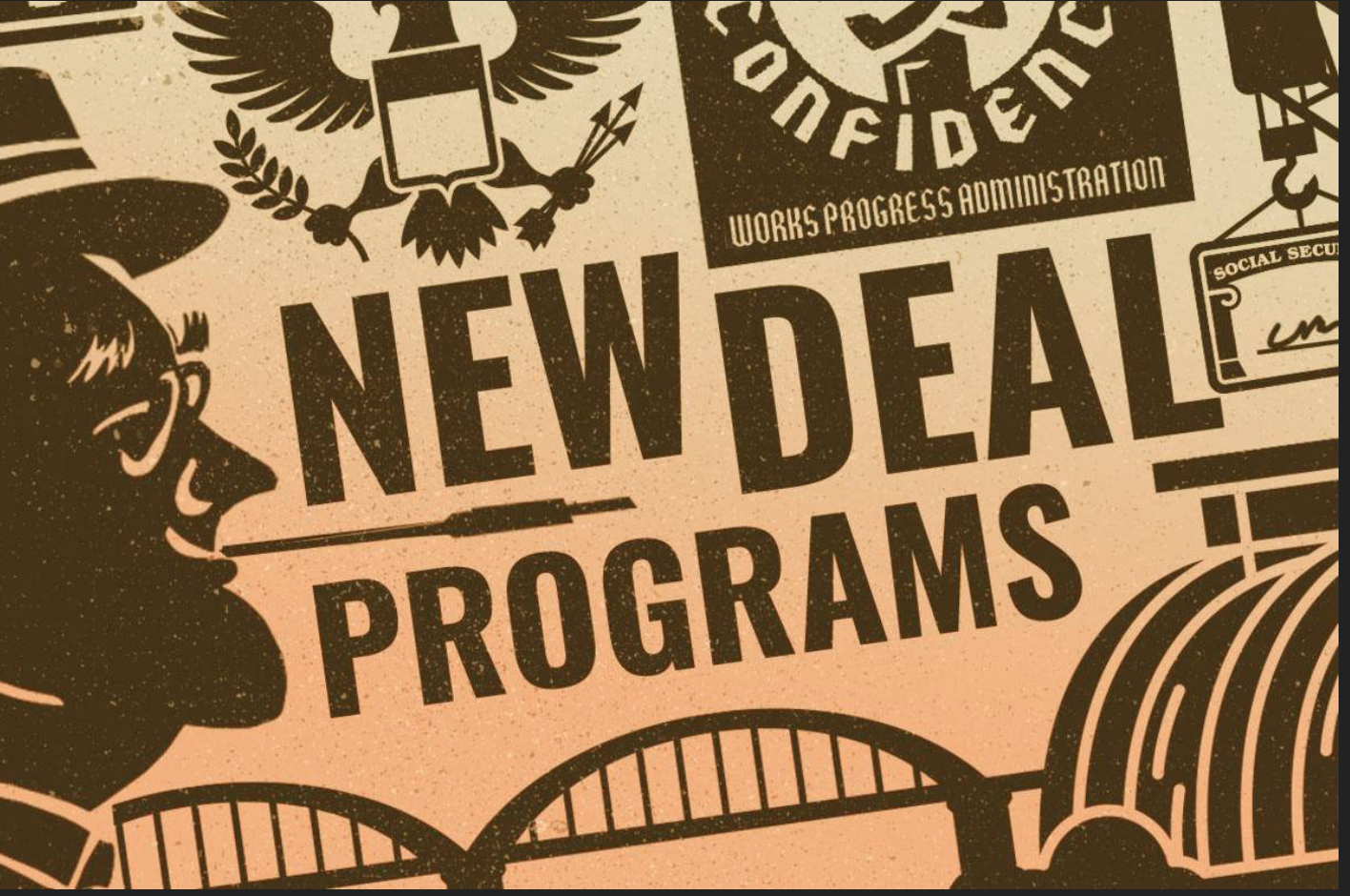
In the 1930s, Franklin Roosevelt’s New Deal extended the state’s role to the provision of economic security for all citizens even in the face of a howling economic downturn. Programs that we now take for granted – Social Security, unemployment insurance, collective bargaining, and banking regulation – were created during this period. President Lyndon Johnson built upon these protections through his Great Society. Subsequent presidents have championed programs that further strengthened the nation’s social safety net.
The third major set of political reforms addressed the stark racial inequalities that stood as the foremost stain on the American experiment. A mass movement for racial justice and equality led to major pieces of legislation aimed at ensuring equal voting rights, equal opportunities for housing, education, and employment, and the end of legalized racial segregation.
None of these reforms solved all problems. Some Americans perceive the state as too big, or costly, or intrusive. Still, America is a far better country because of the reforms so many struggled and sacrificed to bring about.
Yet these accomplishments are now at risk across the board. During his short time in office, Donald Trump has attacked each pillar of progress.
Under the Constitutionally dubious Unitary Executive doctrine, Trump seeks direct control over regulatory agencies that enjoy independent powers bestowed by the Congress. Already, he has fired agency heads without cause in direct contradiction of Congressional mandates. Congress endowed these agencies with some degree of autonomy to ensure that decisions requiring deep expertise – such as drug approvals or financial and environmental regulations – would not be subject to partisan battles or presidential whims. To remove this insulation, as Trump seeks to do, would no doubt weaken the ability of these agencies to ensure the health, safety, and financial security of the American people. The matter will come to a head within the next few months as a case challenging Trump’s removal of agency heads reaches the Supreme Court. It is expected that the Court’s conservative majority will side with the president, though the Court may seek a way to preserve the autonomy of the Federal Reserve given that Fed independence is crucial to investor confidence in the U.S. financial system.
In another attack on Progressive Era reforms, Trump has fired hundreds of thousands of civil servants and weakened civil service protections from many who remain in their jobs. He seeks to eliminate key agencies such as the Department of Education, the Federal Emergency Management Agency, and the Consumer Financial Protection Agency. Trump would undermine the capacity of our government to protect us during disasters, ensure public health, educate our children, keep our air and water clean, and prevent profit-driven corporations from endangering our health and safety.
The president has also directly challenged the 1974 Impoundment Act by refusing to spend money appropriated by the Congress. The legality of this too will likely be decided by the Supreme Court.
The legacies of the New Deal are also at risk. Elon Musk’s DOGE has cut thousands of employees who help the disabled and elderly navigate the Social Security system. Since Trump took office, cuts have been made to food stamps and school nutrition programs. The recently passed Congressional Republican budget blueprint will require devastating cuts to Medicaid funding, upon which roughly 80 million disabled and low-income people rely. Since this would be coupled with the extension and addition of massive tax cuts for the wealthy, the combination would represent the largest regressive shift of income from the poor to the rich in American history. Republicans seek to shred the nation’s social safety net.
Nor are the gains of the civil rights revolution safe. The Republican campaign against Diversity, Equity, and Inclusion (DEI) programs seeks to reverse decades of progress in building a more racially inclusive society. The contributions of African-Americans and other minorities to American history and culture are being wiped from Federal web sites, museums, and schools. Immigrant communities live in fear of ICE. The Supreme Court will soon rule on the constitutionality of Trump’s efforts to deny birthright citizenship to certain groups of people born in the U.S. Transgender people are being driven from public life. An executive order pushing local election officials to require proof of citizenship puts another hurdle in the way of voting rights while disproportionately impact the poor. Trump issued another executive order revoking Lyndon Johnson’s executive order requiring equal opportunity for minorities and women in Federal contracting, recruiting and training. The White House also issued a memo overturning a requirement that contractors do not operate segregated facilities.
Trump wants to transform American into a 21st century version of the Gilded Age, where oligarchs reign, patronage politics permeates the state, expertise is banished, social programs are starved, and citizens enjoy a much constrained set of rights.
This vision should be enough to mobilize Americans to rally to protect the key legacies of prior eras of social and political reform. Let’s hope the people’s voice will prove stronger than the autocratic impulses of Donald Trump.
 The Internationalist