Monthly Archives: April 2025

The Resistance 2.0

Heady from Joe Biden’s triumph, I penned a piece for the Des Moines Register on November 22, 2020, arguing that “the Resistance worked.” In the face of Trump’s norm-breaking presidency, judges defended the rule of law, the media fearlessly reported on Trump’s transgressions, Congressional Democrats blocked some of his most damaging policies, public servants did their jobs, whistleblowers exposed wrongdoing, fact-checkers corrected lies, protesters took to the streets, donors funded Democratic campaigns, and voters removed Donald Trump from office after four years of turmoil and trouble. America’s democratic institutions survived one of the most serious tests of the past century

Alas, less than two months later, Donald Trump directed both an insurrection and a false elector scheme designed to deny Biden the White House. While these shocking moves failed, so did subsequent efforts to impeach Trump or to hold him accountable in court. Instead, Trump is back, and so too are the threats to our democracy.

This time, the dangers are far worse. Trump’s lesson from his first term’s failures is that no independent centers of power must go unchallenged.  

Trump is attacking universities, the media, elite law firms, and the Federal Reserve. Republicans are challenging the tax status of non-profits, withdrawing Federal grants, launching partisan investigations, robbing government agencies of congressionally mandated independence, weakening civil service protections, kneecapping media organizations, and mobilizing the anger of MAGA nation against perceived enemies.

In authoritarian fashion, Trump seeks to intimidate opponents, drain their funds, undermine their legal status, discredit critics, and dismantle the eco-system that supports the Democratic Party and the broader liberal and progressive movements.

Some steps are explicitly partisan. Republicans have forced the Democratic fundraising platform ActBlue to spend precious time and money defending itself against dubious Congressional and Justice Department investigations. Even if no legal action is taken, a wounded ActBlue could hamper the ability of Democrats to raise competitive war chests ahead of the 2026 midterm elections as the whiff of scandal scares off donors.

Trump has long sought to delegitimize the mainstream media, which he perceives to have a liberal bias. His efforts to limit the Associated Press’s White House access and to intimidate the corporate owners of CBS’s 60 Minutes aim to undermine media independence and make reporters and editors think twice about critical coverage.

Likewise, Trump is using the withholding of Federal grants, threats to the non-profit tax status of universities, Title IX investigations, impediments to the enrollment of international students, and legal attacks on accreditation bodies to undermine academic freedom and remold higher education in a MAGA image.

Trump is blackmailing elite law firms that represent his perceived enemies: hire conservative lawyers, drop liberal clients, and provide pro bono legal representation for Trump-approved groups, or else lose access to Federal agencies and courts. Trump has directed the Justice Department to bring legal sanctions against lawyers who sue him or his government. This misuse of state power threatens to dry up the pool of high-quality attorneys available to pursue the more than 150 (and counting) lawsuits brought against Trump’s illegal executive orders.

While lower courts have upheld challenges to many of Trump’s Executive Orders, it remains to be seen how far the Supreme Court will go to rein in our rogue president. The Justices have shown a reluctance to draw clear red lines in response to Trump’s lawless behavior, perhaps fearful that their orders will be ignored. The reality is that the judicial branch has limited tools for compelling a lawbreaking president to comply with its edicts, especially since the Supreme Court ruled that presidents have criminal immunity for official acts.

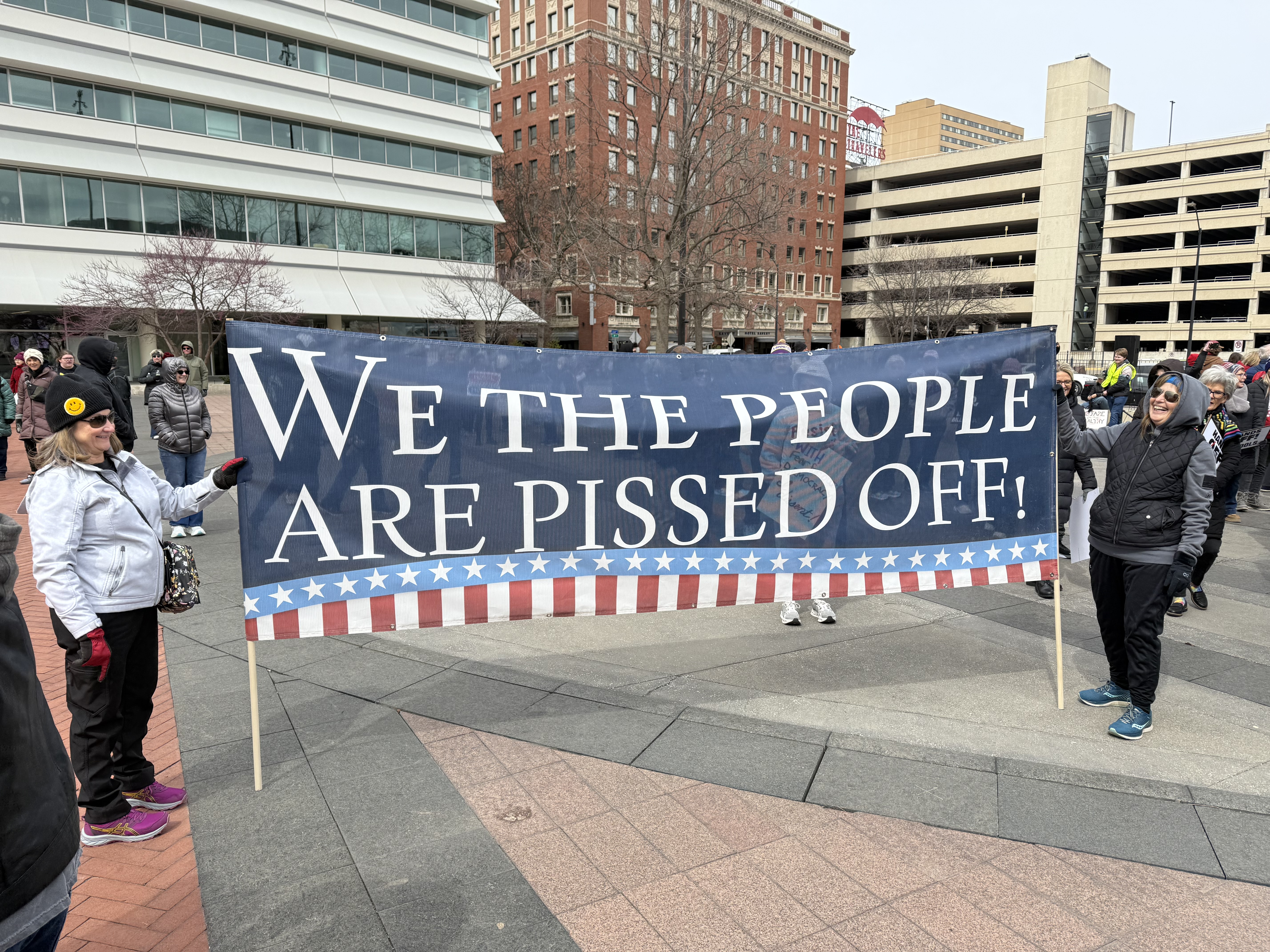
The real brake on an authoritarian president is political. The good news is that effective opposition to Trump 2.0 is emerging. Massive protests have been mounted. The stock and bond markets have punished Trump’s wacky tariff policies. Firms that rely upon imports are challenging the legally of Trump’s tariffs in court. Following the lead of Harvard University, which is suing the administration, higher education is mounting a defense of academic freedom. Four hundred college and university presidents issued a public letter denouncing government intrusion into higher education. The faculty senates at Big Ten universities have begun exploring mutual defense pacts. While some elite law firms quickly caved to Trump’s pressure tactics, others are taking him to court. Democrats and progressive non-profits have attracted a flood of donations. Small cracks have even begun to appear within the Republican Party and among Trump’s advisers.

Most importantly, the public is quickly souring on Trumpian chaos and cruelty. Trump’s approval rating is falling fast. Majorities disapprove of Trump’s handling of the economy, tariffs, inflation, immigration, and the Ukraine war. Voters are rejecting Trump’s threats to democracy. In a New York Times/Siena poll, 54% of respondents felt Trump was exceeding the power of the presidency. Overwhelming majorities insist that the president obey Supreme Court decisions.

Two-thirds described his first months as chaotic and 59% as scary. Only 44% expressed confidence that Trump “understands the problems facing people like you.”

Neither is Trump impervious to resistance. He pulled back on the most extreme tariffs and the threat to remove Federal Reserve Chair Jerome Powell after the stock and bond markets tanked. Trump rescinded orders to terminate international students in the face of skeptical judges. And he appears to be distancing himself from Elon Musk. Trump has a record of buckling when the political heat becomes too intense.

Trump’s initial whirlwind of pressure on major institutions has been destructive on a historic scale. Opposition has taken time to mobilize and has yet to fully recover from Trump’s early blows. But it is rapidly building now. As is clear from the Signal-gate scandal and Trump’s erratic tariff policies, the incompetence and incoherence of Trumpworld undercuts the president’s ability to sustain his MAGA revolution.

The Resistance worked once. Together, we can ensure that it works again. We can’t afford to fail.
Leave a comment

Filed under Uncategorized

Reversing Three Eras of Political Reform

The past century and a half brought three waves of major political reform in the United States: the Progressive Era, the New Deal, and the Civil Rights revolution. Each period of reform led to a progressively fairer, more prosperous, and more democratic society.

Yet what took more than a century to build is being deconstructed in a matter of months. The destruction has been deep and swift with more to come. If not curtailed by the courts and other forms of resistance, the damage will be difficult to reverse.

It is worth considering some history in order to appreciate what is at stake. Politics in late 19th century America was dominated by wealthy oligarchs who routinely bought politicians. The Federal government was too feeble to serve as a counterweight and, in any case, its workforce was composed of political loyalists who swept in and out with each change of administration.

The Progressive Era reforms of the early 20th century sought to replace corrupt, machine politics with a more capable and responsive system of governance. Chief among these reforms was the creation of the modern civil service – an apolitical, permanent bureaucracy built upon merit and expertise. New independent agencies, such as the Interstate Commerce Commission, the Federal Reserve, the Food and Drug Administration, and the Federal Trade Commission, were empowered by Congress to regulate business in the interest of workers and consumers. The powers of the state expanded to manage the complexities of a rapidly growing and modernizing economy.

The growth of an administrative state was balanced by greater popular say over politicians and policies. Senators were chosen through direct election for the first time, women gained the right to vote, and legislation allowing referendum, initiatives and recall elections was passed.

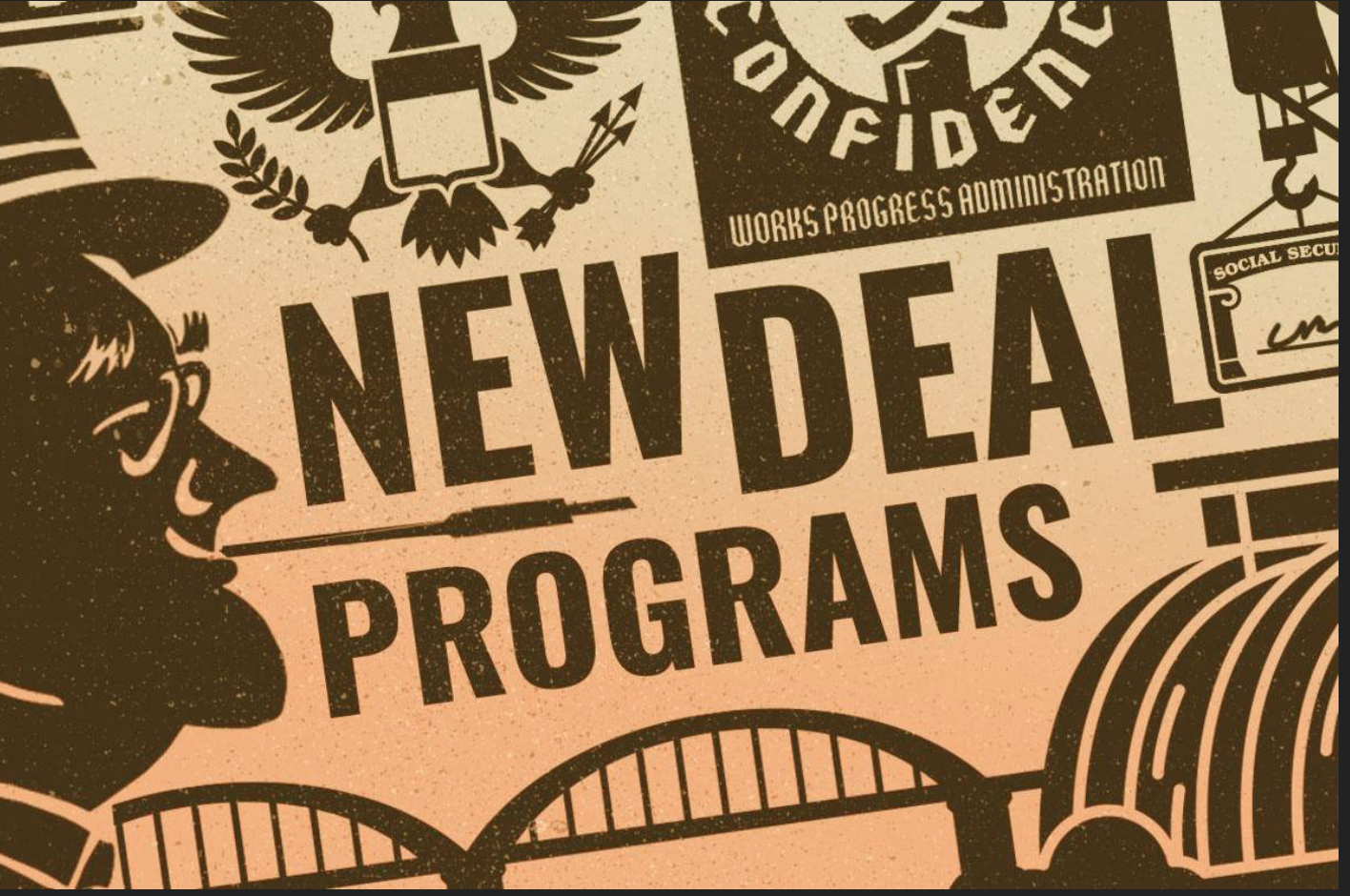
In the 1930s, Franklin Roosevelt’s New Deal extended the state’s role to the provision of economic security for all citizens even in the face of a howling economic downturn. Programs that we now take for granted – Social Security, unemployment insurance, collective bargaining, and banking regulation – were created during this period. President Lyndon Johnson built upon these protections through his Great Society. Subsequent presidents have championed programs that further strengthened the nation’s social safety net.

The third major set of political reforms addressed the stark racial inequalities that stood as the foremost stain on the American experiment. A mass movement for racial justice and equality led to major pieces of legislation aimed at ensuring equal voting rights, equal opportunities for housing, education, and employment, and the end of legalized racial segregation.

None of these reforms solved all problems. Some Americans perceive the state as too big, or costly, or intrusive. Still, America is a far better country because of the reforms so many struggled and sacrificed to bring about.

Yet these accomplishments are now at risk across the board. During his short time in office, Donald Trump has attacked each pillar of progress.

Under the Constitutionally dubious Unitary Executive doctrine, Trump seeks direct control over regulatory agencies that enjoy independent powers bestowed by the Congress. Already, he has fired agency heads without cause in direct contradiction of Congressional mandates. Congress endowed these agencies with some degree of autonomy to ensure that decisions requiring deep expertise – such as drug approvals or financial and environmental regulations – would not be subject to partisan battles or presidential whims. To remove this insulation, as Trump seeks to do, would no doubt weaken the ability of these agencies to ensure the health, safety, and financial security of the American people. The matter will come to a head within the next few months as a case challenging Trump’s removal of agency heads reaches the Supreme Court. It is expected that the Court’s conservative majority will side with the president, though the Court may seek a way to preserve the autonomy of the Federal Reserve given that Fed independence is crucial to investor confidence in the U.S. financial system.

In another attack on Progressive Era reforms, Trump has fired hundreds of thousands of civil servants and weakened civil service protections from many who remain in their jobs. He seeks to eliminate key agencies such as the Department of Education, the Federal Emergency Management Agency, and the Consumer Financial Protection Agency. Trump would undermine the capacity of our government to protect us during disasters, ensure public health, educate our children, keep our air and water clean, and prevent profit-driven corporations from endangering our health and safety.

The president has also directly challenged the 1974 Impoundment Act by refusing to spend money appropriated by the Congress. The legality of this too will likely be decided by the Supreme Court.

The legacies of the New Deal are also at risk. Elon Musk’s DOGE has cut thousands of employees who help the disabled and elderly navigate the Social Security system. Since Trump took office, cuts have been made to food stamps and school nutrition programs. The recently passed Congressional Republican budget blueprint will require devastating cuts to Medicaid funding, upon which roughly 80 million disabled and low-income people rely. Since this would be coupled with the extension and addition of massive tax cuts for the wealthy, the combination would represent the largest regressive shift of income from the poor to the rich in American history. Republicans seek to shred the nation’s social safety net.

Nor are the gains of the civil rights revolution safe. The Republican campaign against Diversity, Equity, and Inclusion (DEI) programs seeks to reverse decades of progress in building a more racially inclusive society. The contributions of African-Americans and other minorities to American history and culture are being wiped from Federal web sites, museums, and schools. Immigrant communities live in fear of ICE. The Supreme Court will soon rule on the constitutionality of Trump’s efforts to deny birthright citizenship to certain groups of people born in the U.S. Transgender people are being driven from public life. An executive order pushing local election officials to require proof of citizenship puts another hurdle in the way of voting rights while disproportionately impact the poor. Trump issued another executive order revoking Lyndon Johnson’s executive order requiring equal opportunity for minorities and women in Federal contracting, recruiting and training. The White House also issued a memo overturning a requirement that contractors do not operate segregated facilities.

Trump wants to transform American into a 21st century version of the Gilded Age, where oligarchs reign, patronage politics permeates the state, expertise is banished, social programs are starved, and citizens enjoy a much constrained set of rights.

This vision should be enough to mobilize Americans to rally to protect the key legacies of prior eras of social and political reform. Let’s hope the people’s voice will prove stronger than the autocratic impulses of Donald Trump.

Leave a comment

Filed under Uncategorized

Trump’s Trade War is Threatening American Financial Power

Donald Trump’s trade war is ostensibly meant to resurrect the United States as a manufacturing powerhouse. There is little chance of that. Half of U.S. imports are intermediate goods. As those prices rise, U.S. manufacturers will face higher input prices while firms in export industries will be hit by retaliatory tariffs abroad. U.S.-produced goods will cost more and be less competitive in global markets.

What Trump’s tariffs are instead accomplishing is to destabilize the one sector where the U.S. remains dominant: finance. Traditionally, the U.S. banking system has stood at the center of the world economy. American stock markets have provided the world’s deepest and most liquid capital pool. Investors sought out U.S. Treasuries as a safe and reliable investment asset. And the dollar has served as the closest thing to a global currency. As a result, the U.S. attracted cheap capital from the rest of the world, which in turn financed U.S. government deficits and high rates of consumer spending.

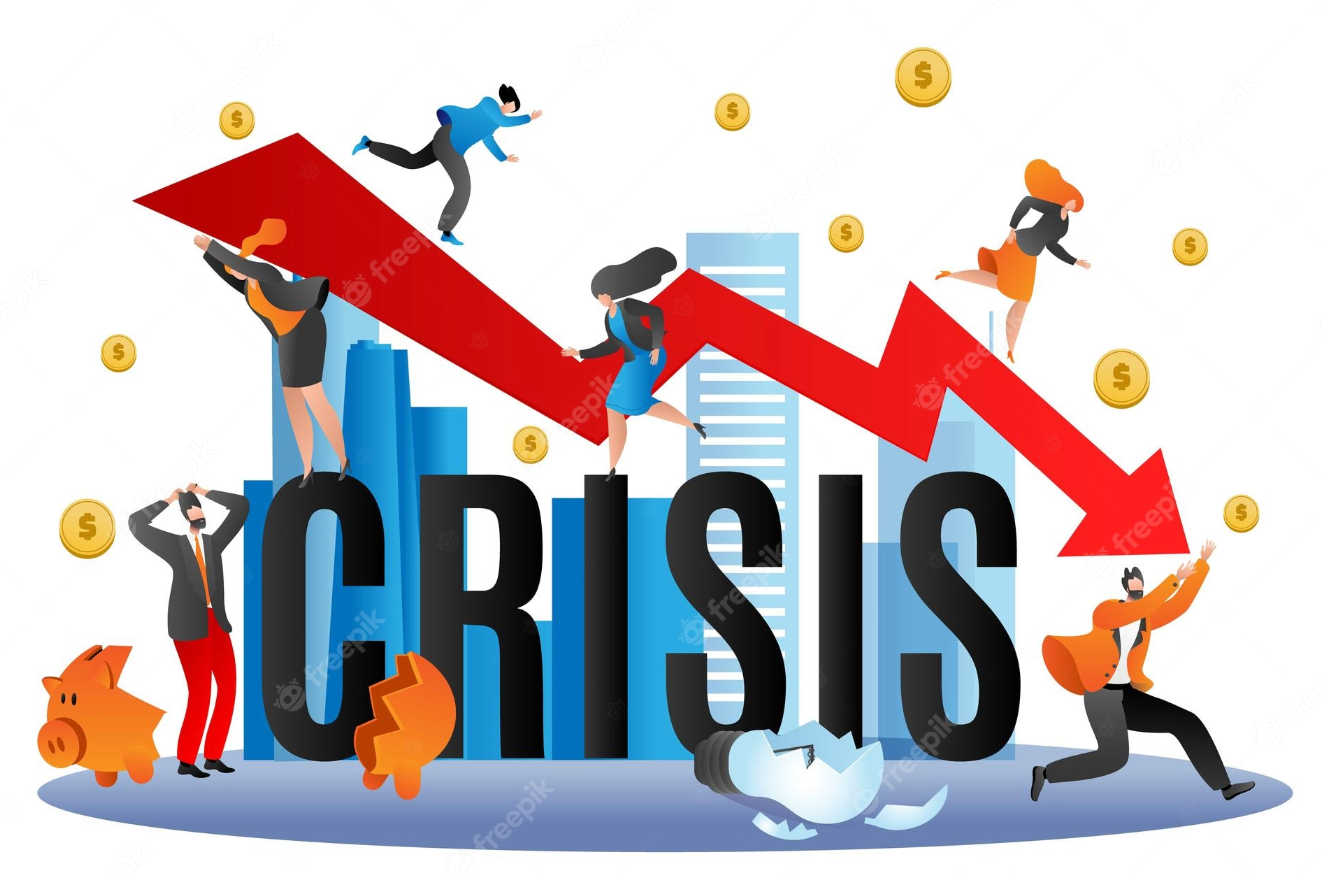
That is why, during times of political and economic turmoil, investors typically buy dollars and Treasuries as safe havens. Not now. Since Trump mounted his trade war with the world, stock prices have fallen, the dollar has slumped, and investors have demanded higher yields in return for holding U.S. government securities.

These trends amount to a deepening vote of no confidence in the political and economic leadership of Washington, D.C. The Trump Administration appears determined to collapse the liberal international order and return the world economy to the kind of zero-sum mercantilism reminiscent of the 18th century.

This crisis of faith in American leadership arises against the backdrop of pre-existing challenges to U.S. financial pre-eminence. The U.S. has used its financial leverage against adversaries (essentially denying countries such as Russia, Iran, North Korea, and Venezuela access to the global banking system) in such an aggressive fashion as to make even friends wonder whether these weapons might someday be turned against them. Further stress on the dollar-based international financial order arises from China’s efforts to promote internationalization of the renminbi – especially in cross-border trade and lending – and its creation of the Cross-Board Interbank Payment System (CIPS) as a China-centered alternative to the SWIFT messaging system that connects the world’s banks.

A long-time pillar of U.S. financial dominance has been the key role of the Federal Reserve in balancing inflation and unemployment while serving as a lender of last resort during crises. Yet the confidence inspired by the Fed rests upon its relative independence from direct political interference. Only a Fed capable of resisting pressures to juice the economy for the political benefit of presidents will retain credibility among investors as an inflation-fighter. This too is being undermined by Donald Trump’ s criticisms of Fed Chair Jerome Powell and his implied threats to replace Powell before his term is up – a power previously considered beyond a president’s reach, but one that could be endorsed by the Supreme Court in a pending case (Trump vs. Wilcox).

In August 2023, Fitch downgraded the rating attached to American government securities based upon concerns about both growing U.S. debt levels, which have reached 137% of GDP, and the periodic standoffs in the Congress over raising the debt ceiling. Another such game of financial chicken may be in the offing in the coming months if enough Democrats, seeking leverage over budgetary policy, join with fiscally conservative Republicans to delay a raise in the debt ceiling past a point of no return.

Vulnerabilities also arise from the heavy dependence of the U.S. on foreign investors, including sovereign states, to finance government debt. China alone holds $750 billion in U.S. Treasuries. The Chinese have been gradually whittling down this total, but could accelerate the process as a means to pressure the U.S. to relent on trade restrictions aimed at Chinese goods. The same is true of other governments that hold large quantities of American debt.

Even if no one of these stressors would be alone capable of inciting financial instability, the combination has created conditions ripe for disruption. Enter Donald Trump’s trade war, which has deepened worries about the recklessness and volatility of U.S. policy. Friends and adversaries alike are considering ways to “derisk” by lessening their exposure to U.S. trade and finance. This could mean a flight from the dollar and an unwillingness of investors to continue financing the U.S. Federal deficits except at an interest premium.

The Economist underscores the shaky fundamentals that underlie American vulnerability: “In the past 12 months, America has disbursed 7% of GDP more than it raised in revenue, and spent more on interest payments than on national defence. Over the next year officials must roll over debt worth nearly $9trn (30% of GDP).”

Vice President J.D. Vance has argued in favor of a weaker dollar while one top Trump economic adviser – Stephen Miran – has suggested taxing foreign Treasury holdings, a move that would likely prompt a bond sell-off

Foreigners hold $32 trillion in U.S. stocks and bonds. A sell-off of bonds and a retreat from the dollar could spike inflation, as a weak dollar pushes up import prices on top of tariffs, and swell the interest payments that the U.S. must pay on its massive debt obligations. The stock market would likely plunge, leading to a vicious downward spiral as investors liquidate assets to meet margin calls, thus further undermining asset prices and so on.

While the dollar remains dominant for now, the proportion of dollars in foreign reserves has gradually fallen from 73% to 58%. A more precipitous decline is not out of the question.

In the long run, a weaker dollar might make U.S. manufacturing for both the domestic and export markets more competitive, but this would be blunted if an ongoing trade war meant higher trade barriers overseas against American goods.

Any advantages from a weaker dollar would also be offset by the blows that Trump’s policies are inflicting upon American service industries in which, unlike manufacturing, the U.S. holds a surplus with the rest of the world. A weakening of the U.S. banking sector would undermine revenue from U.S. financial services abroad. Tourist revenue from overseas visitors has already plummeted, due to the trade war, rising political tensions, slower visa processing, and harsh immigration policies. The revenue that American colleges and universities (and surrounding communities) gain from the enrollment of international students is endangered by high-profile deportations and the unfriendly climate facing visitors from around the world. The administration’s attack on the independence of institutions of higher education also threatens to tarnish the brand of the sector, resulting in diminished flows of international students and high-quality scholars.

The burdens of American leadership in the world have been outweighed by the benefits of global interdependence and financial stability. But leaders can lead only when other are willing to follow. That requires a minimum of trust in the wisdom and reliability of the leader. As the Trump Administration trashes the international and domestic norms and institutions that have underpinned the liberal international order, other states and private actors will seek to derisk their relationship to the U.S., leading to growing American isolation. The short-run gains that might be had from bullying U.S. trade partners into one-sided “deals” pale in comparison with the long-run costs of destroying the bonds of trust that are the true source of American and global prosperity.

Leave a comment

Filed under Uncategorized